Controversy surrounding Trump's words sparks outrage across the USA and the World

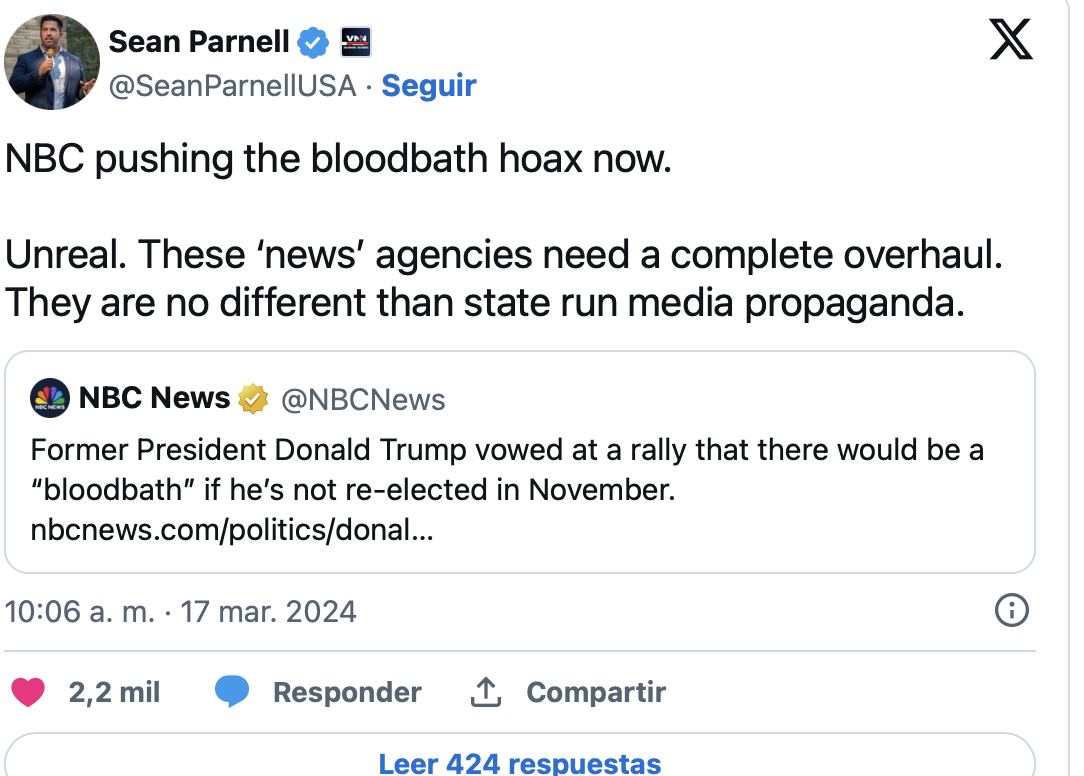
(By Molina, Maqueda, and Maurizio) Politics has always been a realm of interpretations, where every word is scrutinized and dissected in search of hidden meanings or subtexts. Recently, a phrase uttered by former President Donald Trump during a rally in Ohio has sparked considerable controversy, exposing the delicate relationship between politicians, the media, and the public. But this case became obvious as agencies, news agencies, and media outlets distorted a strong statement made by him in headlines and opinion pieces.

Trump's campaign spokesperson, Karoline Leavitt, clarified that the former president's comments specifically referred to the potential economic impact of Biden's policies on the automotive industry and its workers.
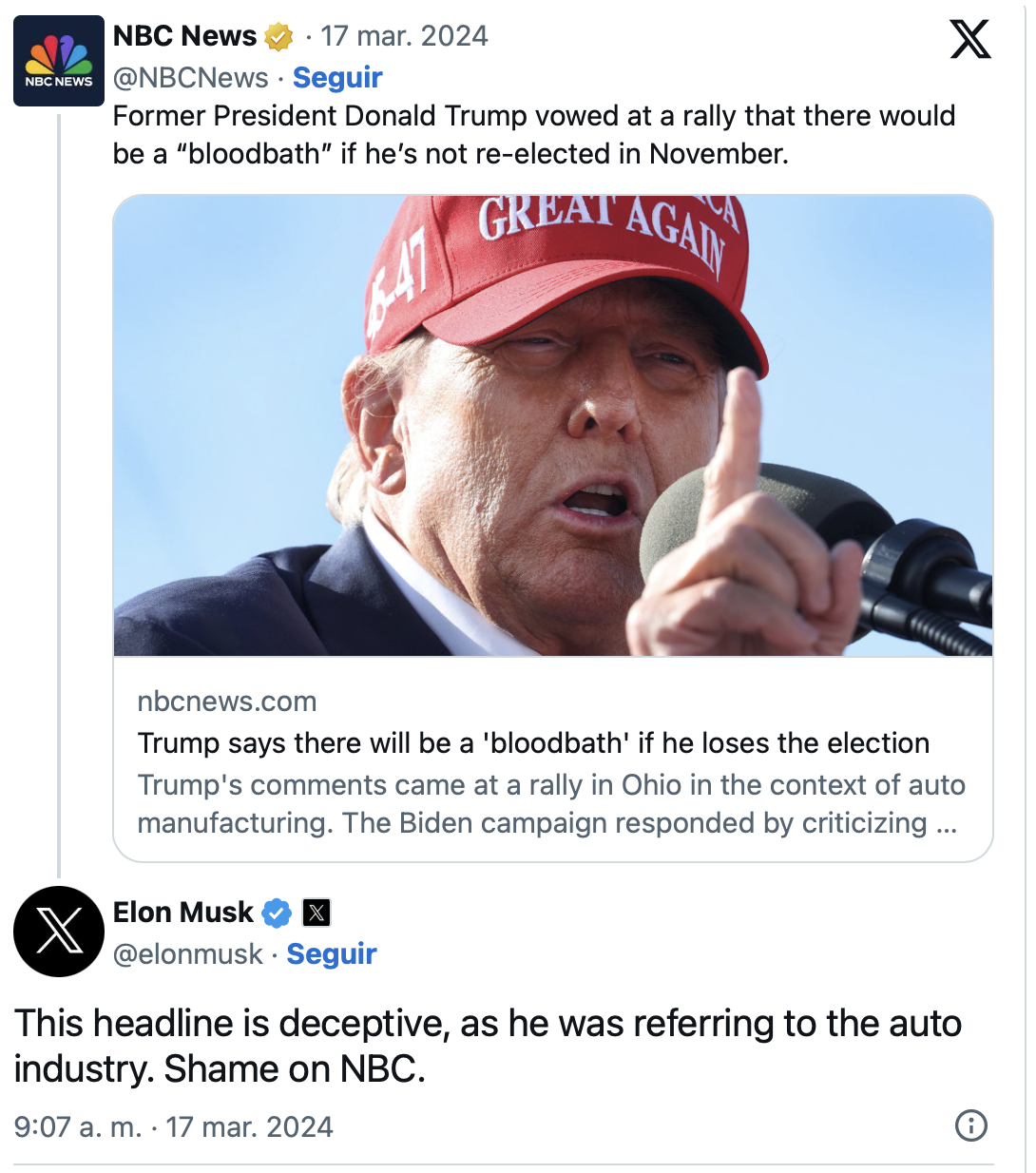
At the event, Trump voiced his concerns about the economic policies of his political rival, Joe Biden, suggesting they could have devastating consequences for the American automotive industry. Using a striking metaphor, he described the situation as a "bloodbath" for the country. However, the interpretation of these words has been the subject of controversy, with several media outlets accused of distorting their original meaning.

The question that arises is: was it really media manipulation or a misinterpretation by journalists? To answer this question, it is crucial to examine the context in which these words were spoken and understand the real implications behind them.


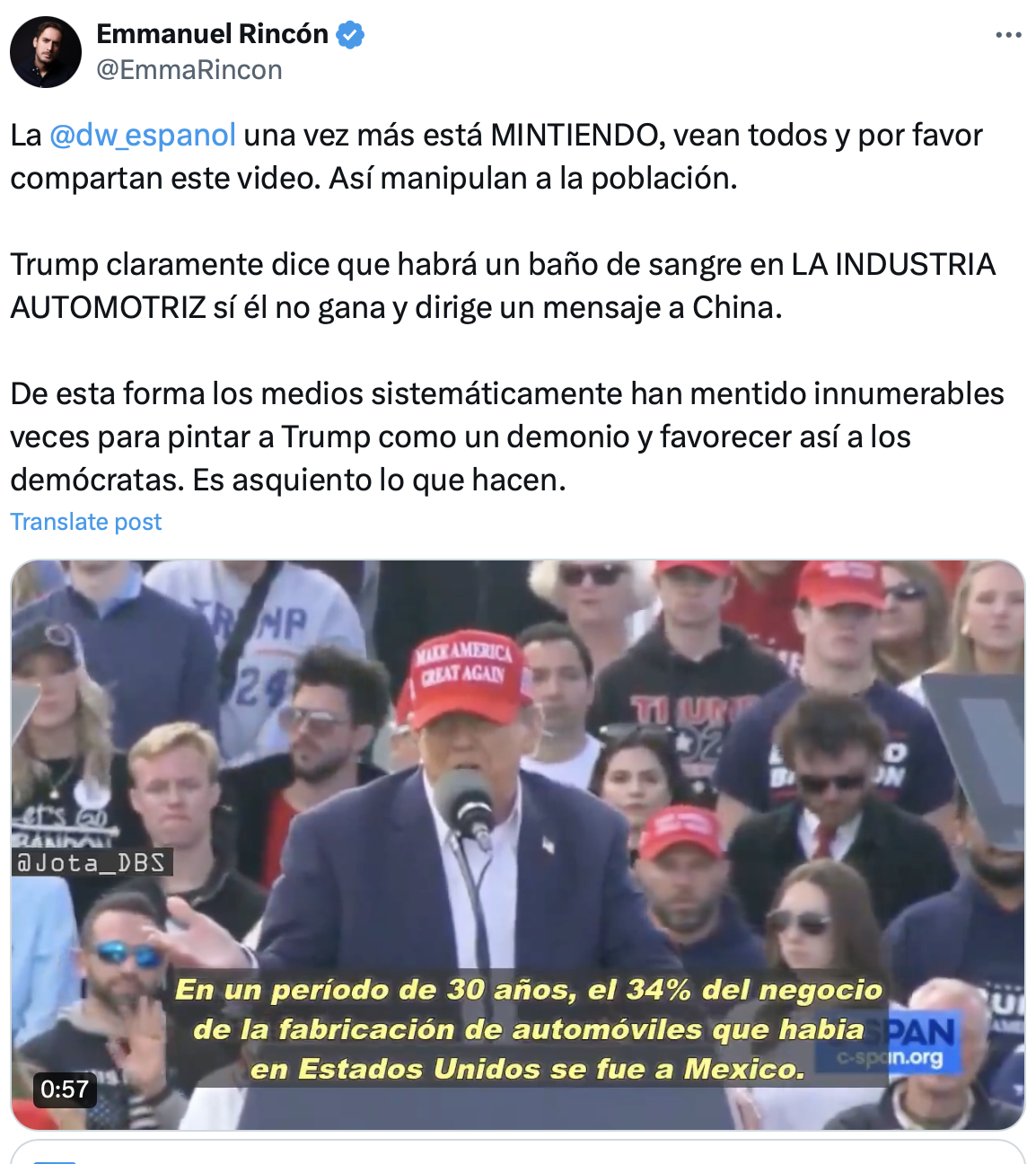
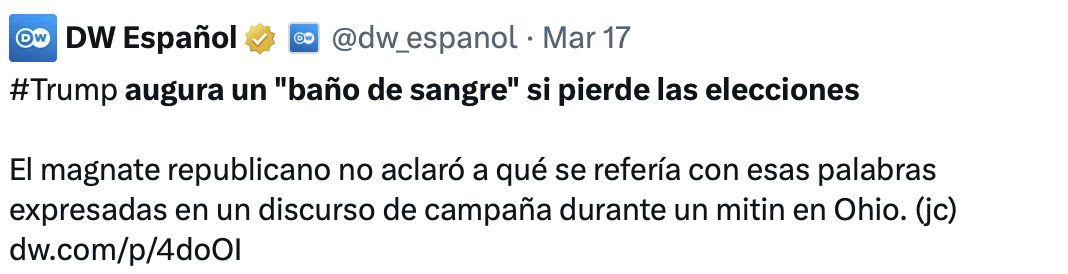
Here, the prestigious journalist Emmanuel Rincón, one of the first to show the media manipulation of Trump's words:
Link

The Context of the Speech

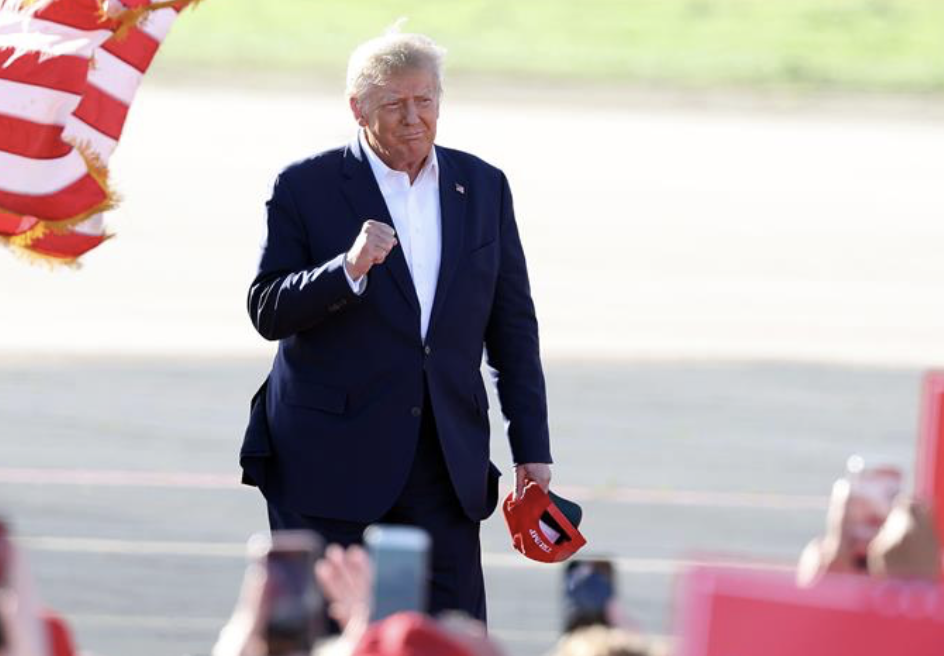
Trump spoke about imposing tariffs on cars manufactured in China and how this could affect the American automotive industry. He expressed concern about job losses and unfair competition in this sector. Referring to the policies proposed by Biden, he warned about the potential negative consequences for the economy and, particularly, the automotive industry. It is important to note that his comment about the "bloodbath" was directly related to this specific issue.
 

Media Interpretation

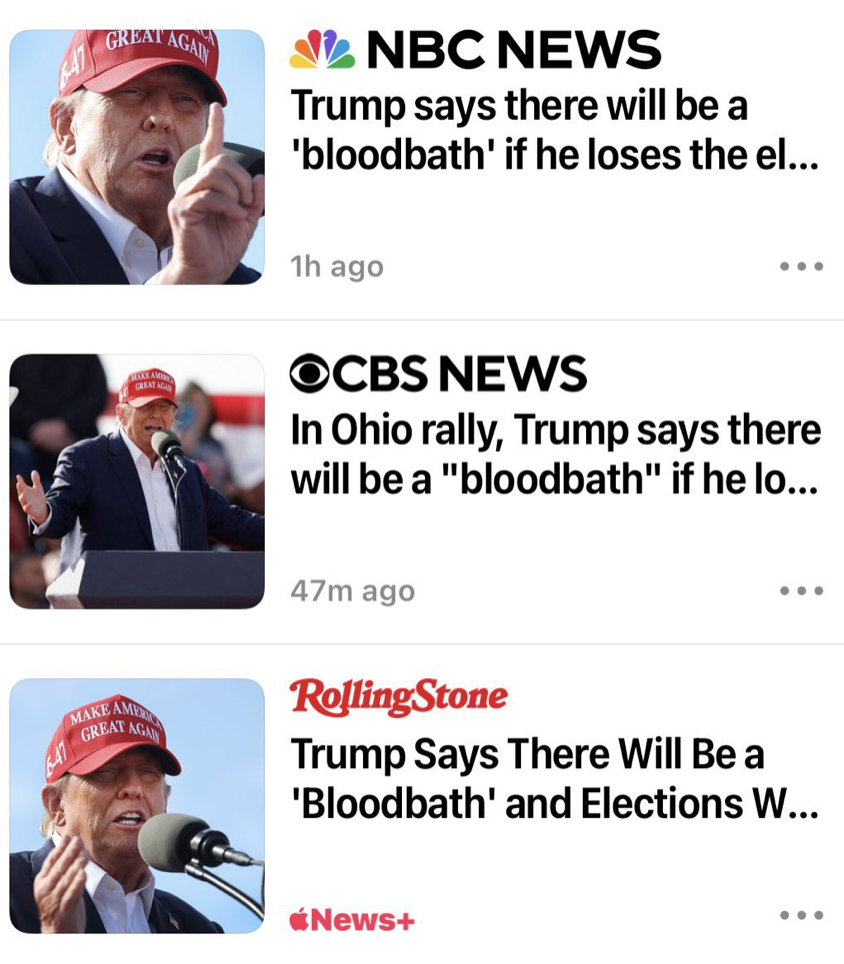
However, several media outlets reported on these comments without properly contextualizing the specific reference to the automotive industry. Headlines like "Trump says there will be a 'bloodbath' if he loses the election" or "Trump says the country faces a 'bloodbath' if Biden wins in November" omitted the crucial connection to trade policy and the automotive industry. This omission led to a biased interpretation of Trump's words, fueling polarization and controversy.
Trump Campaign's Clarification

In response to the controversy, Trump's campaign spokesperson, Karoline Leavitt, clarified that the former president's comments specifically referred to the potential economic impact of Biden's policies on the automotive industry and its workers. This clarification underscores the importance of understanding the complete context behind political statements and avoiding biased interpretations that may distort the truth.

Final Reflection

Media manipulation and misinterpretation of political statements are phenomena that can undermine public trust in the media and distort political discourse. It is the responsibility of journalists and media outlets to ensure balanced and accurate coverage of political events, providing the public with a comprehensive understanding of the context and implications of political leaders' statements.

Ultimately, the controversy surrounding Trump's words highlights the importance of transparency and objectivity in political journalism, as well as the need for the public to be critical and reflective when consuming news and political analysis.

What are the implications of this controversy for public trust in the media?

How can citizens discern between media manipulation and accurate interpretation of political statements?

What responsibility do the media have to ensure balanced and accurate coverage of political events?

Clarity and objectivity in political information are essential for an informed and engaged society. In a world saturated with news and opinions, it is essential that the media fulfill their duty to report impartially and transparently, thus maintaining the integrity of the democratic process.


El Head de Cultura, el rol absolutamente clave hoy en las empresas tops de USA (que aún en Latinoamérica no se ha implementado)

(Por Juan Maqueda, Marcelo Maurizio y Estely Rotmistrovsky, desde Miami) En la actualidad, el Head de Cultura (también conocido como Chief Culture Officer o Director de Cultura o el Co-Ceo) es un puesto cada vez más relevante en las empresas, tanto en línea como fuera de línea. En esta nota te contamos sobre casos concretos de éxito de este rol en USA, Europa y América Latina.

(Tiempo de lectura estratégica y de alto valor: 4 minutos)

Ole Miss creó el relato perfecto del “Fast Friday” al Fiesta Bowl (por qué Miami es el último capítulo de una revolución)

(Por Ortega) El field goal de 47 yardas de Lucas Carneiro que venció a Georgia no fue un golpe de suerte. Fue la culminación de un proceso diseñado para prosperar en el caos, la validación de una hipótesis arriesgada: que un equipo puede perder a su entrenador estrella un mes antes del playoff, mantener a un staff dividido entre dos programas, y aún así ejecutar bajo presión extrema.

(Tiempo de lectura: 4 minutos para ilusionarse)

Empieza este 2026 haciendo lo que ya los Gurús de las top brands hacen

(Por Otero-Maurizio) "El marketing del futuro no se vende; se vive. Y las marcas que creen espacios para vivir, ganarán." Las tendencias 2026 no son meras predicciones, sino síntomas de una transformación profunda en la psicología del consumidor, la economía de la atención y la arquitectura de valor de las marcas. 

(Contenido de alto valor: 3 minutos)

2026, el primer chisme que hizo estallar las redes: Brady & Earle en St. Barths (¿romance, colaboración de marca o el nuevo power duo del entretenimiento global?)

(Por Vera) En la noche de Año Nuevo, mientras el mundo brindaba por lo nuevo, dos figuras aparentemente distantes —Tom Brady, el atleta meticuloso, y Alix Earle, la influencer de la generación Z— escribían, sin saberlo, un capítulo revelador sobre el futuro del branding, el entretenimiento y la economía de la atención en 2026.

(Nota ágil de 3 minutos, menos de 250 palabras)

El colapso del consumo del alcohol (excepto hiper lujo o meta relevancia) está remodelando todo el marketing de bebidas

(Por Maqueda con Maurizio) Imagine una inversión que pierde casi la mitad de su valor en cinco años. No es una criptomoneda volátil ni una startup fallida. Es la industria global del alcohol, un gigante que durante siglos pareció inmune a las crisis y que hoy enfrenta una tormenta perfecta: una revolución generacional en los hábitos de consumo, guerras comerciales y una transformación farmacológica que está reescribiendo la relación humana con la intoxicación.

(Nota ágil de 3 minutos, menos de 250 palabras)

Revolución Bebidas 2026: lo que Starbucks traerá (restructuración para crear experiencias de marca, nuevas líneas, categorías, y salir del no-lugar)

(Por Ortero, Maqueda, con la colaboración de Maurizio) En el vertiginoso mundo del marketing y la cultura de marca, y la expansión de categorías, experiencias de marcas y crossing marketing,  observar cómo grandes empresas como Starbucks se reinventan constantemente es crucial. 

(Tiempo de lectura estratégica y de alto valor: 4 minutos)