The match, played on July 15, 2024 here in Miami, amidst a city and organization overtaken by the passion, disorder, and madness that is football, was the stage for Argentina's consecration as the most successful team in the Copa America, with a total of 16 titles in its history. Under the guidance of Lionel Scaloni, the Argentine team achieved its fourth victory in the tournament with an outstanding performance.
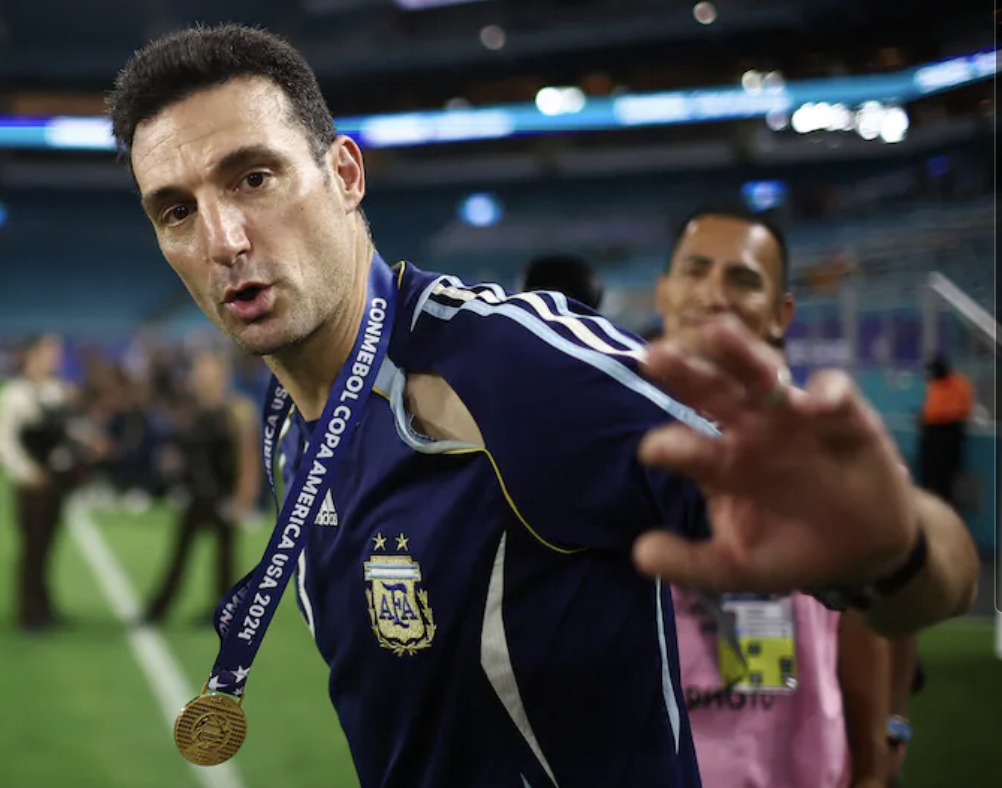

Miami explodes with Argentinian spirit, "al palo," as the Argentinians say:
A team that, without Messi, retired due to injury, showed that it is a squad full of talent, personality, individual skills, experience, strategy, and with many, many heroes.
In Ángel Di María's last match, Argentina was the best throughout the championship, deserving its fourth final and its fourth title. Argentina is impressive.
Argentina literally is the King of America, and this title continues to strengthen its position, ranking it as the number one footballing power in FIFA.
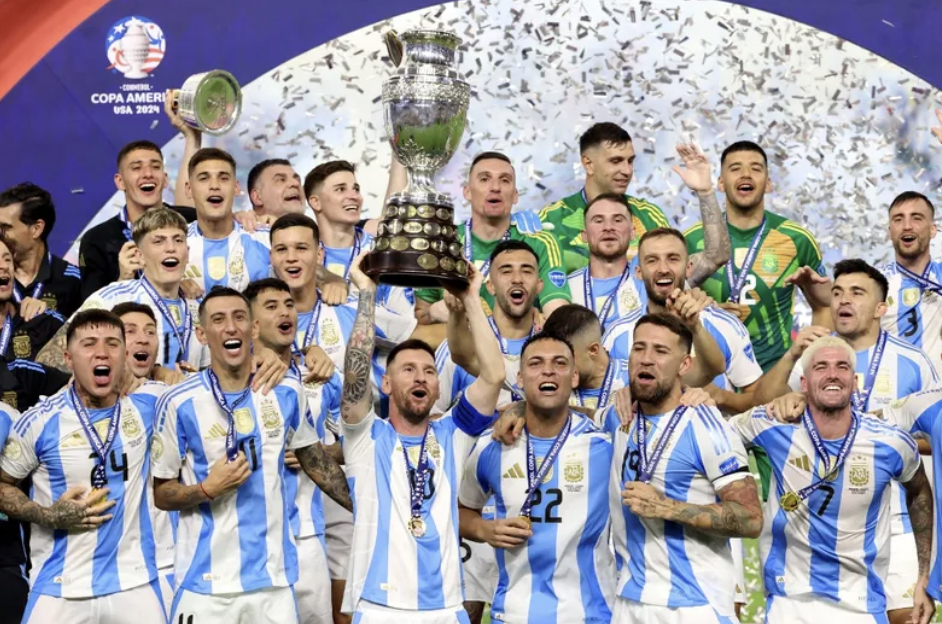
The thrilling match:
Argentina and Colombia played a tightly contested first half where neither team could gain an advantage. The team led by Néstor Lorenzo started with significant ball possession and had the first two clear chances in the final of the 48th edition of the CONMEBOL Copa America™: at 6 minutes, a shot from John Córdoba hit the post, and at 12 minutes, a corner kick taken by James Rodríguez (the tournament's top assist provider) resulted in a doubleheader in the box - the second by Cuesta - which Dibu Martínez managed to control.
Argentina's first chance came through their two veterans: at 19 minutes, Di María made a run down the left flank and his pass back ended with a shot from Messi that, after a deflection, reached Vargas without major issues.
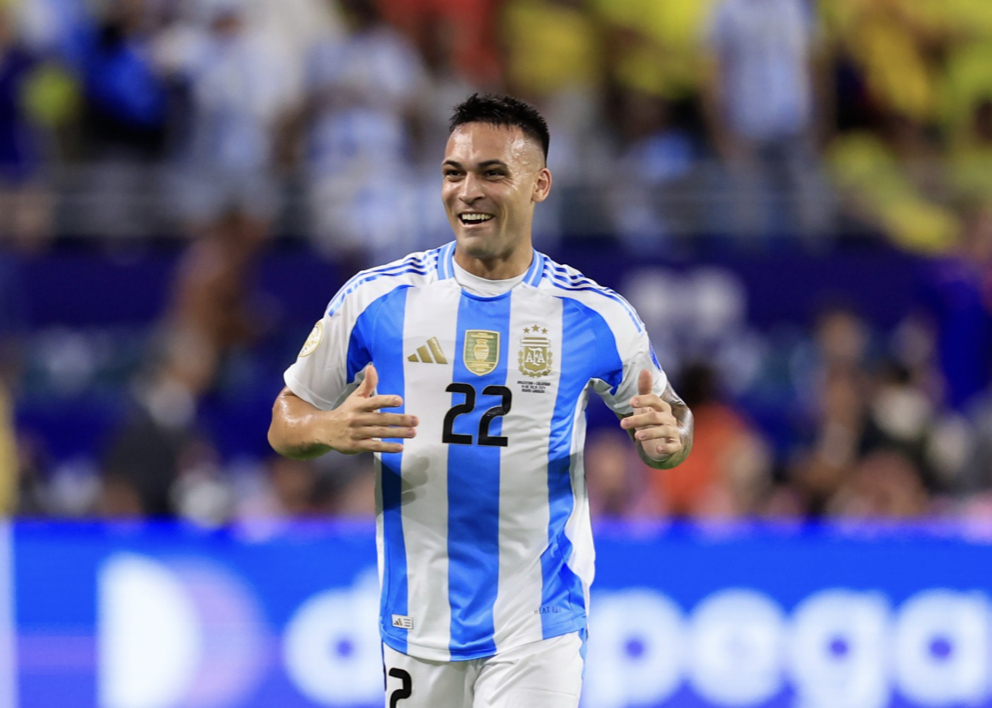
Argentina managed to balance possession, and Colombia had its two clearest chances from outside the box: at 33 minutes, a shot from Lerma was tipped over by Dibu with his fingertips; at 40 minutes, a long and powerful strike from Richard Ríos was safely collected down low by the Aston Villa goalkeeper.

Among the highlights of the match was Ángel Di María's farewell from the Argentine national team, who played his last match for the Albiceleste. Lionel Messi, the player with the most appearances in the history of the tournament, was substituted in the second half, while Lautaro Martínez emerged as the tournament's top scorer by netting the only goal in the final.
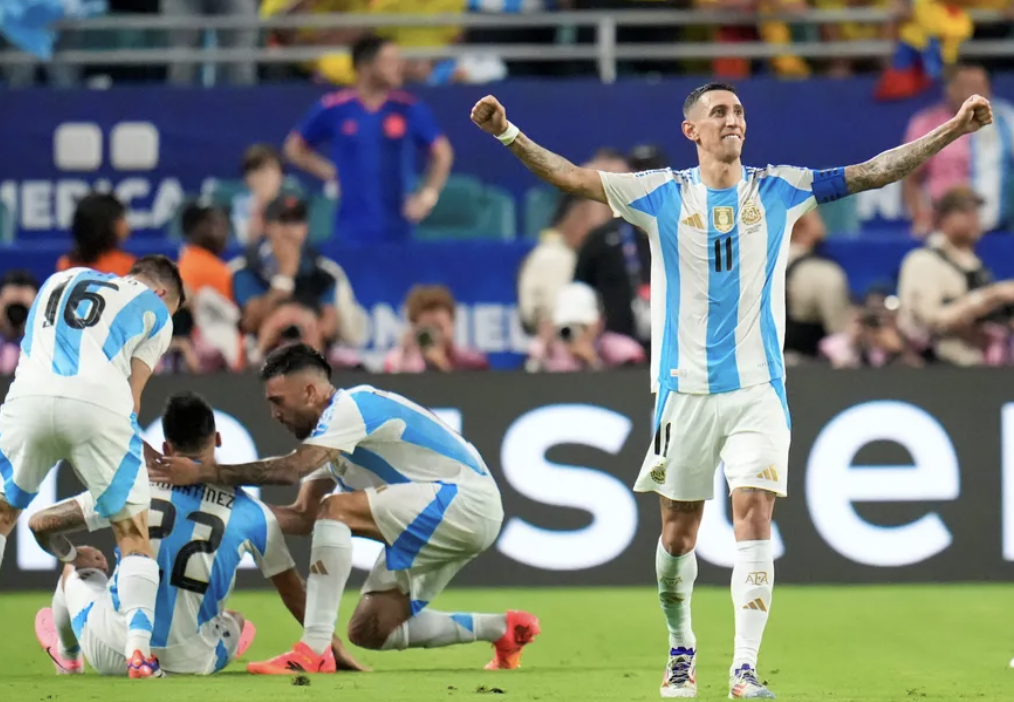
Towards the end of the first half, Nicolás Tagliafico headed a cross (which came after a foul on himself) but it went over Vargas' goal. The second half started intensely for both sides: at 47 minutes, Arias had a clear chance with a shot just wide of the post, and two minutes later, a good collective combination ended with Mac Allister assisting Di María: the Argentine's shot was unable to beat Vargas, who closed down the goal well. At 57 minutes, Argentina connected passes, moved the ball from right to left, and Di María unleashed a powerful, curling shot that Vargas managed to deflect for a corner kick.
In what could be his last match in the CONMEBOL Copa America™, Lionel Messi (the player with the most appearances in the tournament's history) was replaced, visibly in pain, at 65 minutes by Nicolás González.
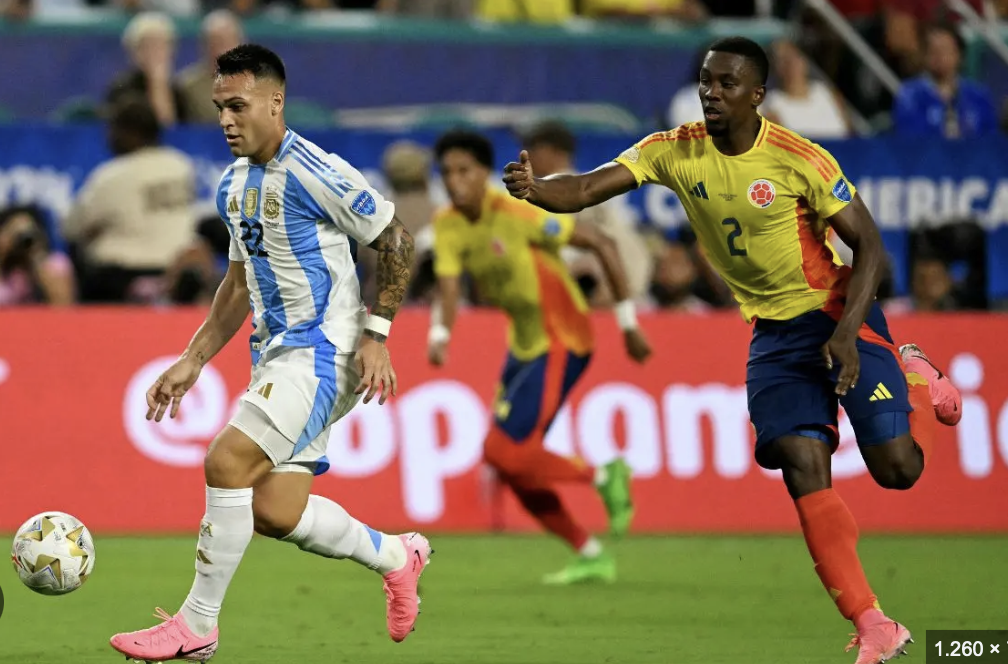
Ten minutes later, González received a pass back from Tagliafico and his left-footed shot found the back of the net. VAR review showed that the full-back was offside, and the score remained 0-0. The end of regular time saw Argentina dominating and gave two more chances to the substitute Nico González: a header went wide of the post, and a shot inside the box sailed over the crossbar. The 0-0 scoreline took the match to extra time.
Just like an extension of regular time, Argentina started on the front foot, and Nico González, this time after a run from Rodrigo De Paul, shot with his right foot from a penalty position, but Vargas managed to save it without giving a rebound. Colombia halted Argentina's momentum, and both teams began to share possession and chances, but neither

With this triumph, Argentina once again demonstrated its quality and dominance in South American football, consolidating itself as one of the most successful teams in the region. The celebration at the Hard Rock Stadium in Miami Gardens, Florida, was the cherry on top for an unforgettable tournament for Argentine fans.
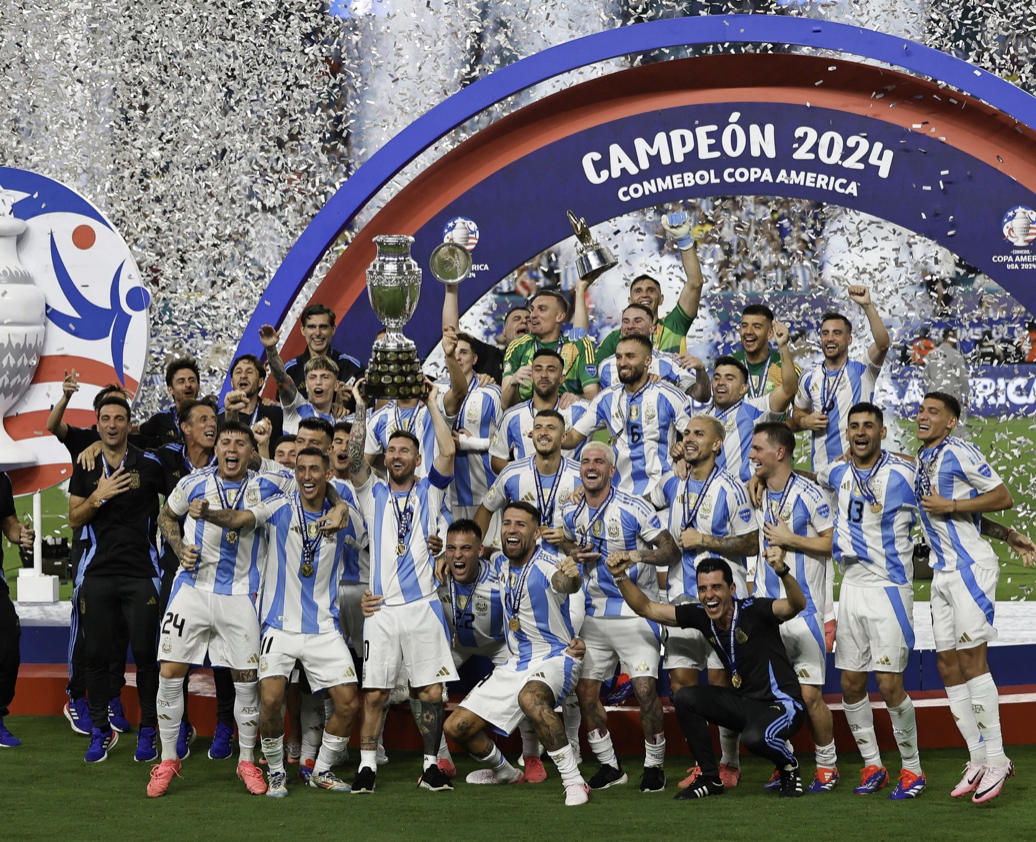
The team led by Lionel Scaloni lined up with Emiliano Martínez; Gonzalo Montiel, Cristian Romero, Lisandro Martínez, Nicolás Tagliafico; Rodrigo De Paul, Alexis Mac Allister, Enzo Fernández; Ángel Di María, Lionel Messi, Julián Álvarez. During the match, Lionel Messi was substituted by Nicolás González in the 65th minute, while Ángel Di María was replaced by Otamendi in the last five minutes, receiving an emotional ovation in his final match with the Argentine national team.
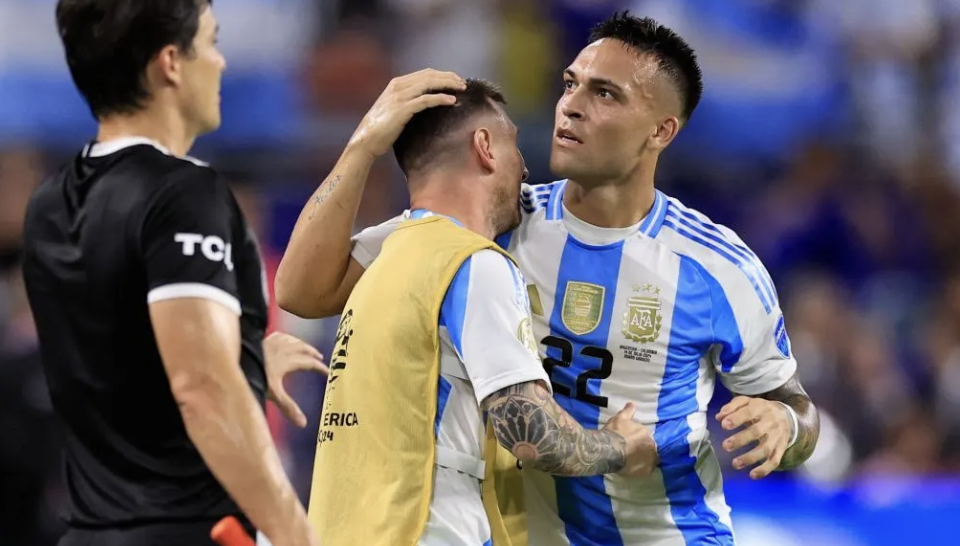
Lautaro Martínez's goal, which made him the tournament's top scorer, came after an excellent assist from Lo Celso in extra time. Argentina managed to balance possession during the match and had clear goal-scoring opportunities, with standout performances from players like Di María, Messi, and Martínez.

Colombia, managed by Néstor Lorenzo, lined up with Camilo Vargas; Santiago Arias, Carlos Cuesta, Davinson Sánchez, Johan Mojica; Jefferson Lerma, Richard Rios, Jhon Arias; James Rodríguez, Luis Díaz, Jhon Córdoba. Despite a solid performance, the Colombian team failed to break through the Argentine defense and were overtaken by Martínez 's goal in extra time.
Diego Cánepa
@diecanepaok