Watch the spot here.
Summary and Insights
By presenting his special helmet for the Qatar Grand Prix, Franco Colapinto not only honors the Argentine national team but also sets a new standard in brand activation within motorsport. In an environment where emotional connection with the audience is paramount, his gesture reflects the ability of athletes to act as ambassadors for their culture. As F1 evolves into a platform for innovation and creativity, drivers like Colapinto demonstrate that, in sports, every detail matters and can distinguish a competitor from a true icon.
Key Points:
-
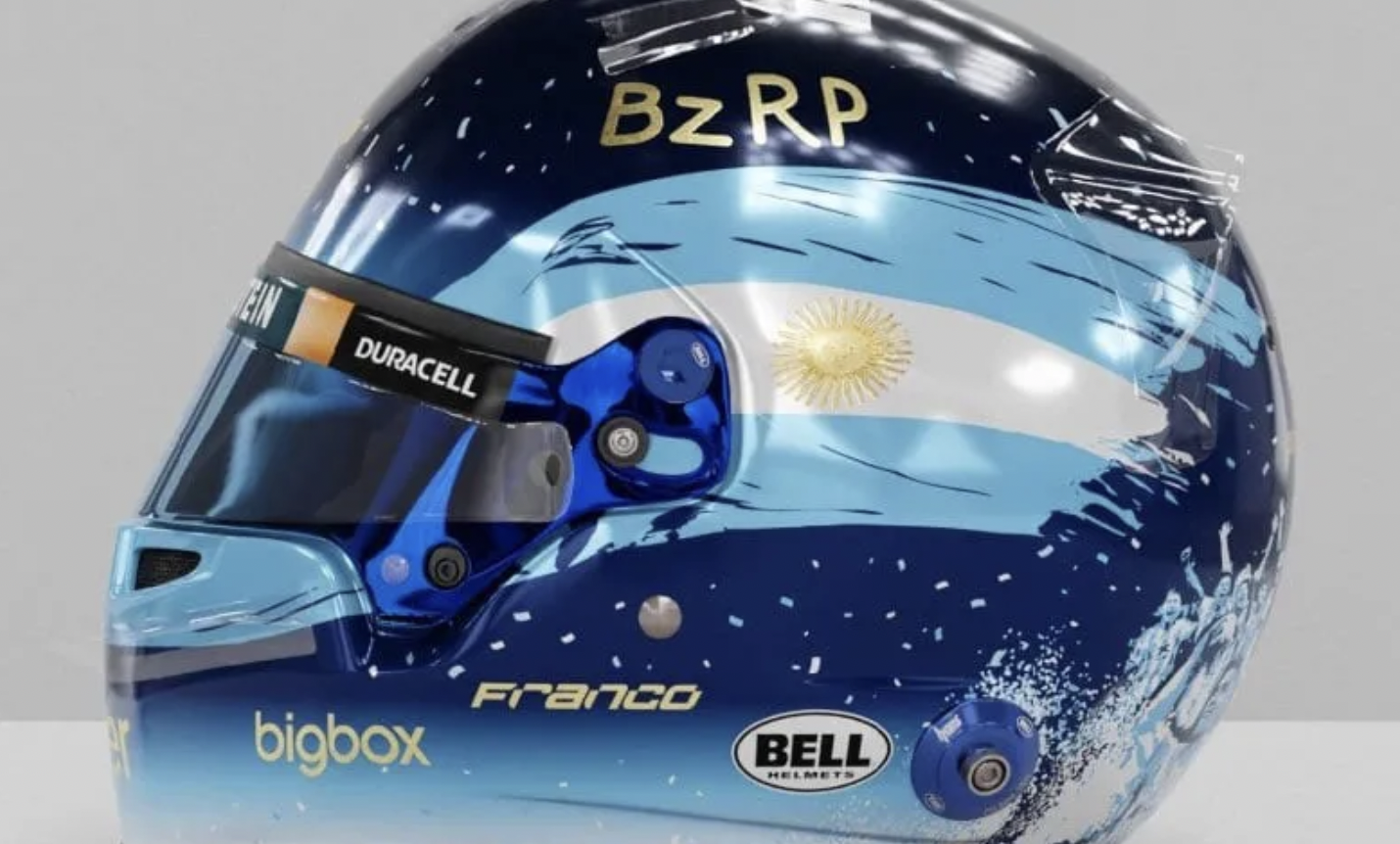
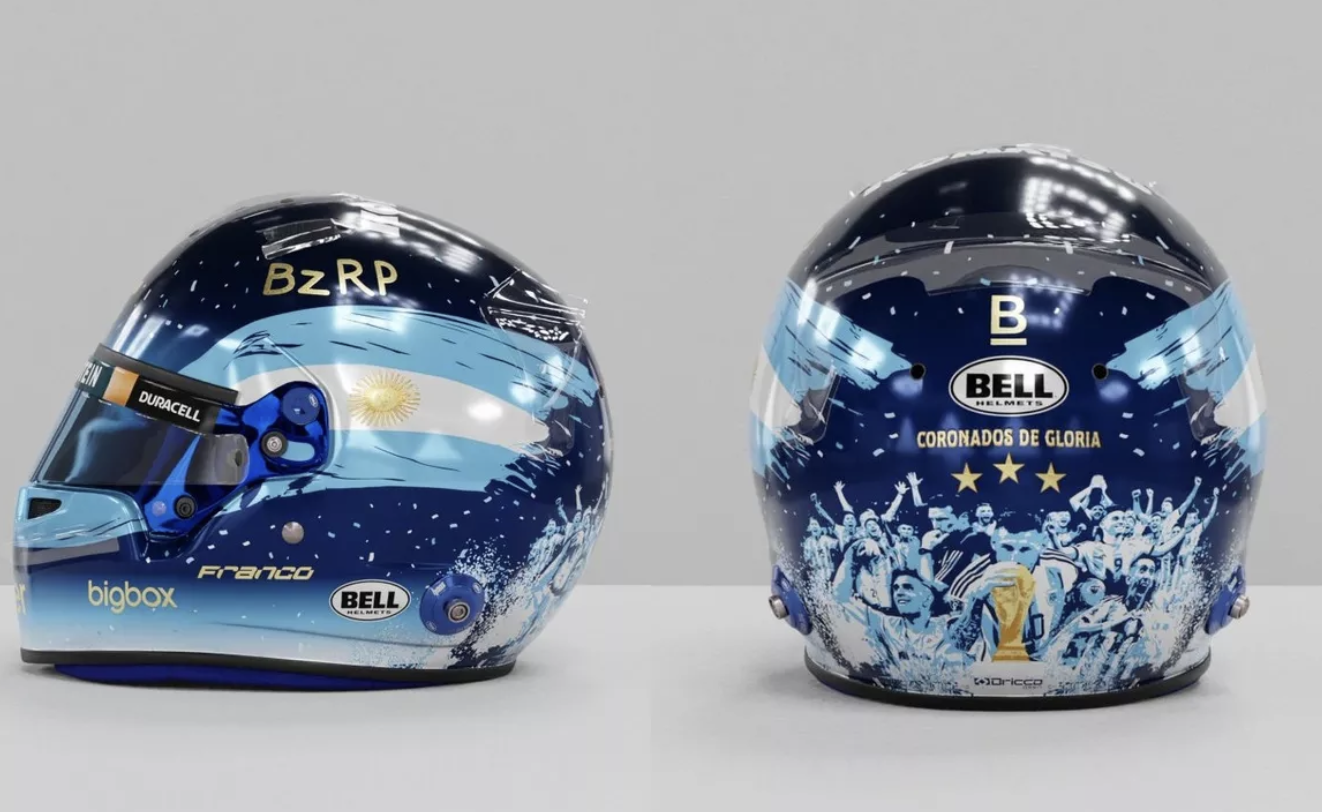
Franco Colapinto will don a special helmet at the Qatar Grand Prix, paying homage to the Argentine national team.
-
The helmet design features an image of Lionel Messi with the World Cup trophy.
-
Colapinto aims to return to the points zone after two challenging races in Brazil and Las Vegas.
-
His future in F1 for 2025 remains uncertain, adding pressure to his performance in Qatar.

IG: @infonegociosmiami
A Helmet that Speaks of Passion and Pride
Franco Colapinto, the promising Argentine driver for Williams, has chosen to carry his national pride onto the circuit in Doha. “I couldn't race in Qatar without bringing something special for you. I hope you like it and that it represents you well. Let’s aim for a good finish,” Colapinto expressed in an emotional message on social media. This helmet, adorned with an iconic image of Lionel Messi kissing the World Cup trophy, serves as a tangible symbol of the connection between motorsport and the fervent football culture that characterizes Argentina.
The Impact of F1 on Marketing and Brand Activation
Formula 1 has evolved into a laboratory of innovation where brands discover new ways to activate and engage with the public. “F1 is the most effective and disruptive school in the world. It understands that brands must activate, cross-promote, and create experiences rather than merely being passive actors,” comments a sports marketing expert. This approach has been crucial in attracting the attention of major companies seeking to partner with charismatic figures like Colapinto, who, in this context, is likened to Lionel Messi within the realm of motorsport.
Colapinto's Strategy: A Case Study
Facing pressure to secure a spot on the grid for the 2025 season, Colapinto arrives in Qatar with hopes of reversing his fortunes after challenging races in Brazil and Las Vegas. His helmet, more than just an accessory, becomes a communication tool that reinforces both his identity and that of his country. “The integration of cultural elements in F1 can be a key differentiator, creating emotional bonds with fans,” the specialist adds.
Argentine Culture in Motorsport
The bond between football and motorsport in Argentina is palpable. The triumph in the Qatar 2022 World Cup not only united the nation but also provided athletes the opportunity to carry that pride into other arenas, such as Formula 1. Colapinto's helmet design, which illustrates the heroes of the national team, exemplifies how athletes can utilize their platforms to celebrate their roots and connect with the audience on a deeper level.