More and more excitement in Miami, hosting seven matches in the FIFA World Cup 2026, including the third and fourth-place playoff: All you need to know.

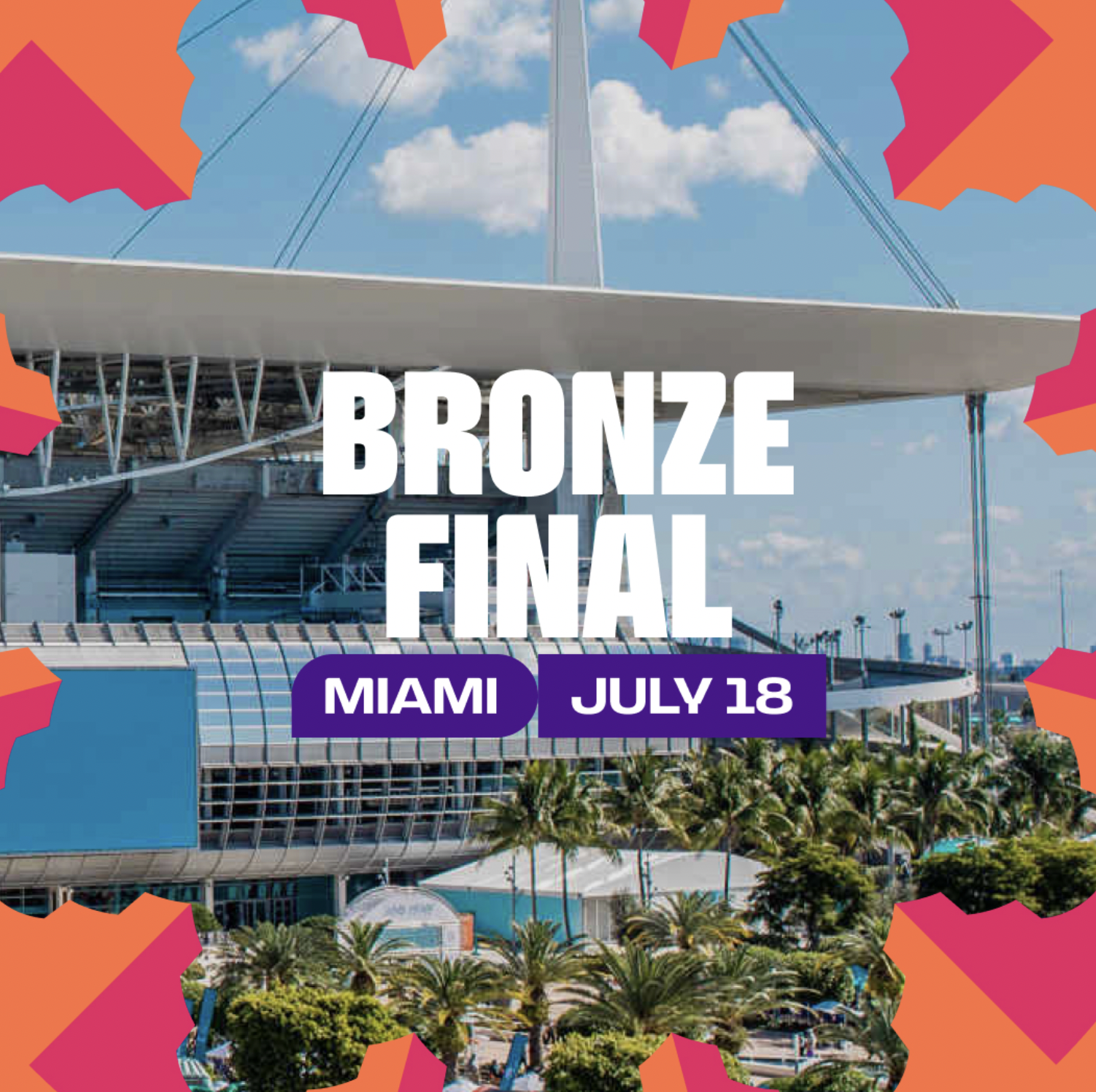
(By Ortega, Maqueda, and Estela Rotmistrovsky) The official schedule for the 2026 FIFA World Cup, the largest and most inclusive edition in history, has been announced, and Miami, one of the 16 host cities, has been selected to host a total of 7 matches in the premier international tournament. The Hard Rock Stadium in Miami Gardens, home of the Miami Dolphins and host venue for the annual Miami Open and Formula 1 Grand Prix, as well as chosen this year to host the final of the 48th edition of the Copa América, will host the third-place match or the Bronze Final, scheduled for July 18. 

Additionally, it will host four group stage matches (Monday, June 15; Sunday, June 21; Wednesday, June 24; and Saturday, June 27); a Round of 32 match on July 3; and a Quarterfinal match on July 11.
The 2026 FIFA World Cup will be the first edition to feature 48 teams instead of 32, with a total of 104 matches (up from 64), including 78 games in the United States and 13 in Mexico and Canada across 16 venues. The tournament's 16 venues will be distributed as follows: 11 in the United States, 3 in Mexico, and 2 in Canada. The format will consist of 12 groups of four teams each. The top two teams and the best eight third-placed teams will advance to the Round of 16. This means that the semi-finalists will play 8 matches, compared to the 7 played under the old system.
Where will the opening match of the 2026 FIFA World Cup be played? The opening match of the 2026 FIFA World Cup will take place at the iconic Estadio Azteca in Mexico City, which will become the only venue to have hosted matches in three different World Cups in the nearly 100-year history of the tournament. According to tradition, this match will feature the Mexican national team as the protagonist, awaiting the opponent determined by draw. This first match is scheduled for Thursday, June 11, 2026.
Where will the final of the 2026 FIFA World Cup be played? The venue hosting the grand final of the 2026 FIFA World Cup will be the MetLife Stadium in New York/New Jersey on Sunday, July 19, 2026. The stadium, with a capacity of 82,500 people, home to the New York Giants and New York Nets, will host a total of eight matches, including 5 in the group stage, one in the Round of 32, one in the Round of 16, and, of course, the final.
Additional key information (Highlights of the 2026 FIFA World Cup calendar) The first match to be played in Canada, hosting its first World Cup, will take place on June 12 at the BMO Field in Toronto. 

Action in the United States, hosting the World Cup for the second time, will kick off at the SoFi Stadium in Los Angeles on the same day. In other words, the 2026 FIFA World Cup will have "three opening matches". Mexico, Canada, and the United States are guaranteed to play their three group stage matches at home. 

The semi-finals will be held in Atlanta and Dallas, and the third-place match will be in Miami. Dallas will host the most matches, with 9 including one of the semi-finals. 
This is a consolation prize as the AT&T Stadium was initially earmarked to be selected for the final. The innovative schedule design ensures that teams enjoy three days of rest before 103 of the 104 tournament matches. Most matches will be concentrated in the East, Central, and West regions to save travel for both teams and fans.


NFL 2026: por qué el fútbol americano (el deporte y sus valores) importa más que nunca (y por qué el show de medio tiempo es lo de menos)

(Por Maqueda, Taylor, Ortega y Maurizio) En 2026, cuando el Super Bowl es también un fenómeno de entretenimiento global, conviene defender una idea simple y casi contracultural: lo más relevante del fútbol americano no es lo que pasa en el escenario del entretiempo, sino lo que pasa en el campo… y lo que ese campo ha enseñado durante más de un siglo sobre la cultura competitiva de Estados Unidos. 

Lectura de alto valor estratégico, 4 minutos de lectura, material idea para compartir)

Adrenalina y estrés: un cóctel peligroso (¿qué tipo de personalidad y qué tipo de organización fomentan este común flagelo?)

(Por la Dra. Sonia Abadi, una cocreación para la prestigiosa comunidad Beyond en colaboración con Infonegocios Miami) Creemos que la adrenalina es energía, excitación, motivación. En realidad, la adrenalina es la hormona de la lucha y, por lo tanto, una respuesta física ante situaciones que producen miedo. 

(Lectura de alto valor estratégico, 4 minutos de lectura, material idea para compartir)

Jurassic Park y el WiFi (Xfinity) "funciona" en el Super Bowl LIX: la nostalgia se convierte en el ecosistema phydigital más ambicioso de 2026

(Por Maqueda-Taylor-Maurizio) Hay un momento en la historia de la publicidad donde un spot deja de ser un spot. Donde un anuncio de 60 segundos se transforma en un organismo vivo que respira en calles, pantallas, algoritmos, conversaciones y emociones colectivas. 

 (Lectura de alto valor estratégico, 4 minutos de lectura, material idea para compartir)

Super Bowl LX: la masterclass de estrategia que todos debemos aprender para el 2026 (y aplicarla en los negocios)

(Taylor-Ortega, colaboración Maurizio) Bajo las luces del Levi's Stadium, no se coronó solo a un campeón de la NFL. Se escribió el manual de una nueva era, donde la estrategia pura, ejecutada con precisión quirúrgica por una defensa joven (Cross de experiencia, muchas capacidades, juventud y mucho trabajo de equipo) derrotó a la tradición, “técnica” y fuerza.

(Lectura de alto valor estratégico, 4 minutos de lectura, material idea para compartir)

Super Bowl LIX: Bad Bunny cayó en audiencias en TV y no rompió los récords de Usher y Kendrick Lamar, ni MJ (¿por qué medios dijeron lo contrario?)

(Por Maqueda-Maurizio-Taylor) Los datos finales de Nielsen para el Halftime Show del Super Bowl LIX son una cápsula de verdad en un mar de hipérbole digital. 128.2 millones de espectadores. No es un récord. Es, de hecho, una caída de 5.3 millones respecto al pico de 133.5 millones de 2025. 

(Lectura de alto valor estratégico, 4 minutos de lectura, material ideal para compartir)

El "Billionaire Bunker" no es una moda, es una estrategia geopolítica de élite (el manual no escrito al que se suscribe Zuckerberg)

(Por Taylor desde Silicon Beach, edición Maurizio) Cuando Mark Zuckerberg compra una propiedad en Indian Creek Village —esa isla privada de 41 mansiones apodada "Billionaire Bunker"— no está comprando una casa. Está adquiriendo una opción estratégica en el tablero geopolítico del capital global. Y con él, se completa una trinidad sagrada: Bezos (Amazon), Page (Google), Zuckerberg (Meta). Los tres fundadores del ecosistema digital que define el siglo XXI ahora tienen su búnker en el mismo kilómetro cuadrado de Florida.

(Lectura de valor, 4 minutos de lectura, material idea para compartir)

Inter Miami CF se corona como el club más valioso de la MLS (valuación histórica de U$$ 1.450 millones)

(Por ORTEGA) Inter Miami CF no solo hace historia en la cancha. Según Sportico, medio especializado en valuaciones deportivas a nivel global, la franquicia de Florida se consolida como el club más valioso de la Major League Soccer (MLS), con una valoración récord de USD$ 1.450 millones, marcando un crecimiento interanual del 22%, el más alto de la liga.

(Lectura de valor, 3 minutos de lectura, material idea para compartir)

Kylie Jenner y SKIMS: por qué esta campaña no es solo moda (una muestra más de la compleja era de las colaboraciones, phigitalidad y ecosistemas de marca)

(Por Vera- Rotmistrovsky y Maurizio) Esta colaboración, aparentemente sencilla, es en realidad un caso de estudio en estrategia de expansión de categorías, uso inteligente de celebridades y –sobre todo– una lección magistral en cómo conectar lo físico y lo digital en la mente del consumidor.

(Lectura de valor, 4 minutos de lectura, material idea para compartir)

El gran error estratégico que la mayoría de marcas comenten (y que otras como Ferrari, Adidas, Mercedes y LVMH, corrigieron)

(Por Maurizio y Maqueda) Entre 2015 y 2020, una generación de marketineros —sobreestimulados por la fiebre de las métricas digitales— cometió uno de los errores estratégicos más costosos de la historia del mundo de los negocios: declarar muerto el marketing experiencial y físico. 

(Lectura de valor, 4 minutos de lectura, material idea para compartir)