-
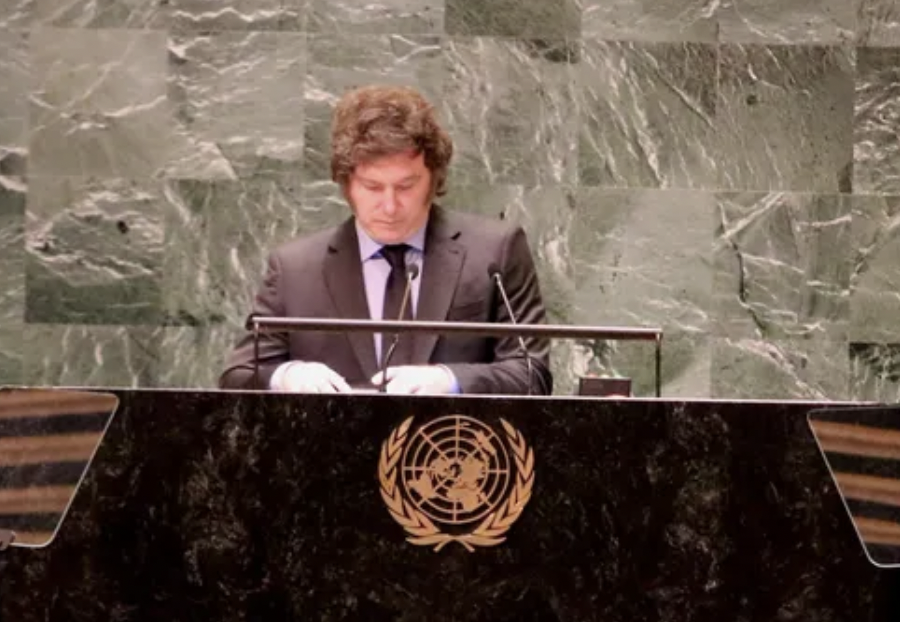
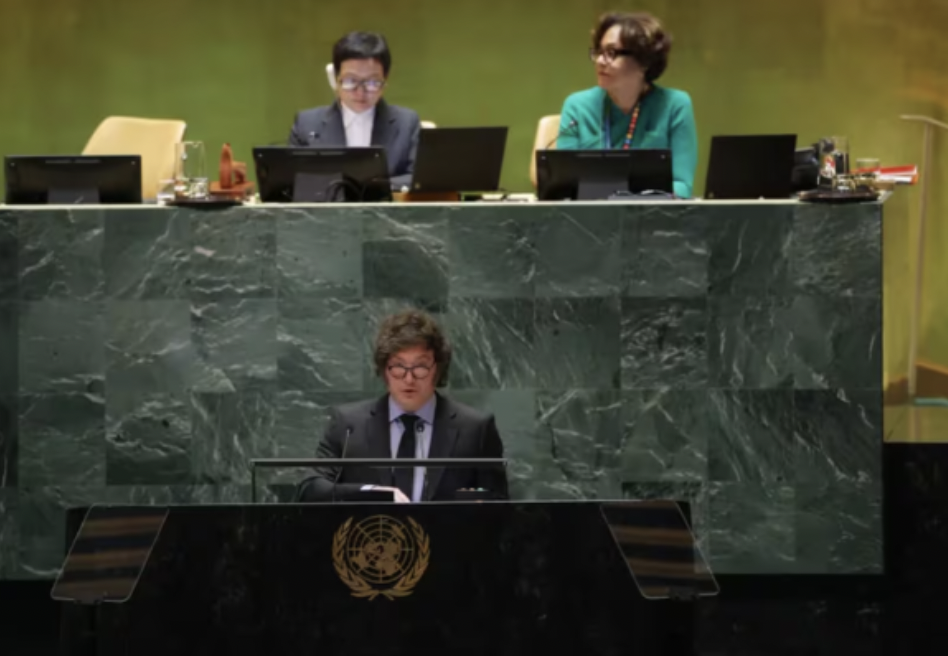
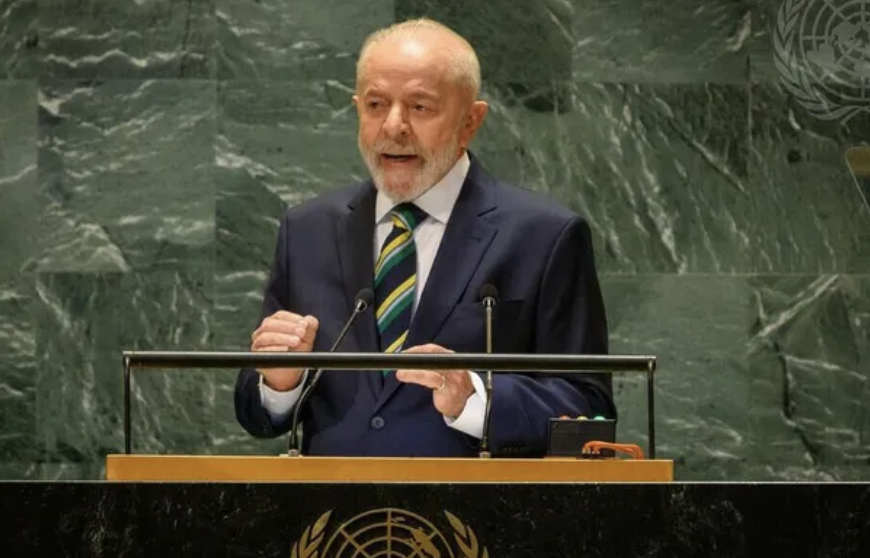
Clearly, his speech captured the world’s attention, and beyond supporters and detractors, the solidity and clarity of his vision (highly empathetic to the silent majority) took center stage. While Petro and Lula continue with dogmatic and denialist rhetoric rooted in ideology, Milei proposes realism, pragmatism, and authenticity that even impacts those who disagree with him on a reflective level.
-
Milei's political proposal does not entail denying truth and evidence; rather, it aims to saturate the discourse with irrevocable evidence, from which the ideas of freedom are generated, presented, exemplified, and demonstrated—not as mere postures, but as essential, drastic, clear, and real, akin to the science of managing states (referring to "Estadismo" versus the "Estatismo" proposed by socialism) and positively impacting nations and individuals socioeconomically based on knowledge of economics, administration, and social psychology.
The difference between "estadista" and "estatista" lies in their meaning and use within the political context:
Estadista: Refers to a person possessing leadership skills and qualities within the realm of political administration. An estadista acts responsibly and with vision in managing public affairs, seeking the general welfare through the optimization of state resources. This term is often associated with leaders who have demonstrated the capacity to effectively and ethically guide the state. (Excellence)
Estatista: This term describes someone who supports the ideology of "estatismo," advocating for an active and interventionist role of the state in the economy and social life. An estatista tends to favor policies that involve greater regulation and state control, typically advocating for the state to have increasing resources and power.
In summary, while an "estadista" focuses on skill and leadership in politics, ensuring coherence in the use of public resources to enhance freedoms and the common good, based on the accumulation of individual prosperities, an "estatista" emphasizes the belief in state intervention across various aspects of social and economic life, concentrating resources within the state for equitable distribution.
Strategic Analysis of Javier Milei's Speech at the UN: Key Points and Geopolitical Critiques
In his first intervention at the 79th General Assembly of the UN, Javier Milei, the new Argentine president, delivered a powerful speech that not only criticized the multilateral organization but also established a clear stance on national sovereignty and global interventionism. Below are the key points of the speech, structured as a geopolitical strategic analysis.
Context:
Javier Milei's speech at the UN stands as a political manifesto advocating for national sovereignty, critiquing international bureaucracy, and defending an economic model based on individual freedom. His stance challenges the current international order and raises questions about the future of multilateralism in an increasingly polarized world. With a focus on freedom as the guiding principle, Milei positions himself as a leader seeking to redefine Argentina's relationship with global institutions while inviting other countries to join his cause.
“We have transitioned from an organization that pursued peace to one that imposes an ideological agenda.”
-
Historical Review of the UN
Milei began his speech by acknowledging the historical context that led to the establishment of the UN, emphasizing its original mission of preserving peace after World War II. This reference underpins his critique of the institutional deviation that, in his view, has caused the UN to lose its way.
2. Critique of the “2030 Agenda”
The Argentine president dismissed the 2030 Agenda, labeling it a "socialist government program." Milei argues that this agenda, although well-intentioned, compromises state sovereignty and seeks to impose a supranational governance model that undermines fundamental rights such as freedom and property. This assertion reflects a clear opposition to global policies that, in his opinion, restrict the autonomy of nations.
-
A Supranational Governance Program
Milei characterizes the 2030 Agenda as a "socialist government program." He contends that the proposed goals, albeit well-meaning, do not address the root causes of the problems they aim to solve. Instead, they perpetuate systems that restrict freedom and individual development.
3. Transformation of the UN into a “Leviathan”
Milei described the UN as a "Leviathan with multiple tentacles," seeking to dictate not only policies but also lifestyles to citizens around the globe. This metaphor underscores his view of an entity that has become excessively bureaucratic and distanced from its foundational principles.
-
The Ideological Transformation
The Argentine president argues that the UN has mutated from a forum dedicated to dialogue and the peaceful resolution of conflicts into a "Leviathan" attempting to impose an ideological agenda. This shift, according to Milei, is reflected in the 2030 Agenda, which he contends is nothing more than a means to intervene in the sovereignty of nation-states, suggesting that solutions to complex problems must be imposed by a supranational entity.
4. Double Standards in Human Rights
The Argentine president denounced the hypocrisy in the composition of the Human Rights Council, pointing out that dictatorial regimes like Cuba and Venezuela can be part of this body without being questioned. This highlights a broader critique regarding the lack of coherence and the double standards that, according to Milei, characterize the UN in its defense of human rights.
-
One of Milei’s most critical points is the composition of the UN Human Rights Council, which includes authoritarian regimes that perpetuate systematic human rights violations. This double standard undermines the credibility of the UN and raises the question: does it truly defend human rights, or does it use them as a tool for political pressure?
"What about Maduro, Venezuela, and perhaps the most pathetic, cynical, and representative case of the falsehood and incoherence of ideological fanaticism?"
5. The False Pursuit of Equality
The president maintains that the pursuit of equality through imposed legislation only deepens existing inequalities. According to him, history has shown that prosperity is achieved by limiting the power of the state and ensuring individual rights.
6. Rejection of Interventionist Economic Policies
From an economic perspective, Milei argued that the policies promoted by the UN have resulted in interventionism that hinders the growth of developing countries. This approach aligns with his libertarian ideology, which advocates for economic freedom and the right of nations to manage their own resources without external impositions.
-
Milei also criticizes the economic policies promoted by the UN, which, from his perspective, are interventionist and detrimental to developing countries. This raises an important dilemma: how can nations…
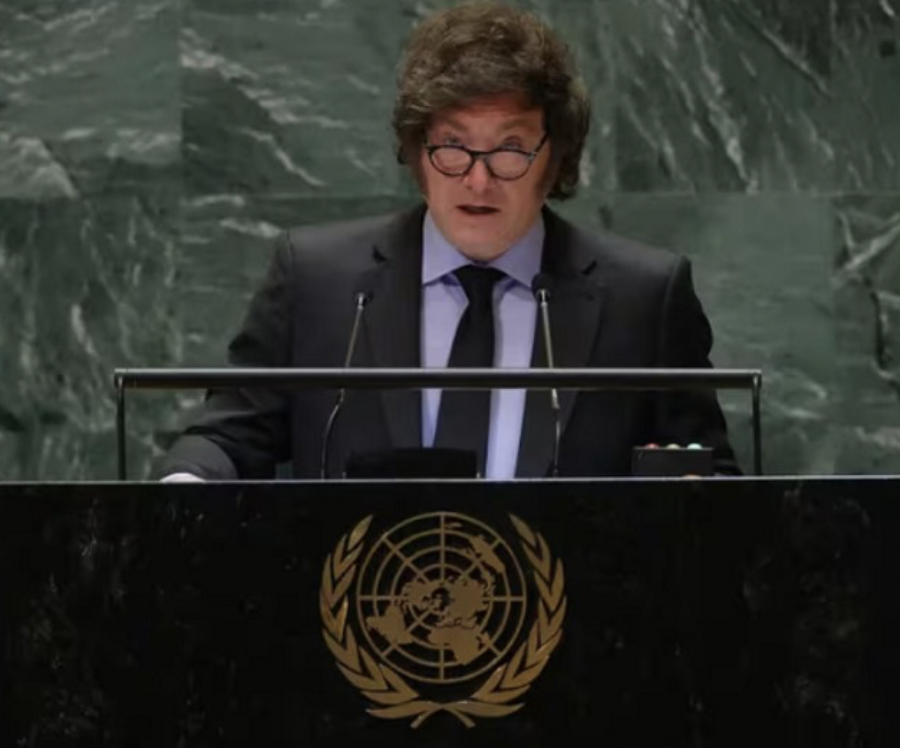
Clear and Assertive Critique of the 2030 Agenda
Call to Action
-
Towards the end of his speech, Milei called on UN members to reconsider the organization's direction. His message was clear: Argentina is undergoing a transformation towards freedom and the defense of individual rights, seeking to disengage from policies he deems harmful.
The discussion on climate change has been a focal point for the 2030 Agenda. Milei criticizes regulations that, in his view, limit the economic development of developing countries, rendering them "perpetual debtors" to global elites.
-
His stance becomes a crucial topic for understanding the future of international diplomacy and the role of multilateral organizations. This article delves into Milei's words, their context, and the implications of his rejection of the 2030 Agenda.

-
Infonegocios RED: 4.5 million Anglophone Latinos reading business news daily.
-
Sign Up for Free: Register and receive our newsletter by simply leaving your email and name here. (https://infonegocios.miami/suscribite-al-newsletter)

-
IG: @infonegociosmiami
