

Yet when we launch a new project, we often aspire to join an influential circle, hoping for favors, advantages, or benefits. And if we want to grow our venture or company, we look to secure the backing of that capital of high‑value contacts. Those are guarded, kept in reserve, and not overused—because once you tap them, it’s not easy to go back.
-
So if we’re in the early stage and need help, we hold back from calling them until the project has its final shape, so as not to inconvenience them. Nor do we share or lend our contacts to others—they might “burn” them. The Silver Bullet effect is saved for a single impact.
-
Imagine we meet someone we’d like to approach with a project and we rush to hand over our card, expecting them to reach out. Instead of a paper rectangle destined for a pile of identical items, if we generate a field of interest—exchanging ideas and seeking affinities—we’ll remain floating in their mental network for days.
-
All we need is to wait for the right time and place, when some association of ideas brings our conversation back to mind. And there’s no doubt they’ll find a way to reach us.
Once, at the end of one of my talks, a CEO approached me for my business card.
That day I wasn’t carrying any. He was annoyed—he wanted to hire me for a training session. I sensed that, being very formal, he found me unserious for not having a card. “How can I find you?” he pressed. “Tell me how I can hide,” I replied. Within a month, via one of the networks, he got in touch.
-
Being “discovered” adds extra value to the relationship—bringing that touch of magic that always accompanies a true find.
-
Perhaps we need to change perspective and remember that, in both real and virtual spheres, in human networks the one who wins is the one who contributes most—not the one who takes the most. Ask “what do I have to give?” instead of “what can I get or ask for?”
-
Experts on human network dynamics in the U.S. say it takes eight interactions with someone before you’re in a position to ask for something. And how many interactions to offer something to the other person? Just one.
-
Let’s be generous—and assume our cultures are more convivial. Maybe four interactions suffice? Even then, offering will be four times more powerful than asking.
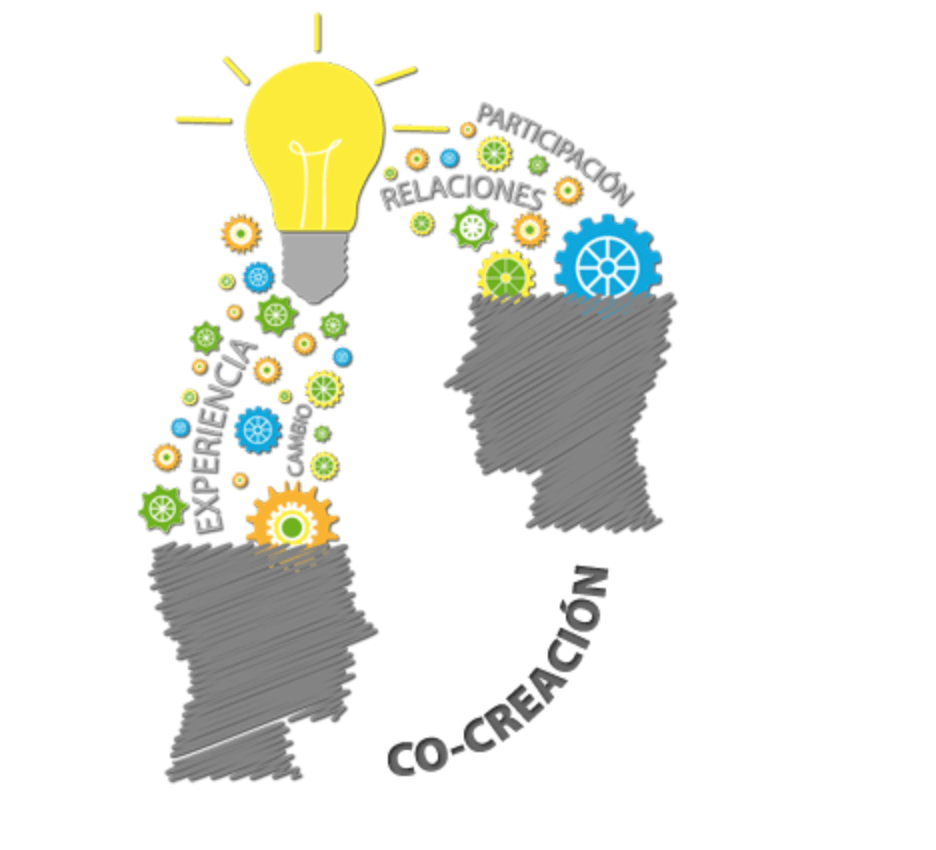
What can we offer?
Knowledge, ideas, introductions, contacts—anything that adds value for the other.
-
Informal connections—friends, teammates, fellow travelers, friends‑of‑friends—work differently. These ties, always interesting, have a particular quality: the more we activate them, the more vital and dynamic they become. We’re better off sharing them—even lending them—because that’s how they grow stronger.
-
We can act as bridges, facilitators, matchmakers, between two or more people. We can also share an early‑stage project and draw on others’ ideas and suggestions to improve it—just as we can contribute selflessly to someone else’s project with our own ideas, resources, and connections.
-
This availability is gratifying, but it also gives us a sense of belonging and a reputation that will attract others who may want to collaborate on our projects.
What do we gain?
-
We become known, remembered, and kept in mind. And by serving as intermediaries, we position ourselves as connectors—nodes that connect others to one another.
-
But it’s not only about amassing varied, informal connections. It’s about understanding where the possible ties run—between ideas, people, and projects—and setting them in motion.
-
To do that, we need to create a weave, to knit bonds, to connect our people and their ideas not only with us, but also among themselves.
-
Does this way of being in the world make us better? More generous? More supportive? Without a doubt. More importantly, it makes us part of the new collaborative paradigm—where the most valuable person isn’t the one who has the most, but the one who contributes most to the commons. And it positions us, in our social and professional worlds, as attractive, convening, and respected nodes.
-
Hoarding contacts or ideas belongs to an old frontier logic: what’s mine must be guarded so it isn’t stolen. Sharing connections and co‑creating belongs to network logic: what is shared multiplies, revitalizes, and grows.
Network thinking promotes and enables connective thinking and collaborative work. Today we know this way of moving and thinking is not only interesting as an experience; it’s also how innovation is generated in our lives, professions, and enterprises.
-
People in networks don’t hunt for contacts—they weave formal and informal connections. In doing so, they find, offer, exchange, capitalize, and generate mid‑ and long‑term resources for specific and diverse purposes alike.
-
We need to practice a new style of networking—open to opportunity beyond the traffic of influence and contacts of convenience. A style nourished by affinities, unexpected coincidences, emotional rapport, and shared values.
-
And the most surprising aspect of this approach is that we encounter ideas and people that are not the consequence of what we’re seeking now—but the origin of a project we hadn’t yet imagined.

Sonia Abadi, physician, psychoanalyst, creator of the Network Thinking model, and author of “La prodigiosa trama. Variaciones en clave de red”
This content is a co‑creation with the esteemed Beyond community.
© 2025 Infonegocios Miami. All rights reserved.
Read Smart, Be Smarter!
https://infonegocios.miami/suscribite-al-newsletter
-
For editorial and content inquiries at Infonegocios Miami, write to [email protected]
Infonegocios NETWORK: 4.5 million Anglo‑Latinos united by a passion for business.
Join us and stay informed










Tu opinión enriquece este artículo: