
The Collapse of the Fortress Model: When Walls Become Graves
-
For decades, companies operated under a paradigm now recognized as slow strategic suicide: innovation in isolation. Hermetically sealed labs. R&D departments as intellectual bunkers. Customers kept at arm’s length, reduced to demographics in PowerPoint decks. Competitors demonized. Startups ignored until it was too late.
-
This model—which business strategist Henry Chesbrough calls “closed innovation”—was admirable in the 20th century, when knowledge was scarce, information traveled slowly, and entry barriers were financial mountains. But in 2025, this approach isn’t obsolete: it’s lethal.
-
The pace of technological change, the democratization of knowledge, audience fragmentation, and the rise of what he called “liquid consumer expectations” have transformed isolated innovation from a competitive advantage into a death sentence.
-
The numbers are brutally clear: according to a 2024 McKinsey study, companies operating under closed-innovation models experience about 34% lower annual growth than those adopting co-creation ecosystems. Even more devastating: 62% of Fortune 500 firms from two decades ago no longer exist, largely victims of their inability to evolve beyond their own mental borders.

Co-Creation as an Operating System: It’s Not a Tactic, It’s Architecture
-
What we are witnessing is not merely the popularization of a marketing technique; it’s the fundamental reorganization of how value is created in the global economy. Co-creation represents a paradigm shift comparable to the industrial revolution or the invention of the internet: it is civilizational infrastructure, not management fashion.
-
The late professor C.K. Prahalad and Venkat Ramashwamy, who coined “co-creation” in The Future of Competition (2004), defined it as “the practice of developing products, services and experiences in conjunction with consumers, creating mutually beneficial value.” But this definition, prophetic at the time, now proves insufficient.
-
In 2025, co-creation has evolved into what I call “ecosystem orchestration”: the ability of an organization to function as the conductor of an orchestra of heterogeneous actors—customers, competitors, startups, academics, artists, even smart machines—all contributing simultaneously to value creation.
The Critical Role of the Head of Culture: The Architect of the Brand Universe
-
Here lies the most important question any CEO should ask in 2025: Does your organization have a Head of Culture? Not a Chief Marketing Officer with added cultural responsibilities. Not a Community Manager with an inflated budget. A true Head of Culture: a strategist who understands that brands no longer compete for market share but for cultural relevance.
-
Grant McCracken, cultural anthropologist and author of Chief Culture Officer, argues that these positions are “the corporate early warning system, detecting tectonic shifts in consumer behavior before they’re evident to traditional departments.” But the Head of Culture of the modern phygital ecosystem is much more: a “universe builder.” This role requires unprecedented competencies:
-
Applied anthropology: Ability to decode emergent subcultures before they go mainstream
-
Collaboration orchestration: Skill to identify and activate non-obvious partnerships that generate exponential value
-
Phygital bilingualism: Absolute fluency navigating between physical and digital experiences as a frictionless continuum
-
Cross-sector sensitivity: Ability to see connections between seemingly unrelated industries
-
Ecosystem thinking: Understanding that each collaboration is not a transaction but a node in a living network

Crossing Marketing: The Alchemy of Turning Competitors into Co-Creators
The term “crossing marketing” is only beginning to permeate corporate vocabulary, but it represents one of the decade’s most disruptive practices. Unlike traditional co-marketing (where complementary brands promote each other), crossing marketing involves collaborations that appear impossible but redefine entire categories.
Consider the archetypal cases:
BMW Co-Creation Lab (active since 2010) not only invites automotive enthusiasts to weigh in; it has generated 67 innovations implemented in production models, from interface systems to sustainable materials. More revealing: 31% of the most disruptive ideas came from people without an automotive engineering background—dentists, musicians, architects contributing perspectives that BMW engineers, by their own expertise, couldn’t conceive.
-
This illustrates what cognitive psychologist Gary Klein calls “the curse of expertise”: the more you know about a domain, the more blind you become to nonconventional solutions. Co-creation is the organizational antidote to this blindness.
IKEA Co-Create: The Swedish giant has completely transformed its operating model. Its co-creation platform involves consumers in three critical phases:
-
Ethnographic exploration: They don’t ask what furniture you want; they observe how you live, documenting unarticulated needs. This is business anthropology: studying humans in their natural habitat.
-
Collaborative prototyping: Customers don’t just comment on designs; they literally build physical prototypes in workshops facilitated by IKEA designers. This “thinking with your hands” unlocks insights unattainable via surveys.
-
Iterative feedback: Community voting determines what goes into production. Democracy applied to retail, but with a twist: IKEA retains final veto, balancing popular desire with business viability.
-
Result: products with 43% higher adoption rates compared with internally developed lines, and a cohort of co-creators who function as organic evangelists because they have emotional ownership in the product.
LEGO Ideas: Perhaps the most perfected case of co-creation as a business model. Its platform isn’t content marketing in disguise; it’s radical ideation outsourcing with brilliantly designed incentives.
The process is commercial Darwinism at work:
-
Anyone can upload a LEGO set design
-
If it reaches 10,000 community votes, it enters professional review
-
If produced, the creator receives 1% of net sales
This generates multiple simultaneous effects:
-
Infinite pipeline of ideas with no fixed R&D cost
-
Pre-production market validation: 10,000 votes equal 10,000 potential customers confirmed
-
Organic viral marketing: Creators mobilize their social networks to vote, generating free exposure
-
Authentic storytelling: Each set has a real human story behind it, multiplying its emotional value
LEGO Ideas has produced 41 commercial sets since its launch, generating roughly USD 280 million in direct sales and immeasurable value in brand equity and community engagement.
PR Newswire + Instituto Lafis: The Alchemy of Cross-Data
The alliance between PR Newswire (global leader in media intelligence) and Instituto Lafis (specialist in financial analysis) represents a different category of co-creation: data-fusion partnerships. By unifying media exposure data with brand-reputation indicators, they created a composite metric that no single organization could develop alone. This is value creation through complementarity: 1+1 ≠ 2, but 5.
This kind of collaboration is particularly powerful because:
-
They eliminate information silos that block holistic insights
-
They create entry barriers for competitors (to replicate, you’d need access to both datasets)
-
They generate network effects: more users contribute more data, improving the product for everyone

The Phygital Ecosystem: Where Physical and Digital Merge into a Total Experience
The term “phygital”—a portmanteau of physical and digital—has become dangerously trendy, used indiscriminately to describe any experience that involves a…
An Authentic Phygital Ecosystem Has Five Criteria
-
Seamless Continuity: The experience flows frictionlessly between physical and digital dimensions. Starting an interaction on a smartphone and continuing it in a physical store without losing context.
-
Bidirectional Data Flow: Physical actions generate digital data; digital insights inform physical experiences. It’s a perpetual loop of optimization.
-
Dimension-Agnostic Value: Value resides not in a single channel but in the total system. Removing any component disproportionately degrades the entire experience.
-
Personalization at Scale: The capability to deliver individualized experiences to millions simultaneously, something impossible in purely physical or purely digital worlds.
-
Emergent Properties: The ecosystem generates behaviors and values that couldn’t be predicted by looking at isolated components. It’s truly more than the sum of its parts.
-
Companies that master this — Nike with its app ecosystem + flagship stores + membership program; Starbucks with mobile ordering + rewards + third-place experience — aren’t doing multichannel marketing. They’re building habitable brand universes.
-
The Brand Universe: Your Company as an Alternate Reality
-
Here lies the most advanced concept in contemporary brand strategy: the brand universe. It’s not a logo with guidelines; it’s a complete cosmology with its own physics, native inhabitants, and interaction rules.
Successful brand universes share these characteristics:
-
Deep Lore: Rich narratives that transcend individual products (the Marvel Cinematic Universe, Star Wars, even Apple with its mythology of innovation)
-
Aspirational Membership: Belonging conveys something specific about who you are
-
Distinct Language: Vocabulary, aesthetics, and tone identifiable at a glance
-
In-house Economy: Value systems (points, levels, exclusive access) that function as currency
-
Expanding Territory: Ability to grow into new categories while maintaining coherence
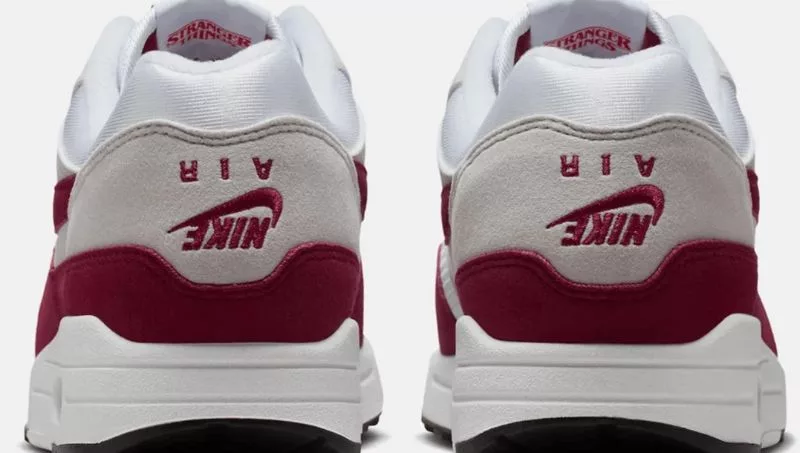
Stranger Things (analyzed earlier) is the most perfect contemporary example: a brand universe that generates USD 3.2 billion in derivative economic value, extending to 300+ collaborations without diluting its identity.
The Existential Question: Is Your Company Bold Enough?
Here’s the uncomfortable truth most organizations avoid: true co-creation requires relinquishing control.
It implies accepting that:
-
Customers may have better ideas than your internal teams
-
Competitors can be more valuable collaborators than traditional allies
-
Startups with 1/1000th of your budget can innovate faster
-
Shared intellectual property can generate more value than monopolized IP
-
Public failure of co-creation experiments is part of the process
Most corporations say they want innovation but operate with decision architectures that prevent it. They want the benefits of co-creation without the risks of real partnerships.
The Imperative of the Century: Evolve or Perish
-
We aren’t in an era of change; we are in a change of eras. Co-creation, phygital ecosystems, and brand universes are not optional trends to test in a low-risk pilot. They are the fundamental operating system of how commerce works in the 21st century.
-
The companies that will survive the next two decades are those that understand innovation no longer happens inside their walls; it happens in the spaces between organizations, in unexpected collaborations, at the intersections of industries, and in the collective intelligence of diverse ecosystems.
-
The question isn’t whether your company has resources to invest in co-creation. The question is: can you afford not to?
-
Because in a world where LEGO builds sets from fans’ minds, where IKEA designs furniture with homemakers, where BMW innovates with dentists, the company that believes it has all the answers internally is already dead.
It’s just not aware of it yet.
-
The future belongs not to those who own more resources, but to those who orchestrate ecosystems best.
Do you have a Head of Culture building your brand universe? If the answer is no, you’re already competing with one hand tied behind your back.
The clock isn’t running. Time has run out.
Read Smart, Be Smarter!
Infonegocios Miami: a publication written by the Anglolatina business community.
Follow for more analysis: @InfonegociosMiami
https://infonegocios.miami/suscribite-al-newsletter
Contact: [email protected]
Infonegocios NETWORK: 4.5 million Anglo‑Latinos united by a passion for business.
Join us and stay informed.
Infonegocios Miami—Economic, Cultural, and Business Intelligence with a Global Lens
Follow for more analysis: @InfonegociosMiami
© 2025 Infonegocios Miami.









Tu opinión enriquece este artículo: