50 years since the first mobile phone call, who is the market leader today?

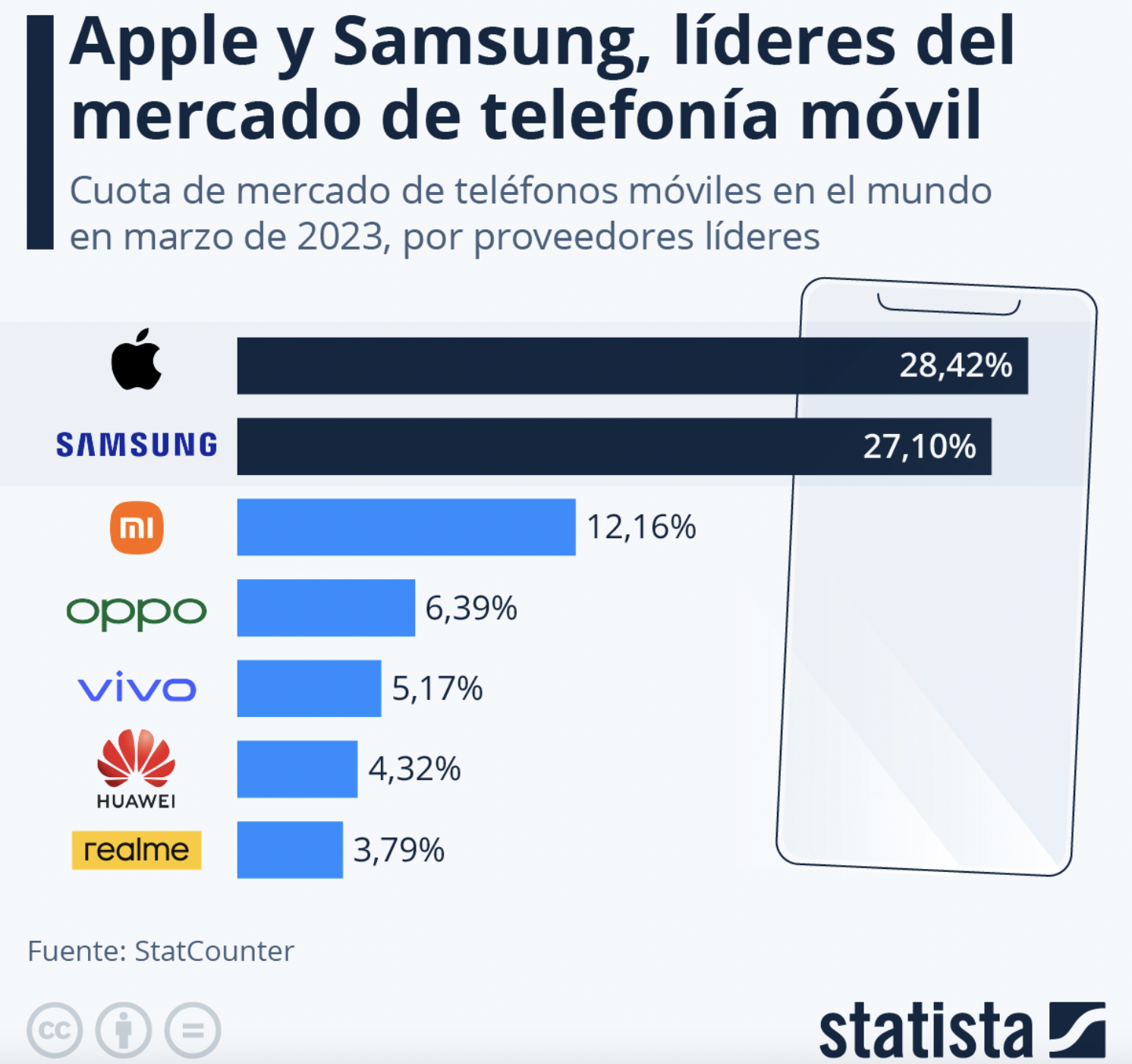
(By Dino Dal Molin, Bizit Global, in co-creation with Marcelo Maurizio) For several years now, Apple and Samsung have led the mobile phone market. As we celebrate the 50th anniversary of the first mobile phone call made by Martin Cooper, it is worth recognizing the significant impact these two companies have had on the industry. From innovative designs to cutting-edge technology, Apple and Samsung have consistently pushed the boundaries of what is possible with mobile devices. 

It will be interesting to see how the market evolves in the coming years and whether new challengers will emerge to disrupt the dominance of these two technological titans. Xiaomi has consolidated its position in third place. What is the distribution of Android and IOS in the world? We share a very interesting and useful report.
The reason behind the success of these three brands can be attributed to several factors:

Firstly, both manufacturers have achieved great brand loyalty among consumers. Apple has created an iconic brand with its sleek design and innovative features, while Samsung has gained popularity thanks to its wide range of models and advanced technology. Customers trust these brands because they have demonstrated consistency in quality and user experience in their devices.

All information is based on data provided by the prestigious research site (Statista.com)

Secondly, Apple and Samsung have invested a lot of resources in research and development, allowing them to create new products and features. Additionally, both companies have strong control over their software ecosystems, allowing them to seamlessly integrate their devices with other brand products and services. For example, Apple users can access their integrated product and service ecosystem, such as iCloud, Apple Music, Apple Pay, and others.
On the other hand, Xiaomi has managed to enter the competition thanks to its focus on the quality-price ratio. This brand has managed to offer high-quality devices at affordable prices, making it very popular in emerging markets such as India, where Xiaomi is the market leader in mobile phones. In addition, Xiaomi has shown innovation in the design of its devices and user experience, offering unique features and services that attract consumers.

However, competition in the mobile phone market is fierce. Many emerging brands are trying to take a share of the market from Apple and Samsung, such as Oppo, Vivo, Huawei, and Realme. These brands are investing in advertising, marketing, and technology to attract consumers and create a presence in the market. Although these brands do not have the same market share as Apple and Samsung, they are gaining ground and represent a potential threat in the future.
 

It is important to note that the mobile phone market is constantly evolving. Manufacturers must be aware of trends and changes in consumer preferences to remain relevant. Innovation and product quality are key to long-term success in this industry.
Apple and Samsung continue to dominate the global mobile phone market, consolidating their positions as the undisputed leaders in the industry. According to the latest data from StatCounter, as of March 2023, the two technological giants jointly hold over half of the market share (55.52%). Xiaomi ranks a distant third, with a market share of 12.16%.

Oppo, Vivo, Huawei, and Realme complete the top seven global mobile phone providers, each with a significant share of the market. However, it is clear that Apple and Samsung have established themselves as the preferred brands by consumers worldwide.

Tu opinión enriquece este artículo:

Superstar 2.0: Adidas Originals reescribe la cultura streetwear con una hiper campaña global que trasciende el fútbol (Miami queda fascinada)

(Por Maurizio y Maqueda) Campaña cinematográfica dirigida por Thibaut Grevet y protagonizada por figuras globales de música, moda y deporte: Samuel L. Jackson (narrador), Kendall Jenner, Jennie de BLACKPINK, Lamine Yamal, Baby Keem, James Harden, Tyshawn Jones y Olivia Dean.

(Lectura de valor, 4 minutos de lectura, material idea para compartir)

El mundo analiza el “algoritmo Messi”: cómo Inter Miami convirtió un 0-2 en un éxito en todo sentido (el verdadero negocio es la remontada)

(Por Ortega - desde Orlando -, con Maurizio) En la MLS 2026, ganar un clásico no es solo sumar tres puntos: es dominar la conversación. Y eso fue exactamente lo que hizo Inter Miami en Orlando: pasó de un 0-2 en media hora a un 4-2 que reescribe el Clásico de Florida y, sobre todo, deja una señal estratégica para toda la liga

(Lectura de valor, 4 minutos de lectura, material idea para compartir)

La mansión del futuro: te mostramos de forma exclusiva el interior de la nueva residencia de Zuckerberg y Chan en Miami

(Por Taylor, con la colaboración de Vera y Maurizio) Te mostramos el diseño más rupturista y fusión que hayas visto. La reciente adquisición de Mark Zuckerberg y Priscilla Chan de una mansión en construcción en Indian Creek Island ha puesto a todos los ojos sobre el mercado inmobiliario de lujo en Miami. 

(Lectura de valor, 4 minutos de lectura, material idea para compartir)

El código del Ormuz, la apuesta detrás del barril de crudo a US$ 100

(Por Mauvecin, Maurizio y Taylor) Cuando los titulares gritan sobre el estrecho de Ormuz, la mayoría piensa en un mapa, barcos y un cuello de botella. Lo que solo el 0.5% de las mentes estratégicas procesa es que estamos ante el mayor juego de póquer geopolítico desde la Crisis de los Misiles de Cuba, pero con crudo, drones y algoritmos financieros como fichas. 

(Lectura de valor, 4 minutos de lectura, material idea para compartir)

El futuro del branding en la era de la hiper saturación: McDonald's Nueva Zelanda y un ejemplo que es escuela para todos

(Por Rodriguez Otero y Maurizio) Desde McDonald 's hasta Apple, la necesidad de innovación en branding nunca ha sido más crítica. En este entorno, es esencial que las marcas no solo se adapten, sino que también lideren con estrategias audaces y creativas. Entonces que le queda al resto del universo de marcas… solo hacer mucho más de lo que están haciendo hasta ahora y con una estrategia de ecosistema crossing. 

(Lectura de valor, 4 minutos de lectura, material idea para compartir)

Coca-Cola Argentina lanza latas Mundial 2026 que arrasan entre los hinchas y los kioscos (y contesta a Coca-Cola Brasil)

(Por Maqueda y Maurizio) A 100 días del mundial, las marcas tienen que hacer mucho más que otros mundiales, las que sean sponsor y las que no. Coca-Cola Argentina (algo así como la Coca Cola campeona del mundo), tiene una gran responsabilidad, acaba de lanzar una edición limitada de 5 latas coleccionables para conmemorar el Mundial 2026, con un diseño que fusiona el clásico rojo de la marca y grafismos en azul y blanco.

(Lectura de valor, 4 minutos de lectura, material idea para compartir)