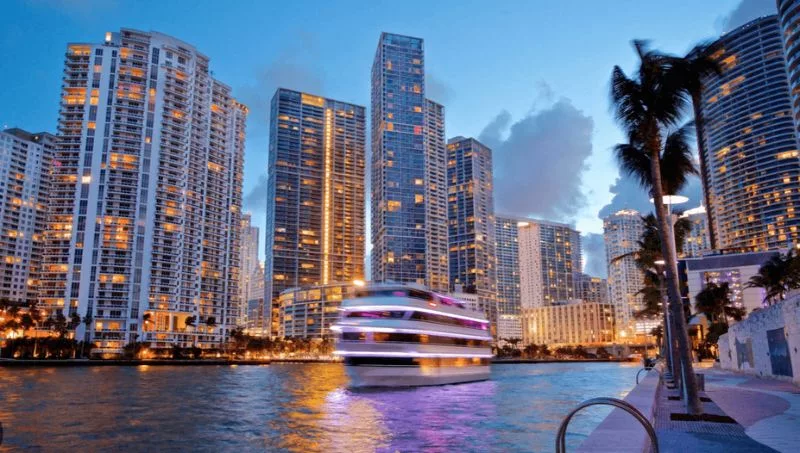

The America Business Forum brings together Trump, Milei, Messi, M. C. Machado, and the global elite in an event that transcends business to become a statement of principles for a new hemispheric order.
From sport to culture, from business to politics—when everything is integrated, cross-pollinated, and perfectly coherent.
The Messi dimension: when sport rewires economies
As sports economist Simon Chadwick (University of Salford) notes: “Messi isn’t an athlete who generates revenue; he’s a platform for territorial economic reconfiguration.” His presence at ABF turns the forum into a nexus of three ecosystems:
-
Sports capital (Messi, Nadal, Infantino)
-
Political capital (Trump, Milei, Machado)
-
Financial capital (Dimon, Griffin, Schmidt)
This triangulation creates what neuroscientist Paul Zak calls “collective trust resonance”: when figures from different domains converge, an event’s perceived credibility doesn’t just add up—it compounds.
Historical comparison (indicative):
-
Davos 2024: 3,000 attendees | ~USD $18B indirect impact | Geopolitical effect: moderate
-
G20 Summit 2024: ~800 leaders | ~USD $4B local | Geopolitical effect: high (short term)
-
ABF Miami 2025: 40,000+ attendees | USD $2.8B+ direct | Geopolitical effect: disruptive (redefines the hemispheric axis)
The difference is qualitative, not merely quantitative: ABF democratizes access to elites (40,000 vs. Davos’s 3,000) while retaining real decision-making power at the top.
The Messi dimension: when sport rewires economies
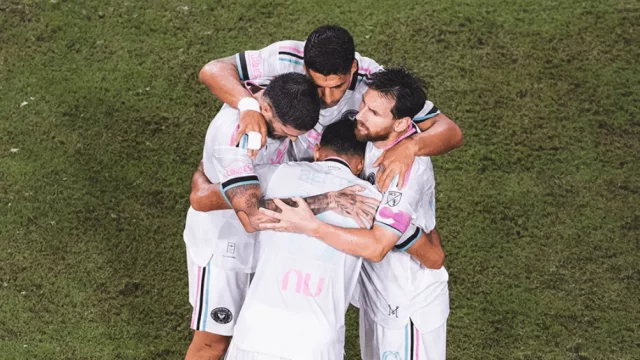
The Argentine star’s participation is anything but incidental. Since his arrival at Inter Miami (July 2023), the documented economic impact includes:
Direct effects:
-
Franchise valuation: $600M (2023) → $1.8B (2025)
-
Merchandising revenue: +470%
-
Miami-Dade hotel occupancy on match days: 94% average
-
Argentine sports tourism to Florida: +180% year over year
More powerful indirect effects:
-
Additional Argentine real estate investment in Miami (2023–2025): $2.4B
-
Argentine tech startups relocated to Florida: 127 companies
-
Bilateral Argentina–Florida trade deals: +$890M in exports

As Chadwick puts it: “Messi isn’t an athlete who generates revenue; he’s a platform for territorial economic reconfiguration.”
Ignacio González: the invisible architect of the new order
At 34, Uruguayan organizer Ignacio González has achieved what century-old institutions have not: turning a regional forum into a platform for global legitimization. His method blends three elements:
Strategic speaker curation:
-
He doesn’t invite “available celebrities,” but “architects of future narratives.” The confirmed list represents roughly $9.7 trillion in combined assets under management/influence.
Perfect geopolitical timing:
-
Scheduling the summit for November 5–6 (post U.S. elections, pre-G20) positions ABF as the place where agendas are “tested” before being formalized in official forums.
Miami as a conscious choice:
-
González understands what academics call the “post-national geography of influence”: Miami operates outside traditional diplomatic protocols, enabling conversations impossible in Washington, Buenos Aires, or Caracas.
His statement—“We’re thinking about the unity of the planet, and the next 50 years”—is not marketing rhetoric. It’s a precise diagnosis: 20th-century institutions (UN, IMF, World Bank) were designed for 1945’s world. ABF is an attempt to build informal institutional architecture for a multipolar 2025–2075 reality.
The Venezuelan factor: exile geopolitics as a power lever
Crucial demographic context:
Florida is home to 43% of Venezuelan exile in the U.S. (2.8M out of 6.5M total). Of these:
-
67% live in Miami-Dade, Broward, Palm Beach
-
34% hold a completed university degree
-
Combined purchasing power: approx. USD $47 billion annually
-
Entrepreneurship rate: 2.3x the U.S. average

Applied neuropolitics of exile:
Columbia University research shows that recent exile communities (less than 15 years in the host country) maintain a “hyper-emotional bond” with the homeland, resulting in:
-
Electoral mobilization 340% higher than traditional economic migrants
-
Political donations 5.7x higher per capita
-
Digital activism reaching 18M+ people in the country of origin
Machado’s presence isn’t a humanitarian gesture; it’s a precise strategic calculation. Trump and ABF organizers recognize that the Venezuelan-American vote in Florida could decide the 2028 presidential election. Elevating her as a headliner alongside presidents and CEOs sends a clear signal: the Venezuelan diaspora is acknowledged as a legitimate political actor, not merely a refugee population.
As Venezuelan political scientist Maryhen Jiménez (University of Oxford) notes: “Machado at ABF represents the institutionalization of exile as a transnational political force—historically comparable to the Cuban exile of the 1960s, but accelerated in speed and scale by digital technology.”
Jamie Dimon + Ken Griffin: when Wall Street speaks, markets shudder
The confirmations of Dimon (JPMorgan) and Griffin (Citadel) elevate ABF from a business summit to a real-time market-moving event.
Financial power context:
Jamie Dimon:
-
Oversees approx. USD $3.9 trillion in assets (JPMorgan)
-
His public remarks have historically moved indexes ±2.3% within 48 hours
-
Informal advisor to the last four U.S. administrations (both parties)
-
His views on Fed policy carry weight comparable to voting FOMC members
Ken Griffin:
-
Founded Citadel with $4.6M (1990) → approx. $62 billion AUM today (2025)
-
Citadel Securities executes about 47% of U.S. retail equity volume
-
Most influential political donor: roughly $1.1B in the 2020–2024 cycle
-
Relocated Citadel HQ from Chicago to Miami (2022), pulling $10B+ in investment
The “Griffin effect” in Miami (since the move):
-
340+ hedge funds established (2022–2025)
-
Approx. $87 billion in assets under management relocated
-
Average finance salaries: ~$340,000 (vs. ~$180,000 pre-Griffin)
When Dimon and Griffin share the ABF stage, they aren’t “attending a conference.” They are signaling to global markets where capital will flow over the next 24–36 months. Their remarks will be parsed by high-frequency trading algorithms in microseconds, triggering instantaneous moves across FX, commodities, and equities.
© 2025 Infonegocios Miami.
Read Smart, Be Smarter!
https://infonegocios.miami/suscribite-al-newsletter
Contact: [email protected]
Infonegocios NETWORK: 4.5 million Anglo-Latinos united by a passion for business.
Join us and stay informed









Tu opinión enriquece este artículo: