-
Insights IN:
-
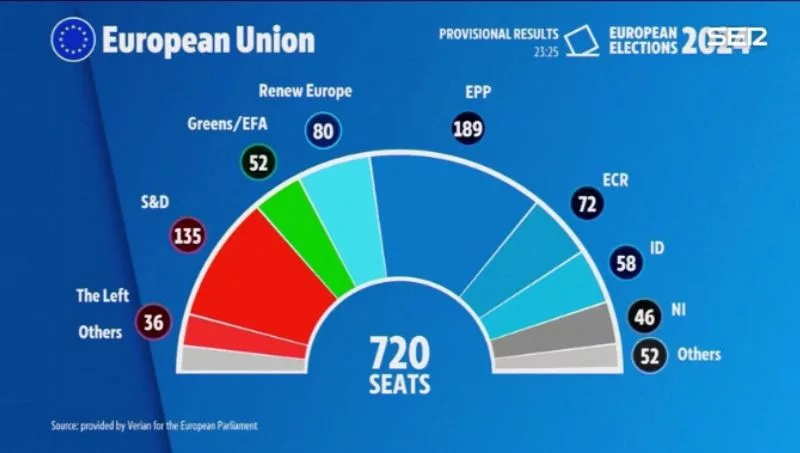
The results of the European Parliament elections reflect a Europe that is leaning towards the right, albeit with a firm center seeking to establish stable and pro-European coalitions. Several key aspects stand out that will define the political dynamics in the European Parliament in the coming years:
-
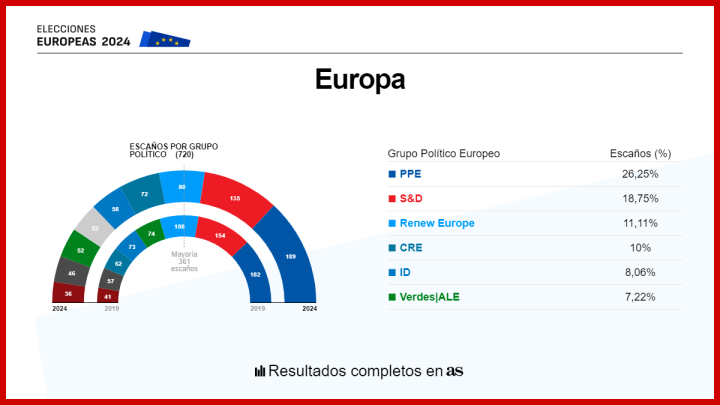
European People's Party (EPP): The EPP emerges as the dominant force, securing 189 seats and solidifying its position as the main political force in the European Parliament. Its results in countries like Spain and Germany give it a privileged position to lead coalitions and negotiations.
-
Social Democrats (S&D): Despite losing some seats, the social democrats maintain their presence in the European Parliament with 135 MEPs. Their willingness to work in coalition with other pro-European forces reflects a commitment to promoting a progressive and social agenda in the EU.
-
Collapse of Liberals and Greens: Both the liberals of Renew Europe and the Greens/European Free Alliance experienced significant losses compared to previous elections. Nevertheless, they show willingness to contribute to a pro-European center majority.
-
Rise of the Far Right: Far-right parties are increasing their representation in the European Parliament, with a nine-seat increase for the Identity and Democracy group. This phenomenon highlights political polarization in Europe and poses challenges for consensus-building and alliances.
-
Citizen Participation: Despite global challenges such as the COVID-19 pandemic and conflicts in Ukraine, voter turnout in the European elections remained around 51%. The lack of significant mobilization of the electorate raises questions about the effectiveness of communication strategies and the ability of European institutions to connect with citizens.
-
The results shape a political scenario where dialogue, negotiation, and consensus-building will be crucial to address the common challenges of the European Union.
-
The increase in far-right representation raises questions about political stability and cohesion in the EU, as well as the influence of these forces on the European agenda.
-
The ability of traditional parties to adapt to the demands and expectations of citizens, as well as to offer effective solutions to current challenges, will be crucial for their long-term legitimacy and sustainability.
General Conclusion:
The 2024 European elections mark a turning point in the history of the European Union, with results that outline a complex and challenging political landscape. The ability of leaders and political forces to work together, overcoming ideological differences and promoting the common good, will be decisive for the future of Europe in the coming years.
-
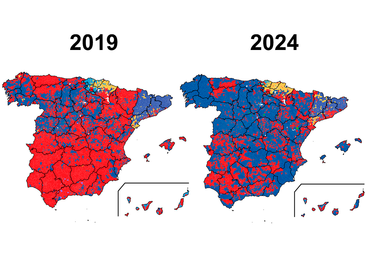
Spain, France, a complete change:
The big surprise came from the far-right National Rally (RN) of Marine Le Pen in France, which swept the election with 34.5% of the votes, doubling the party of President Emmanuel Macron, who obtained 14.44%, closely followed by the Socialist Party (PS) with 13.20%, with just over 85.8% of the votes counted.
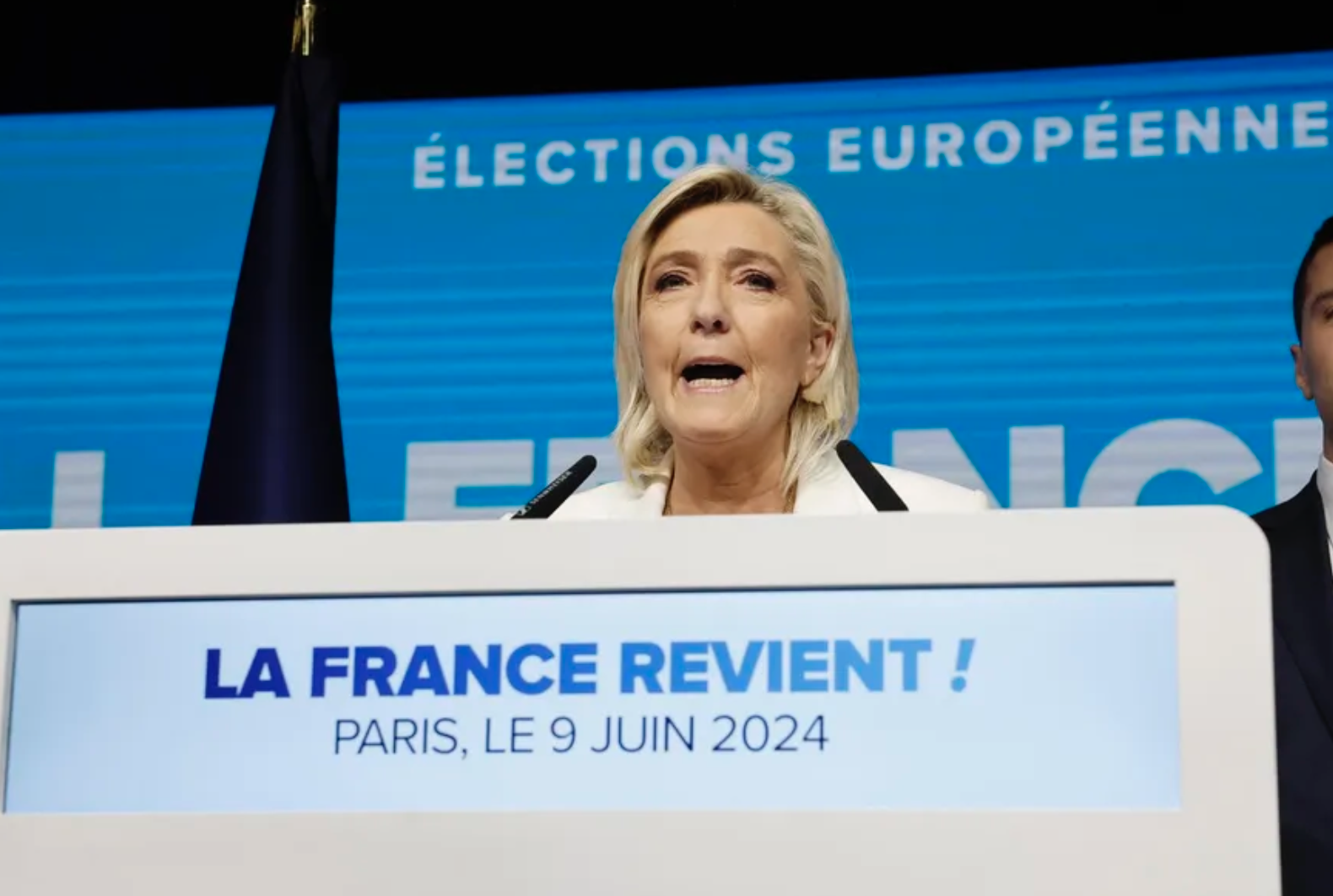
In this context, the future political landscape of France after the European elections is addressed, where the French far-right, represented by National Rally, achieved a significant victory with over 31% of the votes, challenging President Emmanuel Macron's position.
Following these results, Macron has taken the surprising decision to dissolve the French Parliament and call for early legislative elections. Although Macron's re-election is not at stake in these elections, his goal is to consolidate his power and confront the advance of the far right led by Marine Le Pen, whose party has achieved unprecedented success in the European elections.
These legislative elections will determine the composition of the French National Assembly, the lower house of Parliament, which will directly influence the Government's ability to implement its agenda and the country's political stability. The calling of these elections is seen as a strategy to counteract the growing support for Le Pen's proposals and maintain Macron's vision of a more integrated France within the European Union.









Tu opinión enriquece este artículo: