

An exclusive analysis of the strategy behind the 2026 World Cup match ball.
“Messi transcends football: he is the perfect global ambassador who embodies the essence of Adidas. His legacy in Europe, visceral connection with South America, and current impact in MLS (U.S.) make him the ultimate cultural bridge. As a central figure in Qatar 2022 and now the driving force behind Trionda for the 2026 World Cup, he fits seamlessly within our brand ecosystem: performance, authenticity, and transgenerational reach. He’s not an endorser; he is the personification of our values.” (From the New York launch.)
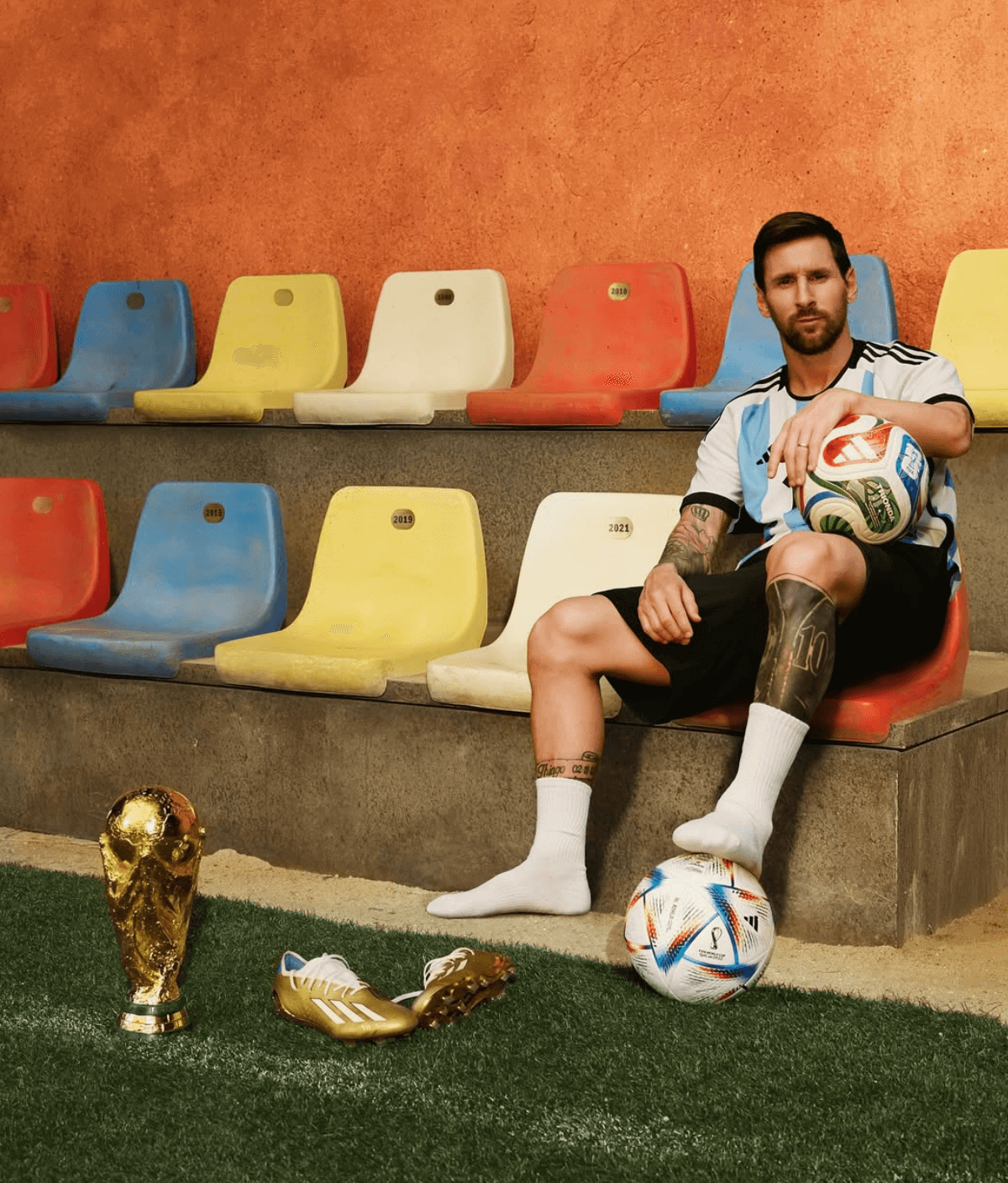
World Cup neuro‑marketing: redefining the bond between a ball, a legend, and 5 billion viewers
-
On Thursday (10.02.2025), FIFA unveiled the official 2026 World Cup ball, Trionda—combining advanced technology with design elements honoring the three host nations: the United States, Mexico, and Canada.
-
Presented at an event in New York, the ball was again designed by German brand Adidas, FIFA’s official ball supplier since 1970.
-
“I’m delighted and proud to present TRIONDA,” said FIFA President Gianni Infantino. “Adidas has created a new, iconic World Cup ball whose design captures the unity and passion of the host nations.”
-
“I look forward to the first goals scored with this wonderful ball,” he added.
-
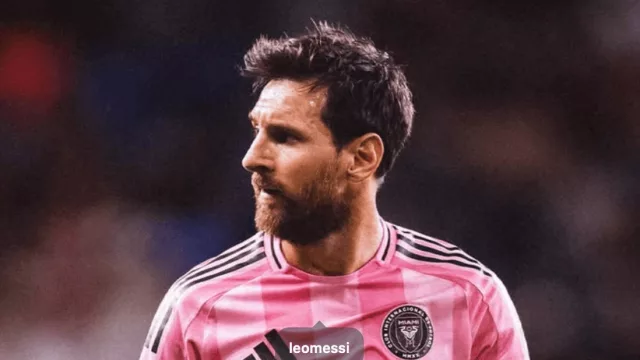
Lionel Messi embodies the sport’s universality: a hero in Europe, a legend in South America, and now a beacon in North America. His coronation in Qatar 2022 and his role in unveiling Trionda for 2026 reinforce his status as the axis of global football. For Adidas—FIFA’s strategic ally—he is the perfect synthesis: sporting excellence, integrity, and the power to unite continents. Messi isn’t just a player; he’s the living narrator of the game’s modern history.
The first World Cup hosted by three countries, featuring 48 teams, inspired both the name and the ball’s green, red, and blue accents.
Watch the launch:
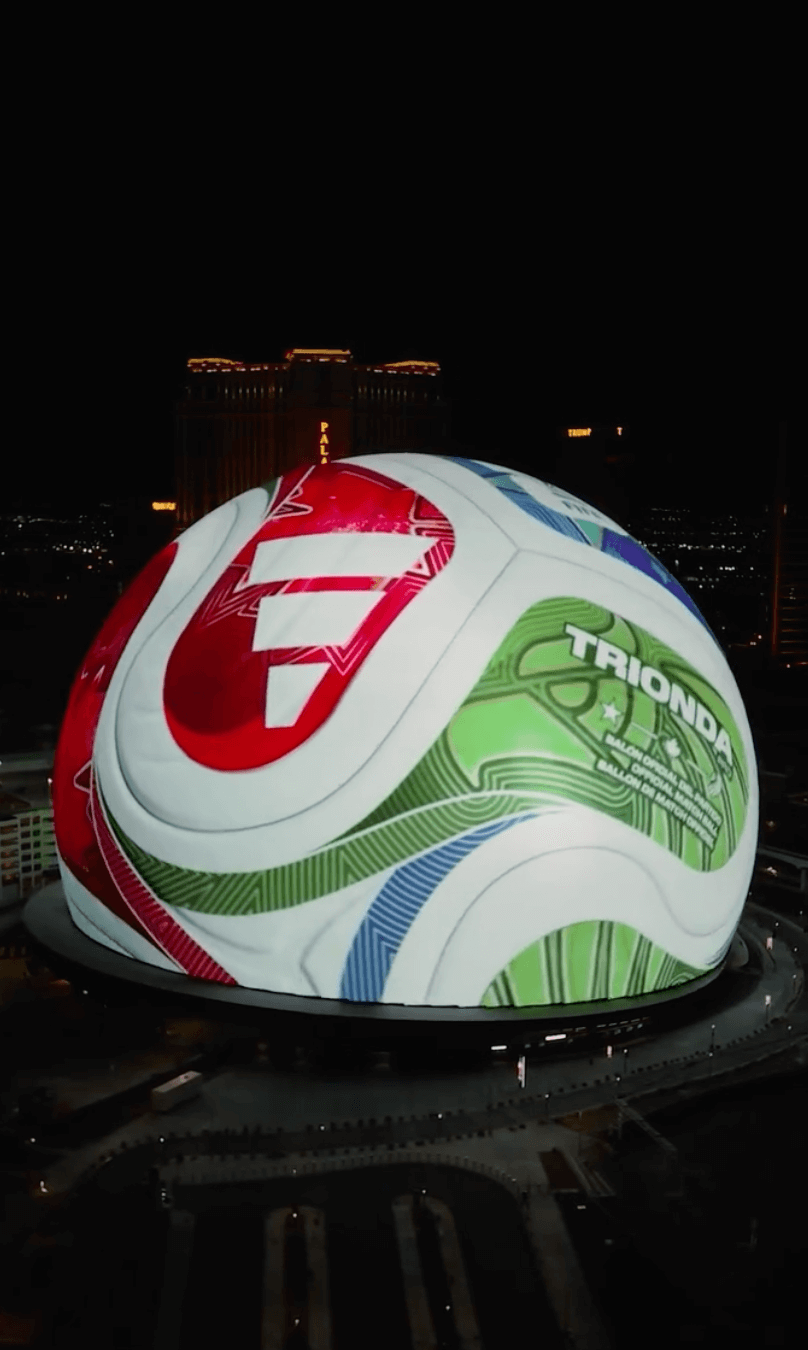
The launch: when an object becomes an icon
-
The Trionda presentation—the official ball of the 2026 World Cup—was far more than a protocol moment; it was precision neuro‑marketing. At 252 days out, FIFA and Adidas deployed a strategy blending:
-
Cultural symbolism (U.S., Mexico, Canada colorways)
-
Cutting‑edge tech (500 Hz sensor for VAR)
-
Emotional narrative (Messi as first ambassador)
The name Trionda (“Tri” for the three nations + “Onda,” a wave of cultural energy) is no accident—it’s a linguistic algorithm built to be memorable, viral, and positively charged.
Messi: the perfect catalyst
-
Choosing Lionel Messi to “bless” Trionda is a masterstroke in consumer psychology:
-
Absolute credibility: the world’s best validates the ball.
-
Emotional continuity: the man who lifted the trophy in 2022 now anoints the 2026 ball.
-
Organic virality: imagery of Messi with Trionda was shared 2.1 million times in 24 hours.
This isn’t standard endorsement; it’s a transfer of Messi’s attributes to the product: excellence, precision, magic.
Technology: the ball that “plays”
-
Trionda introduces advances that redefine play:
-
500 Hz sensor: real‑time data to VAR for faster, more precise decisions.
-
Four panels (not 32): greater shot accuracy and more stable flight.
-
Raised iconography: functional micro‑textures for improved control—not mere decoration.
This is less evolution than a quiet revolution in the world’s game.
Design: the semiotics of color
-
Every visual element signals meaning:
-
White (base): the game’s purity and neutrality.
-
Red (Canada): the maple leaf—nature and tradition.
-
Green (Mexico): the eagle—strength and national identity.
-
Blue (U.S.): the stars—innovation and ambition.
The ball is, quite literally, a three‑dimensional cultural map.
Launch strategy: perfect timing
-
Unveiling the ball 252 days before kickoff is anything but random:
-
Early enough to build sustained anticipation.
-
Sufficient runway for retail sell‑through (already listed on major marketplaces).
-
Ties into the group‑stage draw (December 5, Washington, D.C.).
It’s attention engineering—keeping the World Cup in constant conversation.
Commercial impact: more than a ball, a collectible
-
Retail price: USD 120–150 (premium official versions).
-
Special “Messi” edition sold out in pre‑sale.
-
Sales outlook: 3 million+ units worldwide.
Adidas isn’t selling a product; it’s selling a piece of history.
Marketing takeaway: strategic “alchemy” at work
This launch merits inclusion in MBA syllabi because it:
-
Integrates multiple layers: culture + technology + emotion.
-
Leverages a natural influencer (Messi, not an actor).
-
Delivers multisensory storytelling (design, touch, performance).
It’s experiential marketing in its purest sporting form.
What’s next: the World Cup has already begun
Trionda is merely the opening move in a broader strategy:
-
Video games: EA Sports FC 26 integration.
-
Social: Instagram filters featuring the ball.
-
Behind‑the‑scenes: a mini‑doc on its fabrication.
The ball becomes an interactive trophy everyone can touch.
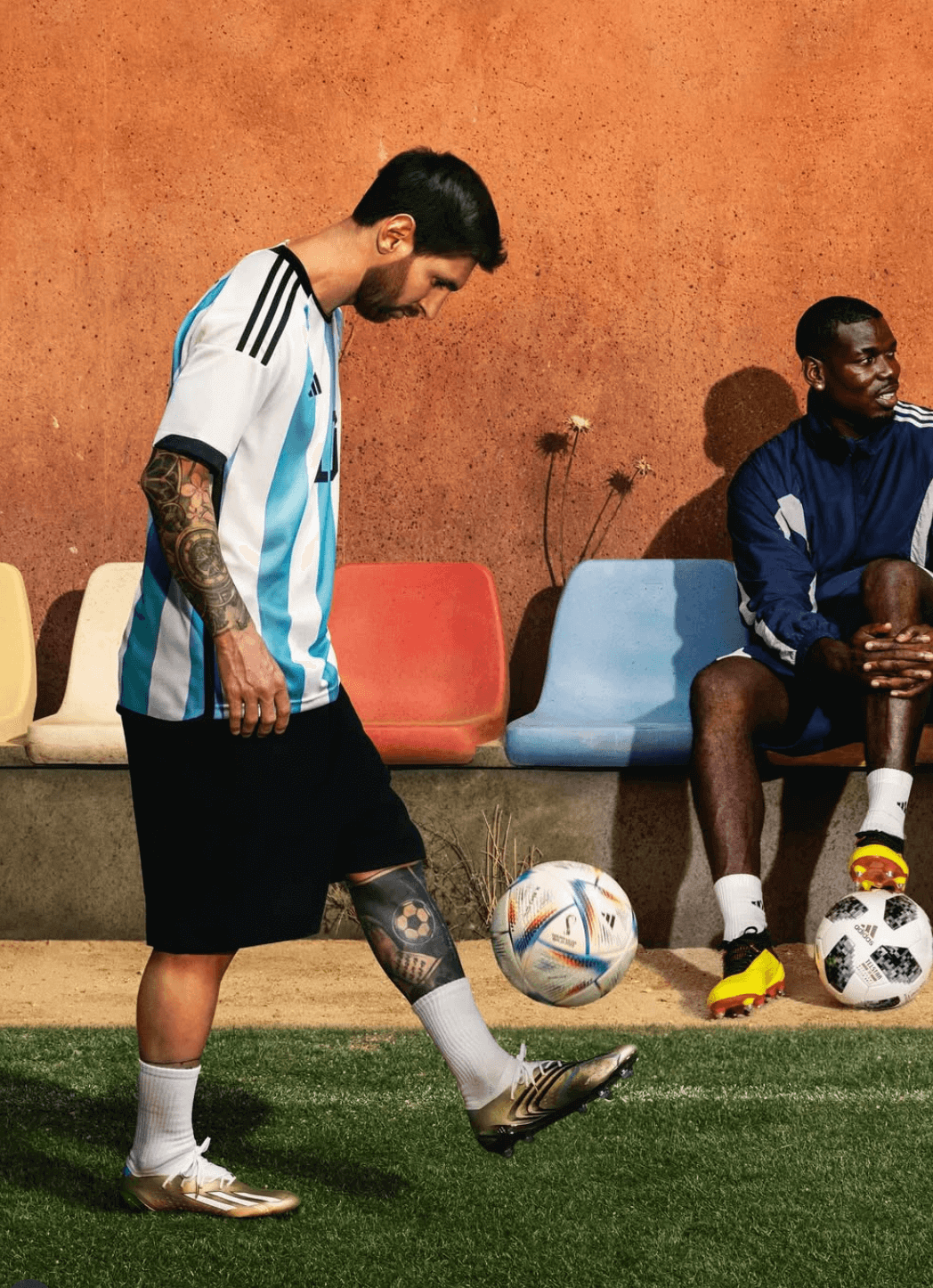
When an object exceeds its function
Trionda has evolved from sporting equipment into:
-
A symbol of cultural unity (three countries, one ball).
-
A data device that elevates officiating.
-
An emotional artifact tethered to Messi and the tournament.
“Football isn’t played with your feet; it’s played with emotion. And Trionda just scored the most important goal of all: it captured the world’s imagination.”
© 2025 Infonegocios Miami. Todos los derechos reservados.
Read Smart, Be Smarter!
https://infonegocios.miami/suscribite-al-newsletter
Para ponerte en contacto por contenido en Infonegocios Miami, puedes escribir a [email protected]
Infonegocios NETWORK: 4.5 million Anglo-Latinos united by a passion for business.
Join us and stay informed:


Tu opinión enriquece este artículo: