
The match, played on July 15, 2024 here in Miami, amidst a city and organization overwhelmed by the passion, disorder, and madness that is football, was the stage for Argentina's consecration as the most successful winner of the Copa América, with a total of 16 titles in its history. Under the guidance of Lionel Scaloni, the Argentine team achieved its fourth victory in the tournament with an outstanding performance.
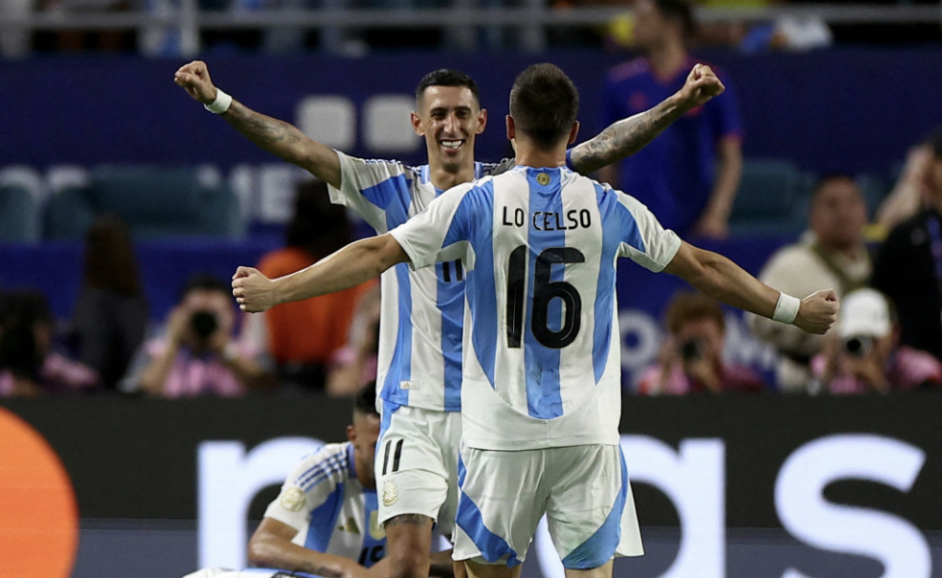
A team without Messi, retired due to injury, showed that it is a squad full of talent, personality, individual skills, experience, strategy, and many, many heroes. In Ángel Di María's final match, Argentina was the best throughout the championship, deserving its fourth final and fourth title. Argentina is impressive. Argentina literally is the King of America, and this title continues to reinforce its status, ranking it as the number one football power in FIFA.

Among the highlights of the match was Ángel Di María's farewell from the Argentine national team, playing his last game with the albiceleste. Lionel Messi, the player with the most appearances in the tournament's history, was substituted in the second half, while Lautaro Martínez was crowned the tournament's top scorer by scoring the only goal in the final.

The match was characterized by intensity and parity between Argentina and Colombia in the early stages, with clear opportunities for both teams. However, it was in extra time when Lautaro Martínez took advantage of an assist from Lo Celso to score the goal that secured the victory for Argentina. With this triumph, Argentina once again demonstrated its quality and dominance in South American football, solidifying its position as one of the most successful teams in the region. The celebration at the Hard Rock Stadium in Miami Gardens, Florida, was the perfect ending to an unforgettable tournament for Argentine fans.

The team led by Lionel Scaloni lined up with Emiliano Martínez; Gonzalo Montiel, Cristian Romero, Lisandro Martínez, Nicolás Tagliafico; Rodrigo De Paul, Alexis Mac Allister, Enzo Fernández; Ángel Di María, Lionel Messi, Julián Álvarez. During the match, Lionel Messi was replaced by Nicolás González in the 65th minute, while Ángel Di María was substituted by Otamendi in the last five minutes, receiving an emotional ovation in his final match with the Argentine national team.
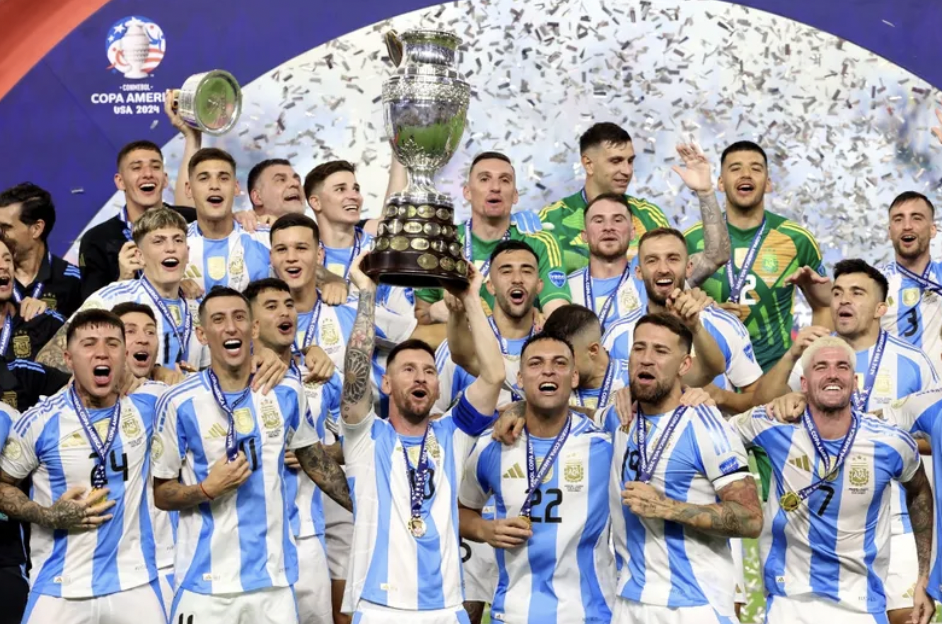
Lautaro Martínez's goal, which made him the tournament's top scorer, came after an excellent assist from Lo Celso in extra time. Argentina managed to balance possession during the match and had clear goal-scoring opportunities, with standout performances from players like Di María, Messi, and Martínez.

Colombia, led by Néstor Lorenzo, fielded Camilo Vargas; Santiago Arias, Carlos Cuesta, Davinson Sánchez, Johan Mojica; Jefferson Lerma, Richard Rios, Jhon Arias; James Rodríguez, Luis Díaz, Jhon Córdoba. Despite a solid performance, the Colombian team failed to break through the Argentine defense and was overcome by Martínez's goal in extra time.

The refereeing was handled by Raphael Claus from Brazil, and the standout player of the match was Ángel Di María, who received the Superior Player of The Match MICHELOB ULTRA award.
With this victory, Argentina was crowned as the most successful team in the Copa América with 16 titles, reaffirming its position as one of the most successful teams in the region.
Argentina's triumph in the final against Colombia was a historic moment for South American football, highlighting the talent and determination of the Argentine players on the field.
And so, a super final arrives, the grand final Argentina - Spain…


Diego Cánepa










Tu opinión enriquece este artículo: