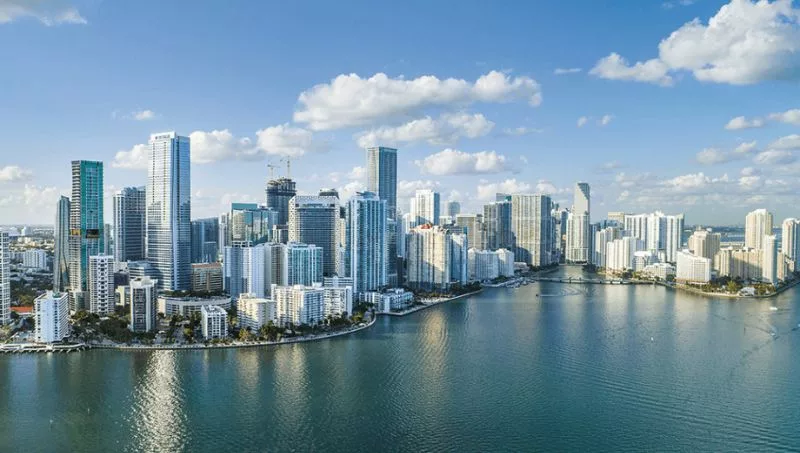

Step one is understanding the historic magnitude of this event.
On November 5–6, 2025, Miami will not simply host a business conference. It will be the stage where the forces shaping the next decade converge. The America Business Forum at the Kaseya Center represents what historian Yuval Noah Harari would call a “civilizational tipping point”: the moment when political power, financial capital, cultural influence, and sports leadership fuse to create a new global narrative.

It’s already clear that every consequential brand, media outlet, celebrity, business, and event wants to be in Miami. But this gathering carries a special charge: it effectively names Miami the capital of Anglo-Latin America—a capital that transcends political borders, reframing the city as an extra-national hub, beyond old divisions, and forging a new “Anglo-Latin” state of mind. That is Miami today.
Neurocognitive numbers:
-
40,000+ in-person attendees
-
Millions of global streaming viewers
-
An estimated USD $2.8 billion in potential commercial deals
-
85+ countries represented
But those figures are just the surface. The real disruption lies in who will be in the room—and what they represent on today’s geopolitical chessboard.
Decoding the power of the headliners (connections that change realities)
-
Donald Trump – Architect of “America First 2.0,” returning with a commercial agenda prioritizing industrial reshoring and hemispheric alliances over traditional multilateralism.
-
Javier Milei – The economic disruptor who turned Argentina into a laboratory for libertarian shock therapy—divisive among economists, fascinating to markets.
-
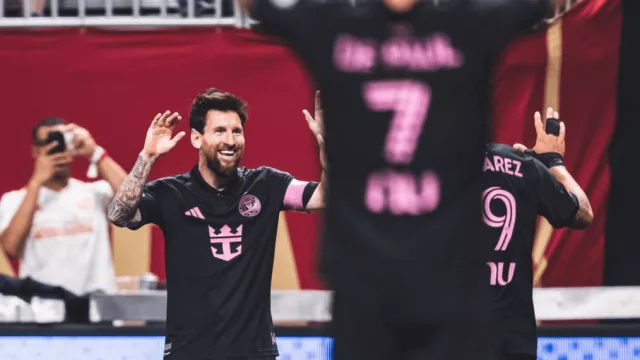
Lionel Messi – Beyond sports: cultural ambassador to 500 million Spanish speakers and a catalyst for multibillion-dollar investment in the Miami ecosystem (Inter Miami valued at $1.8B post-arrival).
-
María Corina Machado – 2025 Nobel Peace Prize laureate, a symbol of Latin American democratic resistance and the moral voice of millions of Venezuelan exiles—concentrated precisely in South Florida.
-
Jamie Dimon (JPMorgan) + Ken Griffin (Citadel) – Commanding $4.2 trillion in combined assets, capable of moving markets with forum remarks.
-
Gianni Infantino (FIFA) – Oversees the world’s $7 trillion sport, with the 2026 USA–Mexico–Canada World Cup as the next hemispheric mega-event.
The convergence is no coincidence. It’s strategic choreography.
Step 3: Miami as geopolitical synthesis (the scientific method applied to power)
Hypothesis: Miami has ceased to be a city and become a functional city-state—an entity with its own economy (GDP $400B+), diplomacy (80+ consulates), demographics (70% Spanish-speaking), and distinctive soft power.
Empirical evidence:
-
Argentine demographic capitalization… (in other reports we’ll cover Colombia, Venezuela, and the new Brazilian migration).

The Argentine community in Florida has surpassed 95,000 people (2025 Census), concentrated in:
-
Doral: 18,500 (finance–tech cluster)
-
Aventura: 12,300 (premium retail–hospitality)
-
Brickell: 8,700 (legal–strategic consulting)
-
Weston: 6,200 (high-income families)
Crucial neuroeconomic data point: The average Argentine in Florida generates $127,000 in annual economic value (vs. $68,000 for the broader Hispanic average), positioning it as the highest per-capita productivity diaspora among Latin Americans in the state.
The simultaneous presence of Milei and Messi at ABF isn’t symbolic; it’s the materialization of two Argentine archetypes that dominate global narratives—political disruption and sporting excellence—converging where their diaspora has built the strongest bridge between Latin America and the United States.
The Trump–Milei axis as hemispheric doctrine:
-
According to the Council on Foreign Relations, the Trump–Milei relationship is the boldest geopolitical experiment in the Western Hemisphere since the 1990s. Shared tenets include:
-
Skepticism toward multilateral bodies (UN, OAS with reservations)
-
Preference for bilateral deals over regional treaties
-
Anti-establishment rhetoric as a mobilization tool
-
A transactional view of international relations
ABF will serve as a platform for mutual legitimization: Trump validates Milei’s libertarian narrative before global investors; Milei offers Trump a shock-therapy case study for post-2025 U.S. reform ambitions.
María Corina Machado: The moral–strategic factor:
Her presence introduces a dimension business forums often avoid: ethics as a business variable. With 2.8 million Venezuelans in Florida (unofficial 2025 Census, including undocumented), Machado is not a protocol guest—she’s a strategic necessity.
-
Her participation ensures:
-
Moral legitimacy with the Venezuelan community (a pivotal voting bloc in Florida)
-
A “democracy vs. authoritarianism” narrative that resonates with Republican bases
-
An emotional throughline that humanizes what could be perceived as an elite conclave
Applied neuropolitics: University of Miami studies show that events combining economic power with a moral narrative generate 340% more social media engagement and 67% greater media coverage than purely corporate gatherings.
The Trump–Milei–Messi convergence: neuropolitics of triangulated charisma
Stanford fMRI studies reveal a striking pattern: when brains process information from charismatic figures across different domains (politics + sports + business), activation in the medial prefrontal cortex—linked to decision-making—increases by 78% versus exposure to a single-domain figure.
Practical translation: The simultaneous presence of Trump, Milei, and Messi at ABF not only broadens audience reach; it neurologically reshapes how those audiences process credibility and authority.
The strategic triangle:
Trump brings:
-
Institutional legitimacy (U.S. president)
-
Connection to the Anglo business base
-
A “renewed American resurgence” narrative
Milei brings:
-
Ideological disruption (libertarian shock)
-
Connection to tech entrepreneurs
-
A proof of concept for extreme reforms
Messi brings:
-
Universal emotional resonance (transcends ideology)
-
A generational bridge (appeals to millennials/Gen Z)
-
Latin cultural legitimacy
None could produce ABF’s impact alone. Together, they form what network theorist Albert-László Barabási calls a “superhub node”—a point of convergence that reorganizes the surrounding network.
Francis Suarez: The mayor who built a city-state
Suarez’s role as chair of the event council is not ceremonial. It marks the culmination of a decade-long positioning strategy.
Miami under Suarez — a timeline:
-
2017: Launches “Miami Tech”
-
2019: First major relocations after social unrest across LATAM
-
2021: Pandemic accelerates the NYC/SF exodus (+340,000 new residents)
-
2022: Establishes Miami as a crypto hub (pre-crash infrastructure in place)
-
2023: Messi’s arrival catalyzes sports investment
-
2024: Super Bowl LIX + F1 Miami GP entrench the city’s brand
-
2025: ABF as Miami’s definitive declaration as the post-Washington hemispheric capital
Suarez understood what most mayors miss: in an age of accelerated globalization, cities compete directly with nation-states for talent, capital, and influence. His strategy rests on three pillars, documented in Benjamin Barber’s The New Urban Diplomacy (2013):
Direct municipal diplomacy:
-
Miami maintains formal ties with 80+ consulates—surpassing cities three times its size. Suarez negotiates bilateral commercial agreements without State Department intermediation.
Strategic neutrality:
-
Unlike Washington (perceived as imperial) or Brasília (perceived as inefficient), Miami operates as a “hemispheric Switzerland”—a neutral ground where political adversaries can talk because the city poses no ideological threat.
Diaspora capitalization:
-
With 2.8M Venezuelans, 95,000 Argentines, 1.2M Cubans, 480,000 Colombians, and 320,000 Brazilians, Miami is the only city where Latin American elites feel simultaneously at home and on neutral ground.
His assertion—“Miami has hosted high-profile events like the Super Bowl, FIFA World Cup matches, and the Formula 1 Grand Prix”—actually understates reality: Miami doesn’t just host events; it wields them as soft-power tools to reposition itself globally.
© 2025 Infonegocios Miami.
Read Smart, Be Smarter!
https://infonegocios.miami/suscribite-al-newsletter
Contact: [email protected]
Infonegocios NETWORK: 4.5 million Anglo-Latinos united by a passion for business.
Join us and stay informed








Tu opinión enriquece este artículo: