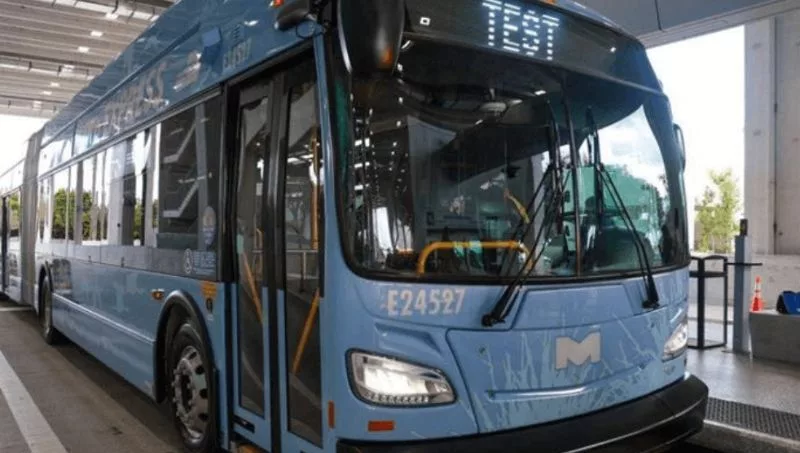

The Metro Express case offers a framework to assess the viability of dedicated lanes, off‑board fare payment, and full electrification in contexts of rapid growth and demographic diversity.
This milestone isn’t merely the arrival of electric buses. It’s a proof of concept for how a city—through an integrated vision of transport, public policy, and community engagement—can turn a promise into a daily experience of efficiency, dignity, and opportunity. If the will to scale this model holds, Miami won’t just shrink its carbon footprint; it will consolidate a more agile, inclusive governance framework fit for the 21st century.

Historical context and Miami’s transit evolution
-
Background: Miami‑Dade has cycled through phases of public‑transit expansion—ambitious visions constrained by funding—culminating in programs like SMART aimed at modernizing and decarbonizing the network.
-
Regional relevance: Metro Express does not exist in isolation; it sits within a continuum of efforts to channel southward growth, reduce congestion, and improve equitable access between high‑density nodes and expanding residential areas.
-
International benchmarks: Peer cities with similar challenges have advanced bus rapid transit with dedicated lanes and pre‑payment, but Miami sets a marker by going 100% electric and pairing it with climate‑controlled stations and advanced digital services.
Impact on mobility, the economy, and urban life
-
Efficiency and time: Shorter waits and higher reliability along a critical corridor linking residential areas with employment centers and public services—enabling potential frequency increases and easing congestion on US‑1.
-
Equity and quality of life: The network is designed to benefit vulnerable groups, seniors, and users with disabilities, while improving access to education, healthcare, and culture in a highly diverse region.
-
Network integration: Seamless connections to Metrorail at Dadeland South and to county bus routes, within a unified fare framework.

Coverage and operations
-
A 32‑kilometer dedicated TransitWay in South Dade, with 14 climate‑controlled stations, Wi‑Fi connectivity, and real‑time displays; off‑board fare collection to speed boarding.
-
Vehicles and user experience: Electric low‑floor buses with accessibility ramps, device charging ports, and bike racks. All‑door boarding to reduce dwell times.
-
Infrastructure and operating safety: Covered station areas, clear wayfinding, and gated crossings that prioritize bus movement.
-
Funding and costs: Approximately USD $100 million, financed through the voter‑approved half‑penny transit surtax, Florida DOT contributions, and Federal Transit Administration support.
Political dimension and public structure
-
Governance: Metro Express reflects coordinated municipal, county, and state decision‑making—integrating resources across multiple agencies and federal partners.
-
Accountability: Ongoing evaluation will be required to refine schedules, frequencies, and coverage—ensuring transparency in resource allocation and operational performance.
-
Challenges and opportunities: Future expansion to other corridors hinges on budget continuity, public acceptance, and the system’s adaptability to climate realities and population growth in Miami‑Dade.
The Latino community and other cultural and economic actors
-
Social impact: Miami‑Dade’s vibrant Argentine community—among others—creates meaningful economic and cultural linkages (culinary, services, entrepreneurship). Metro Express strengthens access to job hubs and cultural centers, reinforcing cross‑border and regional networks.
-
Regional connectivity: The new infrastructure deepens ties among diverse communities, powering an ecosystem of business, education, and tourism that benefits from more efficient mobility.
-
Relevant literature and references: Research on mobility, urbanism, and business migration in Miami underscores how connectivity and transit quality influence talent attraction and investment diversity.
-
Granularity and realism: Innovation and funding are critical, but must coexist with challenges of scaling, maintenance, and adaptation in a climatically dynamic state. Accountability questions should include:
-
How will actual emissions reductions and travel‑time improvements be measured?
-
What mechanisms are in place to adapt the corridor to demographic shifts and population growth in adjacent areas?
-
Which community outreach strategies will ensure that peripheral neighborhoods benefit from enhanced connectivity?
© 2025 Infonegocios Miami.
Read Smart, Be Smarter!
https://infonegocios.miami/suscribite-al-newsletter
Contact: [email protected]
Infonegocios NETWORK: 4.5 million Anglo-Latinos united by a passion for business.
Join us and stay informed












Tu opinión enriquece este artículo: