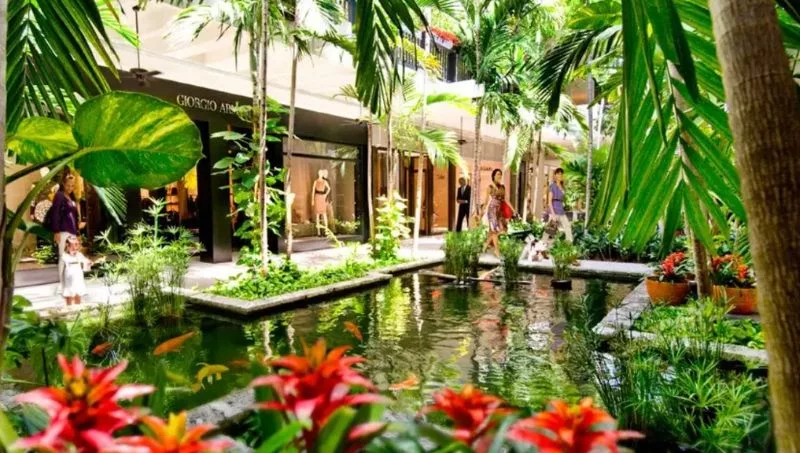
From a neuromarketing perspective, it is known that water is an element that produces a great sense of relaxation in the consumer's mind. In addition, the presence of water fountains in a commercial space generates a feeling of freshness and cleanliness, which increases the perception of quality in the products offered in the shopping center.
Bal Harbour shopping center in Miami is one of the most luxurious shopping centers in the United States and has a large number of spectacular fountains distributed throughout the commercial space. The amount of fountains in this shopping center is approximately 23 water systems, making it one of the shopping centers with the most fountains in the world.
The presence of these fountains has a very positive effect on the consumer's mind, generating feelings of well-being and relaxation. This emotional state facilitates the consumer's stay in the shopping center, which translates into a longer exposure time to products and, consequently, a higher volume of sales.
As for the top brands that can be found in Bal Harbour, luxury stores such as Chanel, Gucci, Prada, Louis Vuitton, among others, stand out, demonstrating that the presence of fountains in the shopping center is not only related to the feeling of well-being they generate, but also contributes to the creation of a luxurious and exclusive environment that attracts a high purchasing power audience.

Most VIP shopping centers in the USA, as well as in Mexico and Colombia, know this secret. However, in the case of Bal Harbour, its delicacy and impact are greater. Its constant and strong sound acts in the visitors' unconscious, generating a message of "abundance". Different specialized studies in shopping center architecture, in conjunction with marketing agency teams, are continuing to investigate and deepen the impact of water, even providing branded bottled water. All of this can generate up to 17% more average sales. Not bad for investing in fountains and mineral water.

The question is, why isn't this technique applied in all businesses?
Perhaps because there are no hidden influencer sellers of water bottles and fountains, making videos all day, like there are for Meta or Google. Applying this technique in real life results in obvious positive outcomes not only in experience but also in permanence and sales in any type of business.
Recommendation:
Fountains that have an architecture consistent with the type of store will give a unique and authentic touch to the commerce where it is applied. It will contribute to the creation of a local identity and the more natural, aesthetic, large, consistent, and strong it is, the more positive "vibes" and distinction it will achieve.










Tu opinión enriquece este artículo: