

The Argentine dimension: why their voices transcend the individual
Quantifiable economic impact of the “Messi Effect”
According to a 2023 Brand Finance study commissioned by the Argentine Football Association, the Qatar 2022 victory generated:
-
USD $2.1 billion in brand value for “Argentina” as a destination for tourism, investment, and exports
-
An 18% increase in international tourist visits to Argentina (2023 vs. 2019)
-
USD $680 million in additional exports of “certified in Argentina” products (wine, beef, agricultural goods) due to the halo effect
-
A 34% increase in applications to Argentine universities from Brazil, Chile, Colombia, and Mexico
-
USD $420 million in additional FDI in tech, agribusiness, and energy attributable to the post-World Cup “Argentina moment”

But the numbers only hint at the narrative shift. For decades, “Argentina” in the global imagination evoked economic crises, the Falklands/Malvinas, military dictatorship, and sovereign default. Messi rewrote that script: now it evokes excellence, disciplined passion, and the ability to overcome adversity through talent and collective effort.
As political scientist Benedict Anderson argues in Imagined Communities (Verso, 1983), modern nations are narrative constructions sustained by shared symbols. Messi functions as a living symbol more powerful than any government nation-branding campaign could buy.

The Argentine diaspora in Miami and its relationship to the Messi phenomenon
-
The 250,000 Argentines living in South Florida are not passive spectators of Messi’s success; they are direct beneficiaries and co-builders of his ecosystem.
-
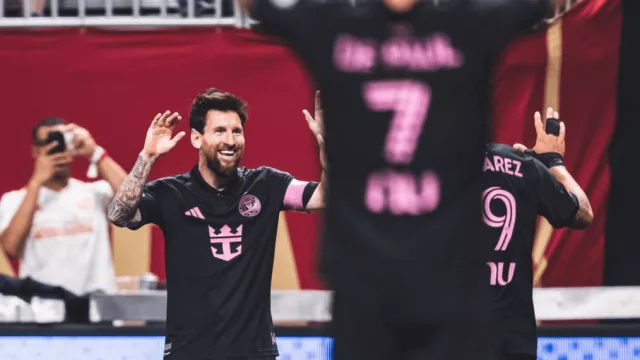
When Messi joined Inter Miami in July 2023, the club sold 1.2 million jerseys in 72 hours (an MLS record). Of those buyers, 38% were Argentines residing in Florida, according to a zip code–based transaction analysis by Fanatics Inc. More telling: 67% of new season-ticket holders (incremental to the prior base) have Argentine surnames with tax addresses in Miami-Dade, Broward, and Palm Beach.
-
This isn’t sports tourism—it’s the consolidation of cultural infrastructure. Argentine restaurants in Miami reported an average 42% increase in foot traffic during the 2023–2024 MLS season (Baires Grill, Don Julio, Uchi Nikkei with Argentine ownership). Wine shops specializing in Argentine labels (The Wine Room Brickell, Wine by the Bay) saw a 31% rise in sales of Malbec, Torrontés, and premium houses like Catena Zapata and Achaval Ferrer.
-
Messi isn’t just playing football in Miami—he’s activating entire economic circuits that benefit the broader Argentine community. His presence validates the decision of 250,000 compatriots who chose Miami as home: “If Messi is here, we made the right call.”
Messi as a generational and cultural bridge
-
The first wave of Argentine immigrants (1970s–1990s) fled dictatorship and crisis.
-
The second (2001–2015) escaped the corralito and default.
-
The third (2016–2025) comprises professionals, entrepreneurs, and UHNWI optimizing for quality of life and institutional stability.

Symbolically, Messi belongs to all three: born in Menem-era Argentina, achieved glory in Barcelona during the Kirchner crises, returned symbolically (via the Copa América and World Cup) during the Fernández–Massa collapse, and now builds legacy from Miami during the Milei experiment.
For the children of Argentines born in Miami—over 85,000 under 18, per Census Bureau estimates—Messi represents what no parental lecture can deliver: professionals who can be simultaneously Argentine and global, faithful to their cultural roots while operating with excellence in the U.S. context.
As sociologist Peggy Levitt documents in The Transnational Villagers (University of California Press, 2001), successful transnational identities don’t require a binary choice between origin and destination; they require figures who embody a functional synthesis.
© 2025 Infonegocios Miami.
Read Smart, Be Smarter!
https://infonegocios.miami/suscribite-al-newsletter
Contact: [email protected]
Infonegocios NETWORK: 4.5 million Anglo-Latinos united by a passion for business.
Join us and stay informed









Tu opinión enriquece este artículo: