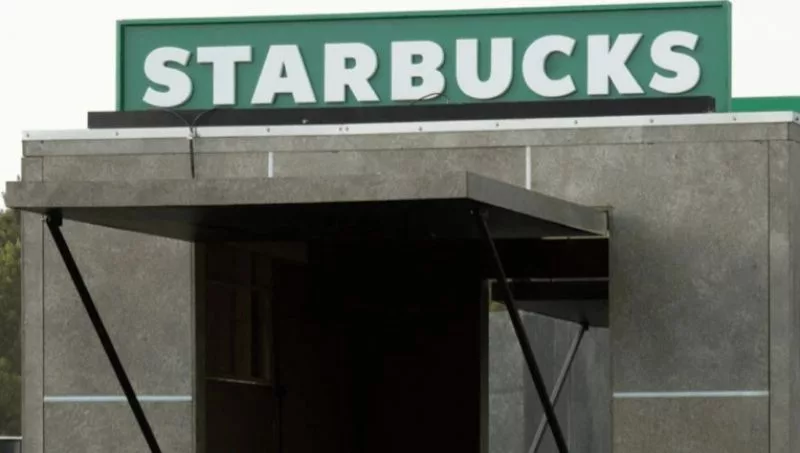

Starbucks isn’t a strategic partner—it’s the official provider of cognitive resilience within Beast City. In a reality show where the axis is “Strength vs. Intelligence,” the brand positions itself as the third element: the fuel for mental endurance, the ritual of pause in hyper-competition. This isn’t product placement. This is world-building.

The Truth No Business Outlet Is Analyzing:
This Isn’t Marketing, It’s “Real Fiction”
MrBeast (Jimmy Donaldson) didn’t build a TV show. He built a simulated society (Beast City) with its own rules, tensions, and economy. By installing a 24/7 service point within that society, Starbucks executed the smartest retail move of 2026: infiltrating an emerging culture as its comfort infrastructure.
On the other hand, there’s another inconvenient truth: companies must once again embrace full marketing structures—strategy, activation, promotions, public relations, trade marketing, brand culture, cross-media (on/off), sponsorships—and this also implies promotional logistics, talent management, agencies, and budget.
Moving beyond just digital marketing or overly literal influencer deals, and shifting toward activating the brand’s life, generating real, phygital events where offline media, experiences, community participation, celebrities, institutions, and events come together—with brand logistics, category expansion, brand gamification, museum-like installations, boutique experiential spacing—is now the meticulous, broad, and constant work every brand must undertake.
The global coffee chain will be a key sponsor of the second season of Prime Video’s hit competition show, which will award US$5 million and reach millions of viewers starting January 2026.
Historically, brands paid to be the backdrop. Here, Starbucks pays to be the utility—and also the script, the content, the interactor, the activator. It’s the water, the electricity, the coffee of that world. And that positioning is unbeatable: when the narrative is based on extreme exhaustion, coffee isn’t a product—it’s a narrative resource.
Thus, Starbucks will accompany the entire season as the official provider, with a permanent presence inside the set known as Beast City.
As a result of this union, Starbucks will launch an exclusive limited-edition beverage: the Cannon Ball Drink, a refreshment inspired by the show, combining lemonade with Strawberry Açaí and Mango Dragonfruit refreshers and dried fruit.

Technical Deconstruction: The 3 Levels of Soft Invasion
-
Diegetic Level (Within the Story): Starbucks exists inside Beast City as an institution. It’s not an ad—it’s a feature of the world. Participants don’t “see” Starbucks; they use it.
-
Transmedia Level (Outside the Story): The Cannon Ball Drink is the tangible artifact that breaks the fourth wall. It’s not an inspired beverage—it’s a relic from the show that you can now consume in the real world. It’s physical proof that Beast City exists.
-
Symbiotic Level (Audience Fusion): MrBeast brings his digital army (mainly Gen Z and Alpha) to ritualize Starbucks. Starbucks brings its massive base (millennials and Gen X) to ritualize MrBeast. It’s a tribe exchange.
The Mistake Everyone Makes: Looking at ROI, Not RON (Return on Narrative)
Analysts will measure the sales impact of the Cannon Ball Drink. That’s a shortsighted error in perspective. The real metric is Narrative Capital Acquired (NCA). Starbucks didn’t buy airtime—it bought copyright over a cultural moment: it became part of the “Beast Games” legend.
This is the opposite of the identity crisis Starbucks suffers in the U.S. Here, Starbucks doesn’t need to recall its own mythology—it adopts a new one, already vibrant and hyper-connected. It’s a transplant of cultural energy.
The 15 Mandates for Your Brand to Execute Its Own “Soft Invasion”
-
Don’t seek “collaborations.” Seek narrative universes with gaps your brand can fill. What does that world need? Energy? Comfort? Knowledge? Be that.
-
Diegetic integration or nothing. Your brand must be useful inside the story, not a billboard in it.
-
Create a tangible “transmedia artifact.” A product, a code, an object that travels from the fictional universe to the real one.
-
Position yourself as a resource, not a prize. Be the water, not the medal.
-
Use the existing infrastructure of pop culture. Don’t build your own stage—infiltrate the most popular one.
-
Resolve a narrative tension. In Beast Games, the tension is exhaustion. Starbucks is the solution. What tension does your brand solve?
-
Train your team to speak the universe’s language. Baristas must understand the lore of Beast Games.
-
Design “inside-out” experiences. A viewing party in-store isn’t enough. Create a mini-challenge inspired by the show that happens in your location.
-
Cede creative control. To infiltrate, you must adopt the rules of the host world. MrBeast dictated the narrative.
-
Measure engagement in layers: social conversation, fan art that includes your brand, fan theories about your role in the plot.
-
Prepare the “second wave.” The collaboration doesn’t end with the season finale. What’s the next transmedia artifact? A permanent “Beast City Blend”?
-
Align with your identity crisis (if you have one). Starbucks uses this to reconnect with a young audience. What disconnect does your brand correct?
-
Hyper-segment, but massify. The content is ultra-niche (MrBeast fans), but the activation is massive (drink in all U.S. stores).
-
Create a physical “ritual point.” The Starbucks in Beast City is a meeting and strategy spot. What ritual does your brand facilitate?
-
Hire a “Narrative Universe Strategist.” A profile that maps fictions, video games, reality shows, and creator lore to find invasion points.
The Future: Toward a “Starbucks Cinematic Universe”?
This move isn’t a one-off. It’s the blueprint for the future. Imagine:
-
Nike infiltrating the next EA sports video game not as a sponsor, but as the “official equipment manufacturer” within the lore.
-
A water brand being the “scarce resource” in a Discovery survival reality show.
-
Apple being the “neural interface” in Netflix’s next sci-fi series.
Starbucks and MrBeast just wrote the first chapter of the manual: Brands no longer inhabit the real world. They inhabit narratives.
Disruptive Conclusion: The Supercharged Return of Product Placement Strategy
Beast Games: Strong vs. Smart doesn’t have “advertising.” It has brand ecology. Starbucks is an organism within that ecosystem. This is the final blow to 70 years of interruptive marketing. The audience won’t tolerate being interrupted—but it celebrates being helped to live its favorite fiction.
The question for 2026 is no longer “What’s your content strategy?” It’s “In which narrative universes is your brand an indispensable character?”
Starbucks, in its paradox, understood: while in one reality it closes stores, in another it becomes the cantina of the most-watched saga on the planet. In which saga does your brand live?
Read Smart, Be Smarter.
Infonegocios Miami—Economic, Cultural, and Business Intelligence with a Global Lens
Follow us for more analysis: @InfonegociosMiami
Read Smart, Be Smarter!
https://infonegocios.miami/suscribite-al-newsletter
Contact: [email protected]
Infonegocios NETWORK: 4.5 million Anglo-Latinos united by a passion for business.
Join us and stay informed.
© 2025 Infonegocios Miami.



Tu opinión enriquece este artículo: