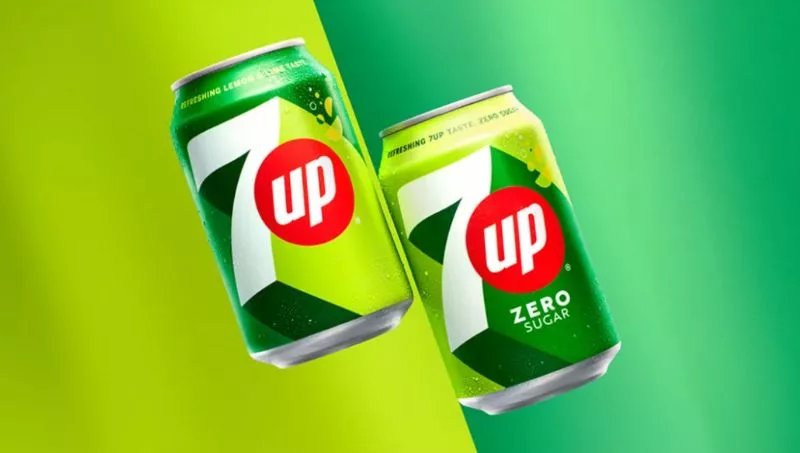
This is the first brand redesign in seven years and includes subtle but important changes that offer a fresh perspective and dynamic movement that will not go unnoticed by its loyal consumers.
The main goal of this rebranding effort is to propel the brand to a more global level. However, it is not the only goal. More and more, major brands are renewing their identities to adapt to new environments and contexts. This strategic move by 7Up improves the brand's flexibility, digital adaptation, and adds several new resources to its arsenal.
The super COOL main changes.
One of the significant changes in the new visual identity is the color palette. While the characteristic green color remains, a lighter tone reflecting the color of lime has been introduced in circular shapes resembling bubbles and segments of citrus fruits. The iconic red circle remains the center of the logo, while the addition of a shadow to the "7" adds depth and coherence to the identity.
PepsiCo's design team and Innovation Team have created a "bright and confident visual identity design system that resonates with all cultural regions and languages." The new 7Up features the brand's bold green color infused with additional citrus tones and high-contrast lines representing an upward flow of energy.
What does UPliftment mean exactly?
A new concept called "UPliftment" has been incorporated into the brand's identity, inspired by the creation of positive moments throughout history. This abstract concept related to creating enjoyable moments will likely be used in upcoming 7Up campaigns.
Plus: "New Get Up, Same 7UP"
Finally, the brand's rebranding is accompanied by the slogan "New Get Up, Same 7UP," which communicates the brand's commitment to the same great taste while refreshing its image for a new era. The result is a bold, energetic, and contemporary brand identity that showcases 7Up's unique characteristics and distinctive personality.
History of an incredible logo:


Conclusion: Pepsi and Seven, both of which have become super attractive and empathetic, fresh, and very trendy, are taking a turn in the category, perhaps with a much more CROSS thinking, with a very fashionable, young art that refers to street art, clothing brands, and music.
For all those who love marketing, these two new restylings are a dream come true.


Tu opinión enriquece este artículo: