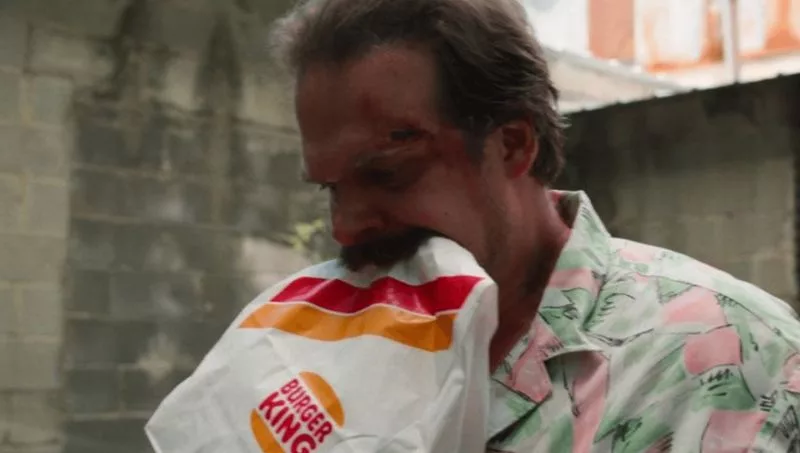

When Nostalgia Becomes a Multi-Million Dollar Cross-Marketing Strategy
-
If Formula 1 today serves as the blueprint for what every business and brand should aspire to, "Stranger Things" stands as a master class in culture, cross-marketing, phygitality, and product placement. It also serves as a wake-up call for creatives, tech leaders, CEOs, and 30- to 40-somethings who left the '80s and '90s behind, mistaking the physical ecosystem and so-called traditional marketing for something obsolete while failing to integrate those lessons into the 2020-2030 landscape.
Check out this incredible video: Watch video ↗ ( https://www.youtube.com/watch?v=nYlnwcdTsgw&t=11s )

The Farewell of a Phenomenon: More than a Series, a Cultural Ecosystem
After nearly a decade, the global phenomenon created by the Duffer Brothers prepares for its farewell. Netflix will release the fifth and final season of "Stranger Things" in staggered volumes: the first on November 26, the second on December 25, and the grand finale on December 31, 2025. This closure marks not only the end of an extraordinary television narrative but also the decline of what marketing scholars have dubbed “the definitive 21st-century case study on brand integration in entertainment content.”
Brands crossing universes are expanding in cocreation:
The numbers validate this claim with indisputable force: Season 4 amassed over 140 million views, the entire saga boasts over 70 international awards, and it is estimated that across the eight chapters of the third season, 100 brands from 45 different product and service categories appeared. However, reducing this phenomenon to metrics alone would be akin to analyzing the Mona Lisa merely by its pigments. "Stranger Things" did not practice traditional product placement; it executed what contemporary strategists refer to as "narrative brand archeology" — reviving brands as cultural artifacts that serve simultaneously as narrative elements, nostalgia catalysts, and commercial vehicles.

The Temporal Context: When Kids Become Adults Before Our Eyes
There exists a fascinating meta-narrative dimension in "Stranger Things" that amplifies its cultural impact: when the series began in 2016, Millie Bobby Brown was 12, Finn Wolfhard 13, Gaten Matarazzo 14, Caleb McLaughlin 15, and Noah Schnapp 11. By the final season, their ages range from 19 to 23, even though their characters still represent adolescents of 15 to 16 years.
This temporal dissonance creates what semiotician Umberto Eco would call a "double nostalgic reading": audiences simultaneously experience nostalgia for the 80s (diegetic context) and nostalgia for 2016, the year they discovered the series (personal context). This layered emotional architecture makes "Stranger Things" the perfect vehicle for product placement because the brands evoke not only the 80s but also our own youth while experiencing the series.
The Archaeology of Product Placement: From the 80s to Stranger Things
To understand the revolution represented by "Stranger Things," we must historically contextualize product placement. This advertising technique reached its “golden age” in the 1980s, a decade characterized by:
1. The Consolidation of Color Television: Households finally owned devices capable of showcasing products in all their chromatic splendor, making a bright red soda or a yellow cereal box visually irresistible.
2. Centralized Family Programming: With only two or three channels available, families gathered simultaneously in front of shared content, creating what sociologist Pierre Bourdieu would call "shared cultural capital" — everyone watched, commented on, and recalled the same programs.
3. Absence of Evasion Technologies: There were no DVRs to skip commercials, no on-demand streaming, no second screens. The audience was captive by design technology.
In Spain, series like "Médico de Familia" took product placement to comedic extremes, featuring breakfast tables with 15+ brands competing for visual attention. In the U.S., movies like "E.T." (1982) turned Reese's Pieces into a sales phenomenon following their strategic appearance. However, then came fragmentation: cable, satellite, internet, and streaming. The audience was no longer a captive viewer but an empowered consumer who could choose what, when, and how to consume content. Traditional product placement — viewed as intrusive and unnatural — fell out of favor, considered an anachronistic relic of a pre-digital age.
Stranger Things: The Strategic Resurrection
The Duffer Brothers did not merely resurrect product placement; they redefined its ontology. Their approach inverts the traditional logic:
Traditional Model:
Brand pays → Product is inserted into content → Audience (hopefully) perceives it
Stranger Things Model:
Creators identify iconic brands from the era → Integrate them as essential narrative elements → Brands seek participation → Netflix monetizes retroactively
This inversion is crucial. Netflix insists that they did not initially seek contracts with brands; it was the Duffers who reached out to brands they deemed “essential references of 80s pop culture.” Only later, when brands like Coca-Cola recognized the strategic value, were sponsorship agreements formalized. This sequence creates perceived authenticity that cannot be replicated through traditional paid insertion. Brands are not there because they paid; they are there because they are narratively necessary.

The Coca-Cola and New Coke Case: Multi-Layered Strategic Brilliance
The collaboration between "Stranger Things" and Coca-Cola deserves a doctoral analysis in brand strategy. The series dedicates significant narrative arcs to New Coke — the reformulated version Coca-Cola launched in the summer of 1985 and withdrew after two months due to catastrophic commercial failure.
Historically, New Coke represents one of the greatest marketing disasters of the 20th century. In an attempt to compete with the sweeter taste of Pepsi, Coca-Cola reformulated its century-old recipe, sparking massive consumer revolt. The company had to humbly retreat, reintroducing the original formula as "Coca-Cola Classic."
-
Why would a brand want to remember its greatest failure? Because "Stranger Things" transforms that failure into nostalgic capital. For contemporary audiences, New Coke does not evoke corporate error; it represents a cultural artifact from a specific era, a retro fascination equivalent to a Sony Walkman or a Pac-Man arcade game.
-
According to Concave Brand Tracking, a branding consultancy, the advertising reach Coca-Cola achieved through the series equates to $1.6 million in traditional spots, just in the U.S., for Season 4. Yet that metric underestimates the real value:
-
 Brand Reactivation: Coca-Cola temporarily relaunched New Coke in 2019, leveraging the nostalgia generated by the series.
-
 Multi-Generational Engagement: Millennials who experienced the 80s rekindled memories, while Gen Z discovered a cultural artifact previously unknown to them.
-
 Organic Conversation: Millions of mentions on social media without additional advertising investment.
Read Smart, Be Smarter!
Infonegocios Miami: a publication written by the Anglolatina business community.
Follow for more analysis: @InfonegociosMiami
https://infonegocios.miami/suscribite-al-newsletter
Contact: [email protected]
Infonegocios NETWORK: 4.5 million Anglo‑Latinos united by a passion for business.
Join us and stay informed.
Infonegocios Miami—Economic, Cultural, and Business Intelligence with a Global Lens
Follow for more analysis: @InfonegociosMiami
© 2025 Infonegocios Miami.





Tu opinión enriquece este artículo: