
Tips and Executive Summary:
-
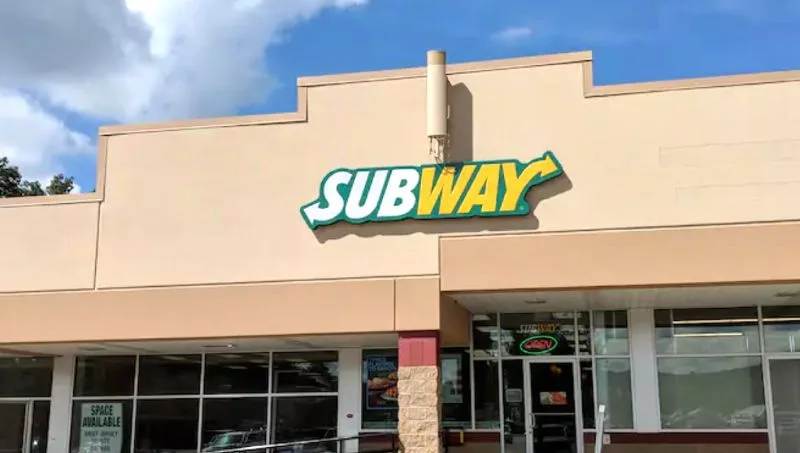
Ever imagine a brand that once ruled the fast-food kingdom in the U.S. with an iron grip—boasting over 27,000 outposts at its peak—could vanish almost overnight? Well, reality just dropped the mic: In 2025, Subway has shuttered more than 600 stores in the U.S., hitting its lowest point in two decades and leaving over 200 employees in Oregon high and dry without a heads-up.
-
What's going down in the world of franchises and retail, where instead of expanding, they're contracting in an arena where competition, innovation, and fresh consumer experiences are the new benchmarks?
-
Pure strategy alert: What's unfolding globally with brand experiences and business models today?

Why Subway is Losing Ground in the United States
-
It's not just about the competition—players like McDonald's, Starbucks, and the new wave of fast-casual spots are facing their own giants, and it's not limited to the West; even retail giants in China and Japan are hitting the same wall as Nike. The core issue lies in a seismic shift in business management, strategy, and customer perception and consumption.
The 20-year-old formula, centered on affordable, quick, and acceptably quality eats, is obsolete in a market that's overflowing and in perpetual flux. Location overload, hyper-competition, and the fatigue from stale offerings have driven Subway to this inflection point: innovate or risk becoming yet another statistic of massive closures and irrelevance. And let's be clear—this is a universal wake-up call for all businesses and industries.
-
In a landscape where fast-food chains are naturally seeing a dip in consumption volumes, the explanation runs deeper than just a swing toward healthier options or societal habit shifts. The real global market transformation reveals that winning brands of tomorrow aren't just peddling products or services in isolation; they're building integrated universes that fuse entertainment, content, multi-channel experiences, and memorable moments. The winning strategy? Expand the value proposition beyond the product itself to encompass the entire ecosystem.
Integrating multiple layers—from personalized service and ambiance to a seamless digital ecosystem that ties it all together—is now non-negotiable. This isn't about overkill; it's an evolutionary response to a consumer who craves more than a transaction—they want to live, feel, and belong to a world that mirrors their passions and ambitions.

Why settle for just offering a "solid product" in a brick-and-mortar space when you can enrich the experience with content, interaction, and customization? Take the analogy of those Parisian outskirts eateries that once seemed extravagant for their elevated service—they created natural loyalty by delivering more than a meal; they offered a one-of-a-kind moment with personality and flair. Today, that same logic applies across mass-consumption sectors, including sports, entertainment, and high-end retail. The challenge? Craft worlds that are emotionally resonant, where tech enables a fluid, tailored experience that connects with users' stories, interests, and aspirations.
-
We're in the era of "phydigital": a dynamic space where the physical and digital realms merge to deliver experiences that go beyond the tangible. Modern brands must think beyond products and focus on ecosystems that engage all senses, blending aesthetics, playfulness, and culture into something irresistible.
The key takeaway? Consumers don't just want to buy—they crave moments that can be felt, shared, and etched in memory. Personalization, meticulous attention to detail (from the restroom design to social media interactions), and the ability to deliver integrated, real-time experiences are now essential differentiators in a hyper-competitive market. This evolution isn't a threat; it's a golden opportunity to build value universes that redefine audience relationships and elevate brand perception to unprecedented levels of exclusivity and loyalty.
The New Business Landscape for Brands: The Other Inconvenient Truth
More work, more investment, more innovation, more culture, more branding, more experience, more playfulness, more emotion—this demands a fresh model of profitability and long-term business design.
-
The writing's on the wall: In a market where premium players like Louis Vuitton, Adidas, and Formula 1 are accelerating growth, companies fixated on mass sales and vertical profitability are crashing into a brick wall. Success today requires more than hawking a cheap sandwich; it means crafting a customer experience that blends quality, fun, variety, and a "phydigital" approach—a seamless fusion of physical and digital elements. This paradigm shift calls for serious investment, top-tier talent, robust internal structures, and long-game strategies. The payoff? Brands that double down on innovation, experiences, and community don't just survive—they dominate and solidify their leadership.
Subscribe for free to receive all strategic information and be part of the largest business and culture community across the Anglophone-Latino world!:
Contact Infonegocios MIAMI:
Read Smart, Be Smarter!











Tu opinión enriquece este artículo: