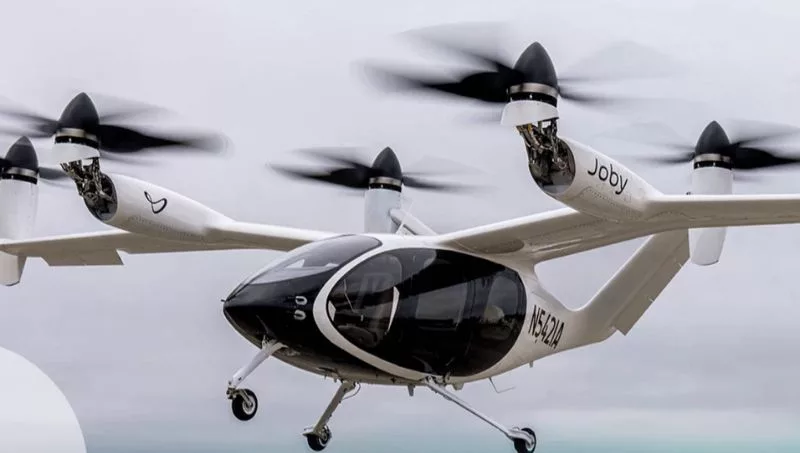

The rollout of an electric vertical takeoff and landing (eVTOL) network led by Archer Aviation for summer 2026 is not just a new service. It is the materialization of a new layer of the city, a three-dimensional infrastructure that will redefine land value, time, and connectivity in South Florida.
-
This project, backed by a power ecosystem that unites tech visionaries like Adam Goldstein (CEO of Archer) with real estate giants like Stephen Ross (Related/Ross, Miami Dolphins) and Bob Zangrillo (Dragon Global), marks the dawn of the “Era of Multidimensional Mobility.” As Mayor Francis Suárez puts it: “Miami has never been afraid to bet on the future… we turn bold ideas into real impact.” And this is perhaps the boldest idea of all.
Anatomy of Disruption: Archer’s Midnight and the Death of Distance
The Midnight vehicle is not a helicopter. It is an algorithm with propellers. An eVTOL designed to reduce ground trips of 60–90 minutes to silent flights of 10–20 minutes. But the data hides the true disruption:
-
Speed of 240 km/h (150 mph): It’s not just speed; it’s the compression of time-space. Connecting West Palm Beach to Downtown Miami in shorter—and more predictable—time than a TV episode.
-
Range of 160 km (100 miles): Defines a unified metropolitan operating radius, from Boca Raton to Little Haiti, creating a functionally integrated megacity.
-
Redundant architecture: Multiple rotors, motors, and batteries. It’s not a plane; it’s a antifragile system. As Goldstein explains, it can suffer failures and keep flying, a safety principle borrowed from commercial aviation but miniaturized.

Goldstein’s CBS News interview is neuro-strategic: “This is a very easy airplane to fly. It could teach you to pilot it in minutes… the pilot only indicates the direction.” This upends the elite-aviation paradigm, democratizing the sky. The control system, akin to an advanced electric vehicle, turns the pilot into an AI supervisor.
Reading time: 4 minutes
The Power Map: The Alliance Building Miami’s Sky
The genius is not in the technology, but in the alliance architecture that will make it real. This isn’t a startup project; it’s a consortium of capital, infrastructure, and vision:
-
Related Ross (Stephen Ross): Will develop a vertiport at his West Palm Beach complex and adapt the Hard Rock Stadium heliport. Not a client; a co-owner of critical nodes.
-
Dragon Global (Bob Zangrillo): Will integrate the network into the Magic City Innovation District in Little Haiti, positioning this district not as just another neighborhood but as the multimodal aerial hub of the new Miami.
-
Hybrid Infrastructure: Adapting existing heliports (Apogee Golf Club, among others) is a logistical masterstroke. It reduces costs, accelerates deployment, and weaves the new network over old infrastructure.
This triangulation (technology + real estate development + innovation district) creates a virtuous circle of value: vertiports raise property values, and high-value properties justify vertiports.

15 Neurostrategic Tips for Navigating the New Aerial Reality
To grasp the deep implications, consider these principles:
-
Real estate value is no longer measured in square meters but in minutes to the vertiport. “Air proximity” will be the new luxury metric.
-
Archer doesn’t sell rides; it sells recovered time. Its product is the single most valuable non-renewable resource: minutes of life.
-
FAA certification isn’t paperwork; it’s the key unlocking a multi-trillion-dollar market. Without it, everything is a prototype.
-
The pilot as an “AI supervisor” is the psychological bridge needed for public acceptance of total autonomy.
-
Electric silence is the Trojan horse for urban acceptance. With helicopters gone, local opposition collapses.
-
The network connects ecosystems, not just points: Stadium, Innovation District, airports.
-
Stephen Ross isn’t investing in air taxis; he’s defending and increasing the value of his real estate empire.
-
Magic City Innovation District shifts from project to central neural node of regional mobility.
-
The “affordable” price (vs. luxury helicopters) aims not for mass adoption but to create a new category of consumption: urban flight as a service.
-
System redundancy isn’t just safety; it’s trust marketing for a skeptical public.
-
Summer 2026 is not a date; it’s a tipping point for global mobility. Where Miami goes, other megacities will follow.
-
This does not erase traffic; it creates an escape valve for the economic stress caused by congestion.
-
The model is replicable: the formula of technology + real estate alliances + existing infrastructure is the blueprint to conquer other cities.
-
The real impact will be reconfiguring work patterns: living in West Palm and working in Miami becomes trivial.
-
The question isn’t “will it work?” but “how much value can I capture in this new aerial geography?”
Historical Context: From Zeppelins to eVTOLs
Miami has an aerial DNA. It was Pan Am’s seaplane gateway in the 1930s. Now, a century later, it is positioned to be the global capital of urban air mobility (UAM). According to a Morgan Stanley report, the UAM market could be worth $1.5 trillion by 2040. By securing Miami, Archer isn’t just winning a city; they win the perfect global showcase: a dense, congested, wealthy, tourist-heavy city with pro-technology political leadership.
FAA certification, in the final phase per NBC News, is the universal bottleneck. Whoever gets it first, not only flies; sets regulatory standards for the global industry.
The Sky as the New Urban Frontier
What Archer and its partners have orchestrated is a masterstroke of financial urbanism. They’re not building taxis; they’re designing the next layer of urban infrastructure, as foundational as the highways in the 1950s or the subway in the 1970s.
For Miami businesses, the message is clear: the map of opportunity is being redrawn in three dimensions. Proximity to a vertiport will be as critical today as proximity to a subway station was yesterday.
For the world, Miami once again cements its role as the future’s laboratory: where the freest visions meet capital, allies, and political will to become real. The sky is no longer the limit. It’s the roadway.
Takeoff is scheduled for 2026. But the race to master this new layer of urban reality has already begun. Is your company seated on the Midnight?
Read Smart, Be Smarter!
Infonegocios Miami: a publication written by the Anglolatina business community.
Follow for more analysis: @InfonegociosMiami

https://infonegocios.miami/suscribite-al-newsletter
Contact: [email protected]
Infonegocios NETWORK: 4.5 million Anglo‑Latinos united by a passion for business.
Join us and stay informed.
Infonegocios Miami—Economic, Cultural, and Business Intelligence with a Global Lens
Follow for more analysis: @InfonegociosMiami
© 2025 Infonegocios Miami.









Tu opinión enriquece este artículo: