
The risk of crude oil hitting USD 100 isn’t a simple supply-and-demand equation; it’s the definitive fusion of hybrid warfare, predictive markets, and the quiet battle for control of AI-enabled resources.
THE ORMUZ CODE: WHY ONLY 0.5% OF MINDS UNDERSTAND THE TRUE GEOPOLITICAL BET BEHIND THE USD 100 BARREL
Brent crude oil rose 10% to $80 in over-the-counter trading on Sunday, according to traders speaking to Reuters. At the same time, various analysts predicted prices could rise to $100 after U.S. and Israeli strikes against Iran plunged the Middle East into a new war.
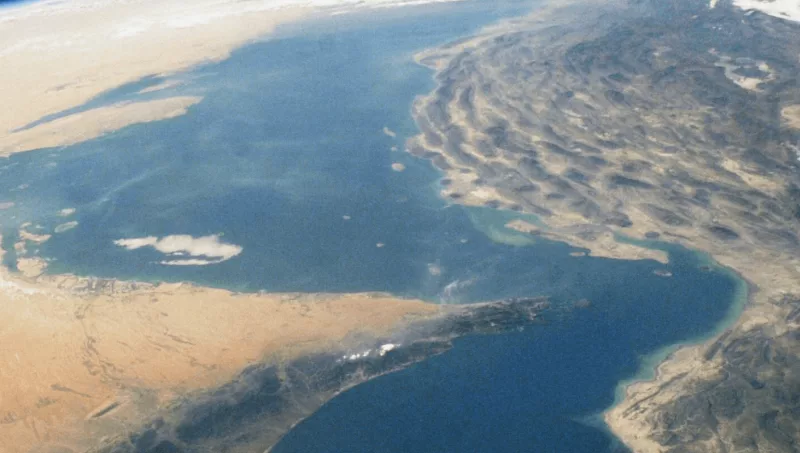
The Strait of Hormuz, between Iran and Oman, is the world’s most critical maritime corridor, carrying roughly 20% of global oil and LNG flows. Its control, predominantly by Iran, makes it pivotal for the world economy and energy security.
-
Imagine this: Iran doesn’t need to close Hormuz to unleash chaos. A proxy network—from Yemen to Lebanon—could stage a choreography of synchronized asymmetric attacks with “logistical accidents” at key Saudi and UAE terminals, while Iranian hackers slow the oil-payment settlement systems (an alternative to SWIFT).
The result: a scarcity-induced psyops that trading algorithms amplified in milliseconds, lifting Brent to $100 before a single barrel physically moves.

THE BOARD THAT VERY FEW SEE: BEYOND THE “CHOKEPROOF POINT”
THE DATA THEY DON’T TELL YOU: THE “SILENT DOMINO EFFECT”
The Achilles’ Heel of the West: 21% of world oil passes through Hormuz, but 40% of Asia’s oil depends on that route. China, which imports 90% of Iranian crude under sanctions, has a hedge: its strategic reserves (secretly adjusted) and a tacit pact with Tehran. If the West presses too hard, Beijing could deploy its fleet of “ghost ships”—vessels that switch off transponders—to keep the flow going while letting Europe and the U.S. suffer the inflationary spiral.
The AI Trading Trump Card: Funds like Renaissance Technologies or Two Sigma already run ML models predicting geopolitical disruptions with ~85% accuracy, drawing data from social sentiment to satellite maritime traffic patterns. They don’t “bet” on oil rising; they’ve already bought $95 calls six months ago. The average citizen pays at the pump; they reap billions in derivatives.
The “Production Paradox”: OPEC+ just signaled higher output, but members lack real slack beyond about 2 million barrels per day, according to internal data from Rystad Energy cross-checked with satellite tank imagery. It’s a bluff to calm markets, but algos already see it: the rise will be transient.
HOW TO THINK LIKE A PETROLEUM STRATEGIST IN CHAOS TIMES
Watch the “Ghost Signals”: Don’t just scan Hormuz—track maritime insurance (war risk). If Lloyd’s of London raises premiums by 300%, panic hits markets before the news. Practical tip: follow the Baltic Exchange Dirty Tanker index in real time.
Decode Tehran’s Language: When Iran talks about a “painful response,” don’t picture missiles; picture cyberattacks on Saudi refineries (as in 2017) or the Shaybah pipeline. Its best weapon is calibrated uncertainty. Practical tip: monitor the cyber-security firm Dragos’ reports on energy infrastructure.
-
Invest in the “Emotional Counterpart”: Fear pushes risk assets lower. The smart money buys terrestrial logistics firms, coal transport railways, or ETFs of alternative energy (ICLN) that appreciate when crude rises. Practical tip: Knight-Swift Transportation (KNX) in the U.S. wins when sea-borne transport costs rise.
Read between the lines of EIA reports: It’s not just the data; it’s what they omit. If they report rising inventories but don’t mention crude quality (heavier, costlier to refine), they’re gilding the lily. Practical tip: compare weekly EIA reports with Platts/Oligram crude price data.
Turn Complexity into Simplicity: The key equation is: Crude price = (Hormuz tension x China interests) ÷ (U.S. Strategic Reserves + Shale production). If three variables rise, price erupts. Practical tip: build your own dashboard with these four variables in a spreadsheet. It’ll give you an edge over 99.5% of the crowd.

THE FINAL VERDICT: THIS IS NOT 1973, IT’S 2026
The 1970s oil crisis was driven by a physical embargo. The 2026 crisis will be a perfect storm of narratives, algorithms, and asymmetrical warfare. Iran may lose on the battlefield but win in the market: every threat it releases, turned into volatility, yields extra revenue from clandestine sales at premium prices to desperate buyers.
The USD 100 barrel isn’t a prediction; it’s a symptom of the new cold war over resources, where the deadliest weapon isn’t the missile but the narrative that goes viral on X (formerly Twitter) and shows up in Brent futures. Whoever controls that narrative will control the price.
How would higher oil prices affect the global economy? The impact on the world economy will hinge heavily on how high prices rise from here. Crude is a major economic input, so higher oil prices trigger upstream and downstream price effects.
-
“In general, a year-over-year 5% rise in oil prices tends to add roughly 0.1 percentage points to the average inflation of major economies,” says Jackson. “Therefore, Brent at $100 per barrel could add between 0.6 and 0.7 percentage points to global inflation.”
Higher inflation could erode consumer confidence and spending. Central banks may raise interest rates to curb inflation, further slowing economic growth.
For Infonegocios Miami, this isn’t just about oil; it’s the pulse of global power in the hyper-information era. And as always, the 0.5% who understand the game are already moving their pieces.
Read Smart, Be Smarter!
https://infonegocios.miami/subscribe-to-newsletter
Contact: [email protected]
Infonegocios NETWORK: 4.5 million Anglo-Latinos united by a passion for business.
Join us and stay informed.
© 2025 Infonegocios Miami.

Infonegocios Miami—Economic, Cultural, and Business Intelligence with a Global Lens











Tu opinión enriquece este artículo: