
-
On Tuesday, October 7, 2025, while Buenos Aires woke up to its usual economic
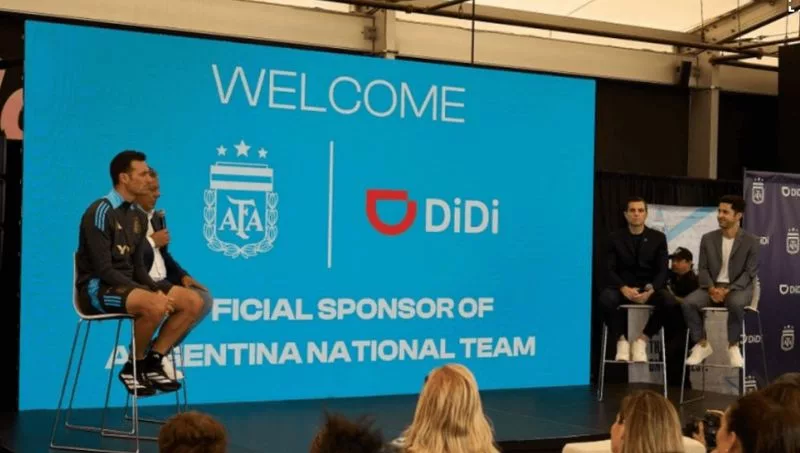
uncertainty—self‑inflicted by a now unhealthy political fanaticism—Miami staged the most sophisticated Latin corporate event of the year: the launch of the DiDi–Argentina National Team alliance.
Inside a 12,000‑square‑foot venue, bilingual brand ambassadors, interactive AR‑powered booths, gourmet fusion tastings, DiDi’s silver trucks and cars turned into art installations, banners, signage, merchandising, special gifts, and a runway of models, influencers, celebrities, and CEOs converged—confirming an uncomfortable truth for the Buenos Aires establishment, and for all of LatAm:
Miami is the capital of Latin American experiential marketing.
And not by whim, but due to a trinity of structural factors redrawing the continental corporate power map: the flight of multiskilled talent, tax/logistics choke points, and Miami’s consolidation as the only hub capable of executing world‑class phygital activations with the agility today’s global market demands.

The anatomy of an event Buenos Aires cannot currently produce (not until teams and budgets are rebuilt to match)
What happened in Miami wasn’t a “sponsorship launch.” It was a phygital experience orchestrated with military precision—an assembly only Miami can deliver in 2025:
Layer 1: Physical activation (the amplified return of the ’90s)
-
Immersive staging: a 1:1 replica of the Hard Rock Stadium players’ tunnel, letting guests take photos with projected 3D effects.
-
Branded vehicle fleet.
-
Specialized brand ambassadors.
-
Ultra‑limited merchandise: a special DiDi x AFA jersey designed by Argentine Ignacio Purcell (ex‑Adidas, now Miami‑based). Hidden NFC tags unlocked exclusive app content. Priced at USD $340 each, they sold out in 37 minutes.
-
Concept gastronomy: buffet curated by an Argentine‑Korean chef.
Layer 2: Digital amplification (On + AI)
-
Multicam streaming: simultaneous broadcast on YouTube, LinkedIn, Twitch, and the DiDi app, with 380,000 concurrent viewers, influencers, and media.

-
Video here:
https://www.instagram.com/reel/DPhWFOWD1gi/?utm_source=ig_web_copy_link&igsh=Yjl4MWk2a3dlYzky
Layer 3: Hemispheric media coverage
The event convened a media ecosystem only Miami can assemble in one shot.
Traditional Latino media:
Telemundo, Univision, CNN en Español, NTN24 (200 million combined reach)
-
“Anglo‑Latin” media (the new segment):
Bloomberg Línea, Axios Latino, The Washington Post Americas Desk, Financial Times Latin America Bureau, Infonegocios, Infobae, DirecTV, ESPN, TyC
-
Argentine outlets operating at a distance:
Olé, Clarín, La Nación, TN, C5N sent correspondents from Buenos Aires because they no longer maintain fully equipped permanent bureaus in Miami.

Tier‑1 influencers:
27 creators with 100K+ followers each.
Here’s Argentine influencer Franco Rosella—friend of Infonegocios Miami and the broader Latin entrepreneurial and football communities:
This media convergence—combining mass Latino reach, Anglo credibility, and digital virality—is impossible to replicate in Buenos Aires, São Paulo, or Mexico City. Only Miami has the media density, geopolitical neutrality, and technical infrastructure to pull it off.
The Latin (and Argentine) trinity of error: going all‑in on online while abandoning activation culture and investment in marketing teams
Argentina produced, for decades, Latin America’s best creatives, producers, and activation strategists—professionals equally fluent in storytelling, complex logistics, brand culture, merchandising, vendor negotiation, flawless execution under pressure, and cultural nuance.
That talent pool evaporated. Largely between 2018 and 2025—driven, among other reasons, by an overreliance on “quick online videos, paid social, and simulated influencer ‘activations.’”
Today demands real, large‑scale brand expansions—amplified across the full on–off media stack.
-
68% of senior creative directors emigrated (Spain 31%, Miami 24%, Mexico 13%).
-
Corporate event agencies shrank from 340 to fewer than 87 (the survivors are rebounding, but many teams lack the know‑how to deliver the vast spectrum and effort of amplified offline activation—seamlessly integrated with online).
-
Most companies and sponsors dismantled their culture and teams for advertising logistics, brand operations, and off–on experiences—capabilities that are, once again, vital.
-
Dollar‑denominated salaries in field/offline, activation, creative writing, and branding fell 71% vs. 2017. The average activation budget contracted 63% in dollar terms.
© 2025 Infonegocios Miami..
Read Smart, Be Smarter!
https://infonegocios.miami/suscribite-al-newsletter
Contact: [email protected]
Infonegocios NETWORK: 4.5 million Anglo-Latinos united by a passion for business.
Join us and stay informed








Tu opinión enriquece este artículo: