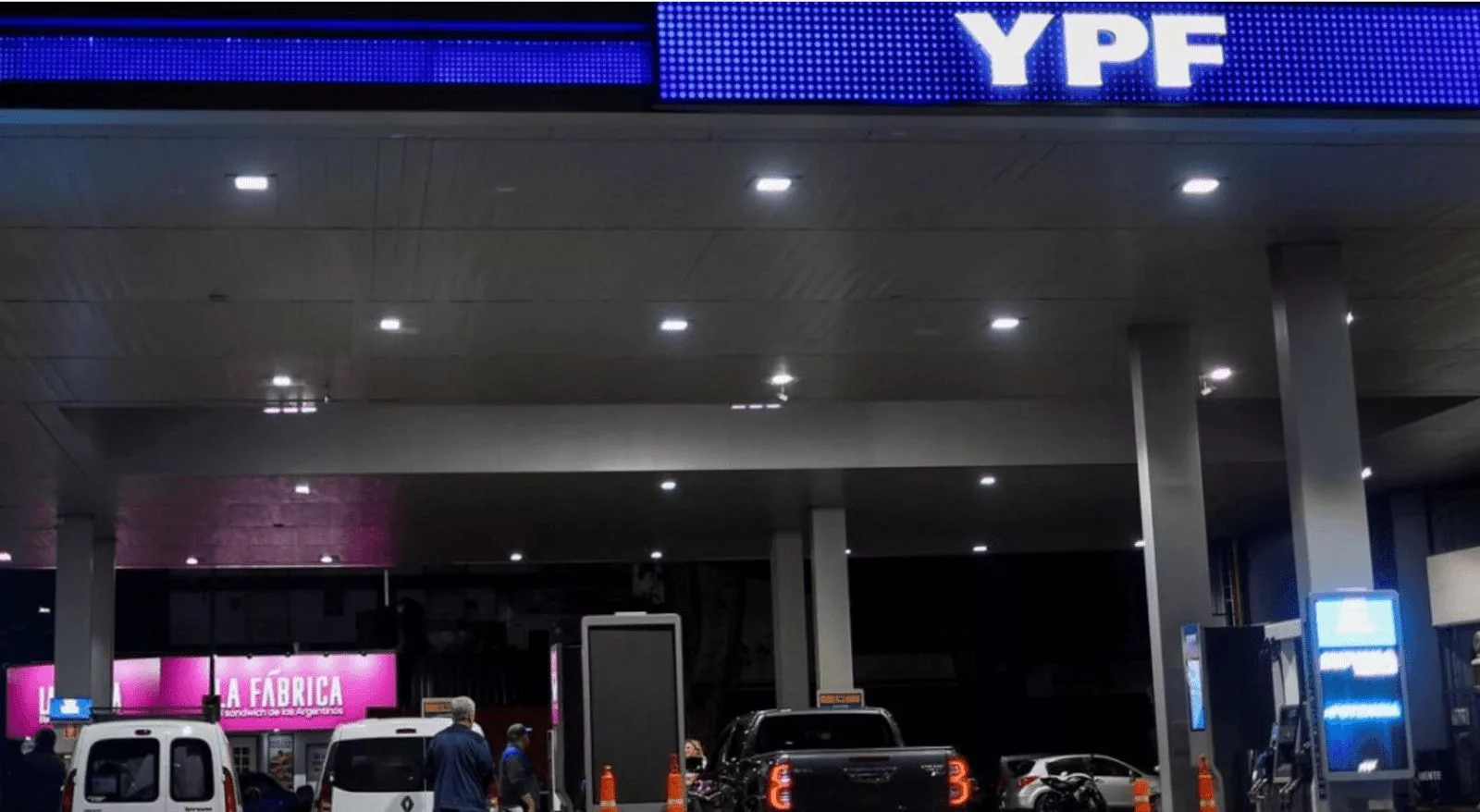
- This is not (just) about fast food. (It’s also about medialunas). This is not (just) about a credit card. This transcends formats and channel diversification; it is a far more profound strategic play.
- It is a masterstroke of strategic retail and platform economics that, if executed well, could transform YPF from a fuel network into something greater: a recurring consumption ecosystem where every stop becomes a transaction, a payment, and a data point.
- According to sector reports in Argentina, YPF is pursuing a multi-pronged strategy: incorporating McDonald's burgers at its "premium" stations through negotiations with Arcos Dorados (the brand's franchisee), launching a Mastercard co-branded credit card while expanding YPF Digital (its fintech arm), all alongside a projected $6+ billion energy investment plan for 2026. It is also exploring a brand crossing with a major medialuna (croissant) brand and has initiated talks with Farmacity to integrate pharmacy products into its retail points.
In marketing, this has a name: migrating from the transactional margin to the relational margin.
The 5 Core Tenets of Modern Brand Value and Business Success:
Crossing Marketing, Category Expansion, Thematic Brand Universes, Collaboration & Co-creation, and Phygital Integration. Executing this today demands new talents, skills, metrics, visions, and planning frameworks—precisely the purview of a Head of Culture role.
Applied to YPF's Strategy:
1. The Core Thesis: Fuel Shifts from "The Product" to "The Traffic Driver"
In 2025, forecourt retail no longer competes on pumps; it competes for time, convenience, and habit. In the U.S., chains like Wawa or Buc-ee's proved a station can be a "destination," not an "errand." In Europe, convenience formats at stations are perfect laboratories for brands needing capillarity.
YPF understood this early: its station retail business already generates approximately $500 million annually, with margins surpassing those of fuel (per cited reports). If accurate, the conclusion is stark: the convenience store and food service are the new, silent engines of the P&L.
2. McDonald's at YPF Black: Co-branding to Elevate Ticket Size and Brand Promise
Adding McDonald's at premium "YPF Black" stations isn't an aspirational whim; it's a strategic shortcut.
- McDonald's provides: Brand trust, operational standards, speed, family demand, and a psychological anchor (a familiar "safe haven" on the road).
YPF provides: Prime locations, high traffic flow, extended hours, weekly frequency, and a massive customer base.
- The goal is a retail classic: increasing average ticket size and recurrence without reliance on fuel price volatility. In brand architecture terms, YPF would deploy an "anchor" brand to elevate quality perception in a premium segment while using other formats for volume.
3. The 4x4 Segmentation: The Network as a Chessboard (Not a Monolith)
A key reported insight: YPF plans to segment its 1,700+ stations into four distinct formats:
- YPF Black: Premium, with high-end offerings and potential McDonald's.
- YPF Full: Current core offer (where YPF is strong in coffee, medialunas, and its own burgers).
- YPF Low Cost / Refiplus: Budget-focused, leveraging Refinor stations.
YPF ACA: Federal presence, potentially integrating Farmacity products in the interior.
- This is crucial because it corrects a historic retail error: assuming "one brand = one experience." Consumers buy based on context (highway vs. city, hurried vs. leisurely, budget vs. treat). Segmentation is an advanced way of stating: we will design the offer around the purchase mission.
4. The Fintech Play: The Real War Is for the "Payment Moment"
The second part of the plan (Mastercard partnership + YPF Digital expansion) is even more ambitious. Per reports, YPF has already obtained Central Bank approval as a payment account provider and is evaluating becoming a full bank—capturing deposits and expanding services.
From a strategic marketing view, this positions YPF as a potential "platform": controlling the payment moment enables control over:
- Loyalty programs (cashback, points, upgrades),
- Personalized promotions (not mass blasts),
- Contextual financing (installments, insurance, assistance),
And, critically, high-frequency behavioral data.
- The conceptual reference is clear: what Pine & Gilmore outline in The Experience Economy and what modern retail learned the hard way: the experience isn't advertised; it's designed. And payment is the final touchpoint of that experience.
5. The "Flywheel" YPF Is Building (Energy + Consumption + Finance)
If executed precisely, the cycle becomes self-reinforcing:
More convenience (McDonald's / premium coffee / pharmacy) → More visits → More app users → More payments → More data → Better offers → More visits.
That is a platform flywheel. It is precisely the arena where players like Mercado Libre or Ualá compete: frequency, data, ecosystem.
15 Actionable Insights on Why This Strategy Can Win
- Never underestimate "the stop": a gas station is a high-frequency physical touchpoint.
- Fuel drives traffic; retail drives margin.
- Format segmentation avoids the error of "promising premium" where the customer seeks value.
- Co-branding works when it reduces perceived risk (McDonald's does this).
- Premium coffee isn't a product; it's a ritual (and rituals create habit).
- Measure per station: ticket size, store conversion rate, margin per square meter, wait time.
- Long lines kill repeat business: operations first, marketing second.
- The app must be "faster than the checkout," or it won't become habitual.
- A proprietary card is a retention lever, not just a financial revenue stream.
- Smart cashback: reward recurrence, don't just give away margin.
- Cross-sell with ethics: personalize without invading (data governance is key).
- Training defines the experience, not the signage.
- Cybersecurity & fraud: in fintech, one crisis can destroy years of brand equity.
- Watch the competition: Axion and Shell are also pushing retail; differentiation requires unique proposition design, not menu copying.
- If the energy core invests heavily (Vaca Muerta/LNG), the consumer "front" must be flawless: trust and consistency are paramount.
References (Per Cited Reports & Institutional Sources)
Retailer (Argentina), 12/23/2025: Report on McDonald's integration and fintech advances.
Sector Report, 12/22/2025: Station segmentation, investment projections, and focus on YPF Digital.
Central Bank of Argentina (BCRA): Regulatory framework for payment service providers / payment accounts.
Pine, B. J. & Gilmore, J. H. (The Experience Economy): Experience design as a competitive advantage.**
Read Smart, Be Smarter!
Infonegocios Miami: a publication written by the Anglolatina business community.
Follow for more analysis: @InfonegociosMiami
https://infonegocios.miami/suscribite-al-newsletter
Contact: [email protected]
Infonegocios NETWORK: 4.5 million Anglo‑Latinos united by a passion for business.
Join us and stay informed.
Infonegocios Miami—Economic, Cultural, and Business Intelligence with a Global Lens
Follow for more analysis: @InfonegociosMiami
© 2025 Infonegocios Miami.







Tu opinión enriquece este artículo: