What revolution is already underway?
Part of the premise is our addiction to cell phones and screens, which we currently live with and fail to realize is a problem. The enigmatic startup Humane showcases its first device in a video: A glimpse into the future of technology.
The goal of the founders of Humane is to make this device a standard in the same way Apple transformed the industry with the iPhone. Humane is convinced that the "human-technology relationship" should evolve beyond the screen, and they consider their product as a step towards that future.
Background:
During the TED 2023 conference just over a month ago in Vancouver, Canada, Humane made its debut and left everyone astonished with its innovative device. Designed to clip onto your clothes, this small device offers a unique sensory experience by projecting images onto your hands. Imagine checking messages, looking up information, or even having ChatGPT-style conversations, all right in the palm of your hand.
What makes Humane even more fascinating is that it works independently, without the need for a smartphone, smartwatch, or computer. This means the device has its own intelligence and processing power, providing a seamless, screenless experience that keeps us connected without disconnecting us from the environment around us. How is it possible for such a small device to perform all these functions? Although the details of its internal operation are a well-kept mystery, it is presumed that Humane leverages cloud computing to enhance its artificial intelligence. This allows it to perform tasks such as real-time translations, object recognition through its camera, meeting summaries, and information searches, among other impressive capabilities. But the most exciting part is the potential for Humane to replace smartphones as we know them.
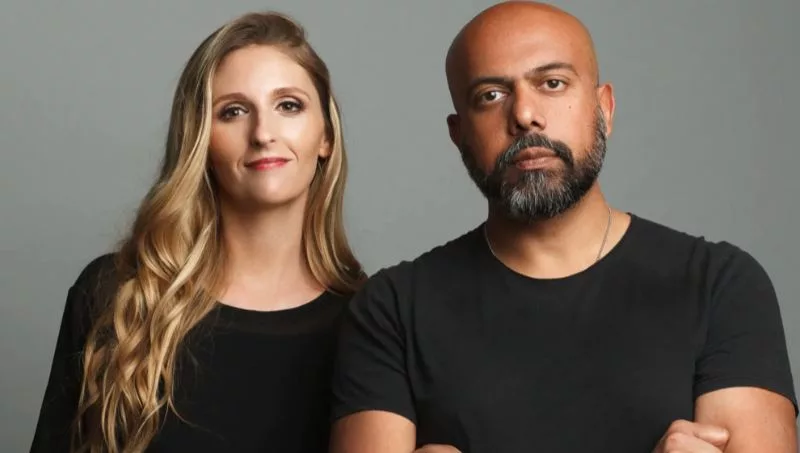
While an official release date has not yet been announced, the company assures that this device has the power to completely transform our relationship with mobile technology. With the backing of tech giants like Microsoft and OpenAI CEO Sam Altman, Humane is in a privileged position to change the technological landscape. Imran Chaudhri, one of the founders of Humane, describes the experience with the device as "screenless, seamless, and sensory." This futuristic vision invites us to imagine a world where technology seamlessly integrates into our daily lives without the need for distracting screens. For Chaudhri, Humane's device represents an innovative solution that has been long-awaited.
The future of mobile technology is constantly evolving, and Humane has taken a bold step forward. Are we witnessing the beginning of the end for cell phones as we know them? Only time will tell, but one thing is certain: Humane is ready to change the way we interact with technology, offering a unique and revolutionary experience.
The product:
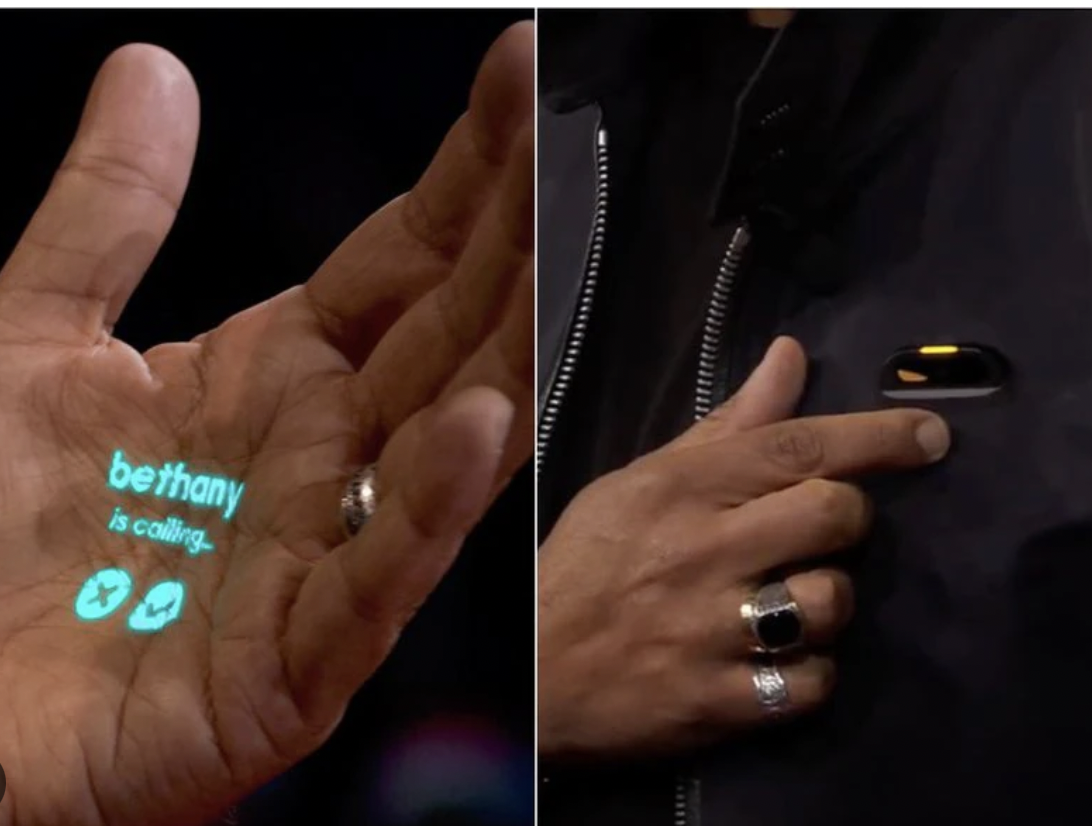
Humane has created a unique wearable, a small device that can attach to almost any part of the body and projects a graphical interface onto areas like the palm of the hand. During the presentation, Chaudhri wore the Humane wearable on the upper part of his jacket, at chest level, and amazed the audience by making a call and projecting the interface directly onto his hand.
The interface displayed relevant information, such as the contact's name and call duration, along with three functional buttons at the bottom: mute microphone, end call, and put on hold. Although they are not capacitive buttons, Chaudhri explained that the device primarily functions through voice commands, similar to well-known voice assistants like Alexa or Siri. Additionally, the Humane wearable features LED indicators to show if the microphone is active.
One fascinating aspect of this device is that it is completely independent and does not require being linked to a smartphone or any other device. Designed from the ground up using artificial intelligence, the Humane wearable promises to leverage AI capabilities to enhance our lives in surprising ways. During his TED talk, Chaudhri posed the following reflection: "What can we do with all these incredible advances in AI? How can we genuinely harness them to improve our lives? If done correctly, AI will unlock a world of possibilities."

But the functionalities of the device don't stop there. The Humane wearable has the ability to perform real-time translations using AI voice models that can mimic the user's voice. Chaudhri demonstrated this by translating his voice from English to French, leaving the audience amazed. According to a witness of the talk, "The translation was heard in French, but it was his own voice generated by AI that spoke," and added that "no interface was projected for the translation."
Furthermore, this innovative device has the capability to gather user health data and provide relevant information based on it. During the presentation, Chaudhri held a chocolate bar in front of the device and asked with a voice command, "Can I eat this?" The device's response not only indicated that the chocolate bar contained cocoa butter but also warned Chaudhri, who is lactose intolerant, that it would be better to avoid it.
What's most impressive is that the Humane wearable gives full control to the user. Chaudhri emphasized that the device owner has the final say and can make decisions despite the recommendations of the integrated AI model. Defiantly, after the device's response, Chaudhri stated, "I'm going to eat it anyway." To which the assistant replied, "Enjoy it."








Tu opinión enriquece este artículo: