Special Edition: FIFA World Cup 2026 — Sports Brand Strategy & Global Culture Series

There are signings that move players. And there are signings that move markets, cities, and entire paradigms.
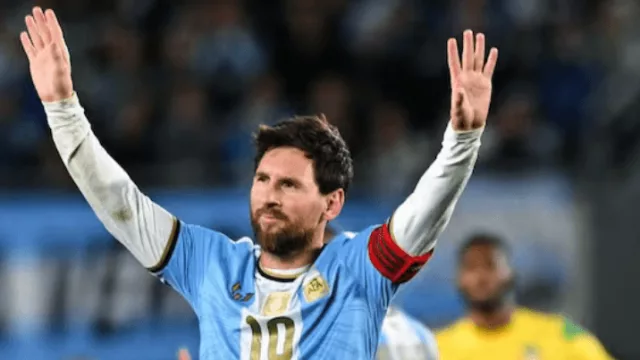
What Inter Miami CF is quietly arranging in the back offices of its South Florida headquarters could be exactly that: not a mere recruitment, but the bold strategic move in North American football since Lionel Messi landed at Chase Stadium in July 2023 and turned Miami into the most unexpected — and most lucrative — sports capital on the planet.
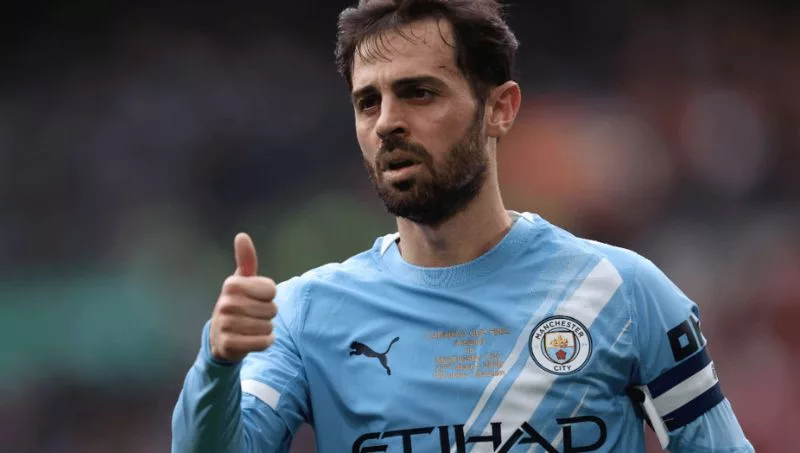
The name circulating with increasing strength in Italian, English, and Portuguese media is Bernardo Silva, 31-year-old attacking midfielder from Manchester City, whose contract expires on June 30, 2026. And if that name sounds familiar, that’s no accident: he’s the same player who for years was Cristiano Ronaldo’s creative partner and club-mate with Portugal. The question reverberating in global football forums today is simple, direct, explosive:
Can the man who played alongside CR7 become Messi’s perfect partner?

WHO IS BERNARDO SILVA? THE PROFILE OF THE MAN THE FOOTBALL WORLD DOESN'T WANT TO LOSE
To understand why this signing would shake the foundations of global football, you must first grasp what Bernardo Silva represents as a football asset and as a world-class personal brand.
In his 408 appearances for Manchester City, the Portuguese star tallied 74 goals and 78 assists, a central piece in one of the most successful projects in European football history under Pep Guardiola. His trophy cabinet includes 19 titles with City, including a Champions League (2023), six Premier Leagues, and a Community Shield. As if that weren’t enough, he’s a senior national team player who will be fully active in the 2026 World Cup, to be hosted by the United States, Canada, and Mexico, giving him unprecedented global visibility just as he negotiates his future.
We’re not talking about a fading star. At 31, he sits at the peak of tactical and intellectual maturity as a footballer. As journalist Fabio Russo documents in La Gazzetta dello Sport, Silva has decided to leave City, and his superpower agent, the mighty Jorge Mendes — who also manages Cristiano Ronaldo and dozens of global icons — is already maneuvering in the market.
THE CHESSBOARD: WHO COMPETES FOR BERNARDO SILVA
The market around Bernardo Silva is, in business terms, equivalent to a high-value auction with multiple powerful bidders. Knowing the terrain is key to understanding why Inter Miami doesn’t have guarantees — and why, nonetheless, it can offer unique propositions that no other club can.
-
Juventus (Italy): The Old Lady, led by Luciano Spalletti, is having an irregular Serie A season, 15 points behind Inter Milan in the Scudetto race. Their immediate objective is to secure Champions League 2026/27 qualification, and for that they need a world-class midfielder to lift the squad. Per La Gazzetta, Mendes’ circle has already been approached. This is the most concrete European destination.
-
Galatasaray (Turkey): The Istanbul club has shown a surprising pull in recent years, attracting stars like Victor Osimhen and Leroy Sane. Turkey’s financial muscle and project ambition make it a serious candidate, albeit with somewhat lower global branding reach.
-
Benfica (Portugal): The sentimental storyline is powerful — the club where Silva developed 13 years ago before leaving for Monaco and then City. A repatriation would carry significant emotional value, but Benfica’s financial muscle to compete at this level is notably smaller than the other contenders.
-
Inter Miami (USA): The MLS reigning champion, the club with the most media traction in the American continent, and the only club in the world that can offer Bernardo Silva something no other club can: playing alongside Lionel Messi in the World Cup year 2026 on North American soil.

THE MASTERSTROKE: WHY MIAMI IS MORE THAN A FOOTBALL DESTINATION
This is where the story stops being purely sports and becomes a case study for the world’s most analytical minds in business, entertainment, and brand strategy.
Messi’s arrival at Inter Miami in 2023 was not just a football signing. It was an urban and economic realignment operation. According to data from the Miami-Dade Chamber of Commerce, the direct and indirect economic impact of Messi’s presence in the city surpassed USD 1.4 billion in his first year alone — spanning tourism, hospitality, merchandising, TV rights, and adjacent real estate value around the stadium.
MLS has seen a 340% surge in Spanish-speaking viewership since 2023 (Nielsen Sports). Apple TV+’s league deal, valued at over USD 2.5 billion across 10 years, found its most powerful content asset in Inter Miami.
Now imagine the Messi + Bernardo Silva equation in a year when World Cup 2026 is played on North American soil.
This is not football. It’s infinite content. Global, guaranteed audience. The most valuable entertainment asset in the 2026 sports market.

THE HUMAN FACTOR: TWO GENIUSES WHO ALREADY KNOW EACH OTHER
There’s an element that numbers don’t fully capture but performance-psychology experts like those documented in Daniel Coyle’s The Culture Code emphasize as decisive: compatibility of character and playing style.
Bernardo Silva and Lionel Messi know each other well. They’ve faced each other dozens of times in the Champions League and international friendlies. They publicly admire one another. Both are attacking midfielders with exceptional vision, elite positional intelligence, and a quiet leadership profile that hinges on collective efficiency rather than ego.
Tactically, a Messi-Silva pairing could be the MLS’s most sophisticated ever. A midfielder with Silva’s physical engine and tactical discipline would exponentially unlock the spaces Messi needs to operate. It wouldn’t be two stars sharing the field; it would be two systems of football intelligence operating in perfect harmony.
With Luis Suárez still on the squad and players like Telasco Segovia and Micael delivering week after week, Inter Miami 2026 could become the most complete and media-dominant MLS team in its history.
THE PRECEDENT THAT CHANGES EVERYTHING: GRIEZMANN TO ORLANDO CITY
The ecosystem is ripe for moves of this scale. Antoine Griezmann’s recent move to Orlando City — a World Cup winner with France and a longtime figure at Atlético Madrid — confirms that MLS is no longer a retirement destination. It’s a strategic endpoint for top-tier players in their prime who understand the value of positioning in the American market as the United States becomes the epicenter of world football with World Cup 2026.
Thomas Müller, Hugo Lloris, James Rodríguez, Son Heung-min — the list of players choosing MLS for their late-career renaissance grows at a pace that three years ago seemed impossible.
Bernardo Silva would be the natural next step. And Miami is the most logical destination.
WHAT BUSINESS LEADERS SHOULD LEARN FROM THIS MARKET
The Bernardo Silva–Inter Miami case is, at its core, an executive manual on how to position oneself in the right market, at the right time, with the right partners. Five principles any leader should apply today:
✅ 1. The value of free asset liquidity is the market’s greatest lever. Silva would be a free agent on June 30. In business: top talents are sometimes available at no transfer cost. The question isn’t what the signing costs, but what it costs NOT to sign.
✅ 2. Positioning before demand creates asymmetrical advantage. World Cup 2026 in the USA is the catalyst. An Inter Miami signing Silva in July enters the world’s most-watched tournament with the world’s most sellable squad. In business: anticipate demand peaks and position your assets before competitors understand what’s happening.
✅ 3. Talent compatibility is worth more than the sum of its parts. Messi + Silva isn’t 1+1=2. It’s an exponential function. In business: build teams where talents amplify each other, not merely add up.
✅ 4. A city’s brand is an asset few leaders know how to leverage. Miami in 2026 is not just a city. It’s an ecosystem of business, entertainment, tourism, and culture that naturally attracts global talent. In business: treat markets as strategic partners, not just geographical locations.
✅ 5. The agent behind the talent is the deal’s key. Jorge Mendes doesn’t move players. He moves ecosystems. In business: identify who truly holds decision-making power in a negotiation and cultivate the relationship from there.
Read Smart, Be Smarter.
🔗 Subscribe to our Newsletter 📩 Contact: [email protected]
Infonegocios NETWORK — 4.5 million Anglo-Latinos united by a passion for business. Join us and stay sharp.

© 2026 Infonegocios Miami Economic, Cultural & Business Intelligence with a Global Lens www.Infonegocios.Miami








Tu opinión enriquece este artículo: