(High-value strategic read, 4 minutes — worth saving and sharing)

When a Festival Stops Being a Festival and Becomes the Greatest Brand Culture Laboratory of the 21st Century
There is a moment — invisible to 97% of the industry — when an event crosses an unseen threshold: it stops hosting brands and starts being a brand-universe that generates its own gravitational pull.
It happened with F1. It's happening in similar ways with Stranger Things, LEGO, Adidas, Star Wars, Netflix, Mercedes, Miami, Harry Potter, Apple, Google, Ferrari, Red Bull, the Miami Heat, Inter Miami, Real Madrid, and Heineken. Disney and Universal have been operating at this level for years. And now Coca-Cola, Pepsi, McDonald's, Victoria's Secret, and Starbucks are all working — hard — to rebuild that same difficult road: developing multi-skilled talent, appointing genuine Heads of Culture, building brand logistics infrastructure, investing the time, and committing the serious budget required to achieve what matters most today and tomorrow — being relevant.
Coachella crossed that line.
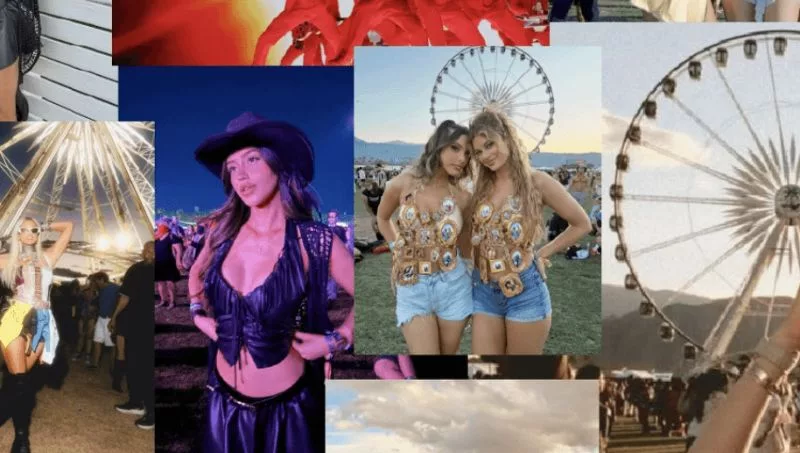
What happens every April in the desert of Indio, California is no longer a music festival. It is the most ambitious social experiment in the history of contemporary branding — a living ecosystem where more than 220 brands, dozens of artist-brands, and 250,000 attendees simultaneously co-create culture, design, art, narrative, and commercial strategy in real time.

📊 The Numbers Are Staggering
The Coachella 2025 figures are almost obscene in their scale:
-
764 billion media impressions
-
$550 million USD in equivalent media value
-
40 million streaming viewers
-
15.9 million social media mentions
-
$700 million+ USD in total economic impact
But reducing Coachella to metrics is like reducing the Sistine Chapel to square footage of painted ceiling.
(And this is precisely the "META truth" — the ROI, the measurement framework — that the industry urgently needs to rescale and rethink.)
The real phenomenon lives in the thousands of invisible cross-connections that only ecosystem-level thinking can decode — and genuinely measure.
🎥 The Video of the "Universe That Looks Like Just a Music Festival"
Crossing Marketing: The Discipline That 3% Understand and Everyone Else Mistakes for Collabs or Cross-Category Deals
Crossing marketing — the term that defines the post-co-branding era — is not two logos appearing side by side. It is the deliberate engineering of multidimensional cultural intersections where each brand contributes a symbolic asset (visual identity, community, narrative, technology, emotional territory) and the intersection generates value that none of them could have created alone.
Think about how it operates at Coachella: Brands don't sponsor the festival. They deploy experiential activations where product design, sneaker culture, music, and desert identity collide to create their own micro-universes inside the larger universe.

The same logic powers Ferrari — yes, Ferrari in F1, where it's far more than a racing team. Ferrari is a music festival, a fashion moment, an art installation, a game, a toy, a cultural movement, a religion. It carries its DNA of engineered desire into sensory experiences that recontextualize what luxury even means.
LEGO does the same at the World Cup, in F1, and with Star Wars — taking its genius modular system and transforming participatory creativity into a living art installation.
Under this new paradigm, every brand stops being an advertiser and becomes a co-author of the event's culture — whether at Coachella, at F1, increasingly at FIFA, and long since established at the NFL and NBA.
And Here Is the Key That Separates the 3% From Everyone Else Watching the Show
Every attendee at Coachella — or any event operating at this level — is not an audience. They are a medium.
The 250,000 people in that desert are simultaneously consumers of experience and producers of cultural content. Every Instagram story, every TikTok, every photo taken inside a brand installation is an act of co-creation — unpaid, but deeply voluntary.
Coachella engineered a system where sharing IS the experience — not a byproduct of it.
Which means these events must now be MACRO-designed — no longer solely by the show's curators (the show curation still matters, obviously, but it is no longer the top layer). The top layer belongs to the Heads of Culture of the multi-brand, multi-category ecosystem.

🎥 200+ Brands With Themed, Playful, Experiential "Museum Houses" — Another Dimension of the Event Entirely
The Brand Theme Universe: From a Line to an Ecosystem
The evolution is crystal clear — for anyone who has trained their eyes to see it.
-
Traditional marketing was linear: Brand → Message → Consumer.
-
Experiential marketing was circular: Brand ↔ Experience ↔ Consumer.
-
Coachella's crossing marketing is orbital: multiple brands, artists, creators, and attendees rotating in interconnected orbits around a shared cultural nucleus — generating unpredictable intersections that no single party planned or could have manufactured alone.
When Justin Bieber hits #1 globally after his Coachella appearance, that's not just a music story. It's the collision of cultural nostalgia, a media moment, platform algorithms, and the collective energy of a quarter million people amplifying simultaneously. You cannot buy that. You have to design it as a system.
The 220+ brand activations at Coachella 2026 are not competing with each other — they operate as nodes in a network. Each activation elevates the perceived value of every other one. The immersive tech brand installation makes the fashion brand's sensory space feel more premium. The beverage brand's environment extends dwell time — which directly benefits the cosmetics brand next door. It is network economics applied to experiential branding.
The Uncomfortable Question That Defines This Era
Coachella surfaces the central tension of contemporary cultural marketing: when everything is designed to be shared, are we still living the experience — or are we just manufacturing content for others to witness?
The Coachella ecosystem's answer is radical: both things are the same thing.
In 2026, living and documenting are not separate acts. The shared experience is the complete experience. The brand that truly gets this designs for the camera AND for the skin. For the algorithm AND for the emotion.

Coachella doesn't sell music. It designs culture and attention at planetary scale.
And the 220+ brands participating are not buying ad space. They are buying citizenship inside a cultural universe with its own rules, its own aesthetic, and its own symbolic economy.
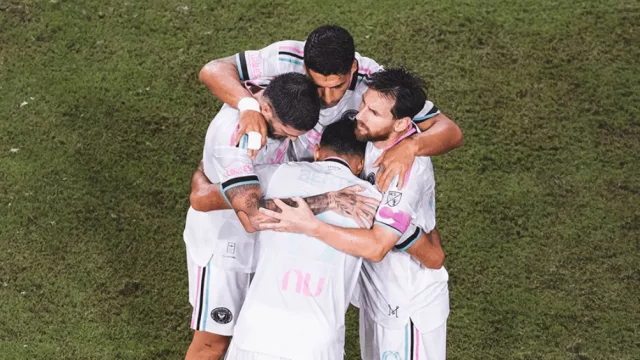
🎥 Where Everything Crosses — Fashion, Art, Design, Football, Culture, Brands
The Bottom Line
The future of branding is not in the ad. It's not even in the isolated experience.
It lives in the capacity to build — or integrate into — living cultural universes where brand, person, art, and technology become indistinguishable from one another.
Coachella is the prototype.
The 3% already know it.
The rest still think it's a music festival.
Infonegocios Miami Read Smart, Be Smarter.
📩 Contact: [email protected]
Infonegocios NETWORK — 4.5 million Anglo-Latinos united by a passion for business. Join us. Stay informed. © 2026 Infonegocios Miami.

www.Infonegocios.Miami Infonegocios Miami — Economic, Cultural, and Business Intelligence with a Global Lens. Strategy, Brands, and Business for the Leaders of the Americas.


Tu opinión enriquece este artículo: