Carlos Sainz wasted no time in taking his Ferrari to the top with a time of 1:33.823 using the medium tires, while Checo Pérez continued the same strategy as Verstappen with the harder tires.
After 15 minutes, the conditions became more realistic, and Verstappen improved even further with the white tires, registering a time of 1:31.826, surpassing Charles Leclerc by 0.702 seconds, who was also using the same tires. Lewis Hamilton placed third but was 1.141 seconds behind the leader's time with medium tires, followed by Pérez.
The session stopped with 26 minutes on the clock when Nico Hulkenberg hit the wall.
When the session resumed, Verstappen reduced his time to 1:30.549, as did Leclerc, who reached second place just 0.253 seconds behind the Red Bull's two-time champion's record.
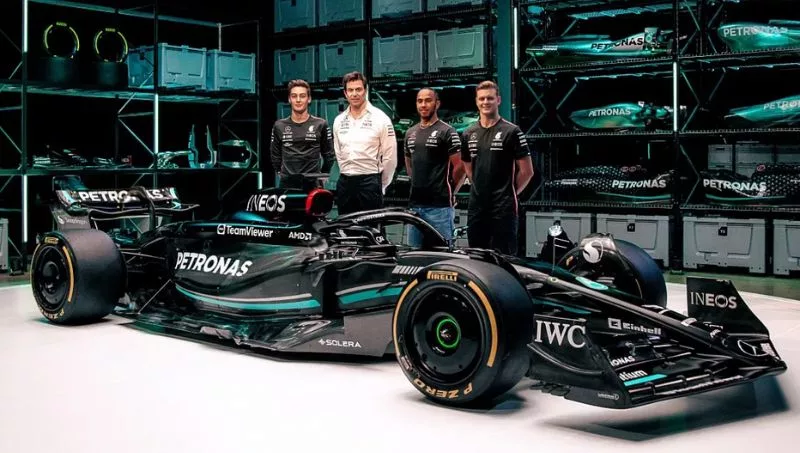
In the last two minutes, the Mercedes attacked. First was Lewis Hamilton, who placed himself in the first position with a time of 1:30.337, but seconds later, Russell climbed to the top with 1:30.125.

This displaced Leclerc to third place, with Verstappen in fourth position. Pierre Gasly, sixth with the Alpine, was the last driver to be less than one second behind Russell. Fernando Alonso, Lance Stroll, and Nico Hulkenberg occupied the seventh to ninth positions.










Tu opinión enriquece este artículo: