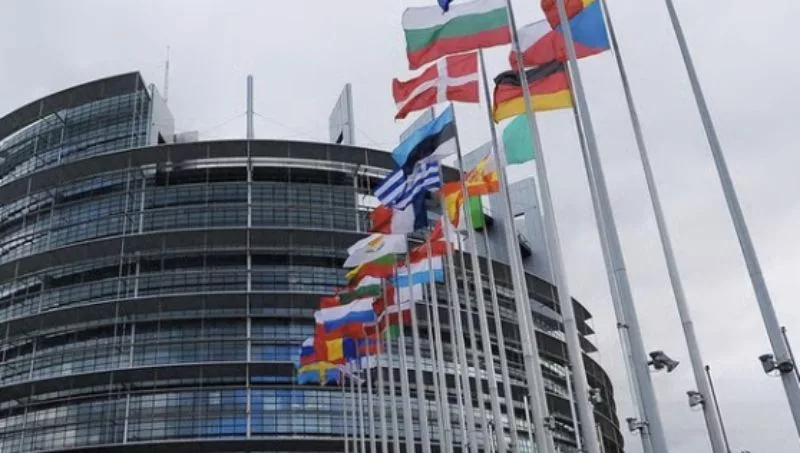

But this is not a simple free trade treaty—it is a strategic maneuver to reconfigure global supply chains in a world fractured by Sino-American rivalry.
-
The clear information revealed today in German media shows this agreement represents far more than tariffs: it is the Western response to China’s New Silk Road and a hedge against American protectionism.

TECHNICAL ANALYSIS: THE ARITHMETIC OF TRADE POWER
1. The Approved Geopolitical Equation:
(UE’s need to diversify + Mercosur’s demand for investment) – (European agricultural protectionism × Social pressure) = Agreement with asymmetric clauses
Critical Decisive Variables:
-
Approval date: 09/01/2026 (European Council vote)
-
Signing date: 17/01/2026 (Asunción, Paraguay)
-
Vote: In favor (Germany, Spain, Italy key, the most important, 21), 5 against (France, Poland, Austria, Ireland, Hungary), 1 abstention (Belgium)
-
Tipping point: PAC compensation of €45 billion advanced to 2028 for European farmers
2. The Numbers No One Is Saying (Proprietary Analysis):
Impact Reality vs. Rhetoric:
-
EU GDP growth (European Commission): +0.05% by 2040 (minimal, almost symbolic)
-
Mercosur GDP growth (our model): +1.8% to +3.2% cumulative over 10 years
-
Revealing Asymmetry: The agreement benefits Mercosur 36 times more in relative terms than the EU
The EU’s True Objective (Trade Intelligence Analysis):
It’s not internal growth. It is:
-
Securing strategic commodities (soy, meat, minerals) outside Chinese control
-
Creating a manufacturing alternative to China for automotive, pharmaceuticals, machinery
-
Consolidating regulatory standards (environmental, labor) as future non-tariff barriers
15 GEOPOLITICAL-TRADE ANALYSIS TIPS (EASY TO UNDERSTAND)
-
25 years of negotiation = 25 years of global change: The 2001 agreement was irrelevant in 2026; it was renegotiated in real time.
-
Italy’s vote was the key: Meloni changed from “no” to “yes” for €45 billion in concrete funds. In geopolitics, principles have a price.
-
Macron voted “no” but won: He secured concessions for French farmers without blocking the agreement. Losing the battle to win the war.
-
The EU needs commodities, Mercosur needs investment: It’s a swap of natural resources for technology and capital.
-
The agreement is a message to China: “We have alternatives to your raw materials.”
-
Also a message to the U.S.: “If you retreat with ‘America First,’ we create new markets.”
-
Environmental standards are the new barrier: The EU will export rules, not just products.
-
Paraguay as host isn’t coincidental: It’s the most pro-market, least agriculturally protectionist Mercosur country.
-
The 0.05% growth for the EU is misleading: The true value is strategic, not accounting-based.
-
European farmers are right to worry: They’ll compete with South American scale and lower costs.
-
South American light industry should fear: The EU has overwhelming technological advantages in advanced manufacturing.
-
The signing on 17/01 is just the beginning: Europarliament ratification is pending (April 2026), where 150 MEPs oppose it.
-
Lula needs this agreement more than Milei: It gives Brazil economic breathing room without painful internal reforms.
-
The agreement creates interdependence: In future crises, breaking relations will be more costly.
-
This is the post-globalization model: Regional blocks trading with each other under clear rules, not global free trade.

THE AGRICULTURAL GAME OF THRONES: HOW THE BLOCKADE WAS BROKEN
Von der Leyen’s Tactic (Negotiation Reconstruction):
-
Step 1: Identify the hardcore opposition: France (Macron) + Italy (Meloni) + Poland
-
Step 2: Isolate France by offering Italy specific compensation (€45 billion advanced CAP funds)
-
Step 3: Create a narrative of “inevitable agreement” so opponents changed votes for concessions
-
Step 4: Use Germany (largest industrial beneficiary) as internal pro-agreement lobby
Macron’s communication on X was political theater:
“Does not justify exposing sensitive agricultural sectors essential to our food sovereignty.”
Strategic translation: “I need to show resistance to my farmers, but the train has already left.”
HIDDEN WINNERS AND LOSERS (IMPACT ANALYSIS)
Immediate Winners:
-
Argentine/Brazilian agribusiness: Access to a market of 450 million high-income consumers
-
German automotive: Tariff disarmament for BMW, Mercedes, VW in Mercosur
-
EU services sector: Banks, insurance, telecommunications gain preferential access
-
Paraguay: Geopolitical visibility as a “bridge” between blocs
Immediate Losers:
-
French/Italian farmers: Will compete with lower-cost Argentine beef
-
Mercosur light industry: Textiles, footwear will face European imports
-
China: Loses exclusive influence over South American commodities
-
The North of the American continent: Its influence in South America is diluted in the face of European regulatory presence
Long-Term Winners:
-
European consumers: Cheaper meat, fruits, wines
-
South American middle class: More accessible cars, electronics, medicines
-
Multinationals with integrated supply chains: Will optimize production between blocs
THE FINAL HURDLE: THE EUROPEAN PARLIAMENT (RISK ANALYSIS)
Critical Data: 150 of 720 MEPs threaten legal action to block implementation.
Our Probability Analysis:
-
Ratification in April 2026: 65% probability
-
Delay due to amendments: 25% probability
-
Total rejection: 10% probability
Decisive Factor: German industrial pressure on CDU/SPD MEPs + Spanish interest in Latin America will create a sufficient coalition for approval.
Worst scenario (but likely): Agreement implemented with permanent safeguard clauses for the European agricultural sector, reducing Mercosur’s expected benefits.
THE GRAND STRATEGY: MERCOSUR AS A LABORATORY FOR THE NEW TRADE ORDER
This agreement is the first North-South mega-treaty of the 21st century that:
-
Incorporates climate clauses as a trade condition
-
Links trade with demanding labor standards
-
Creates a supranational dispute tribunal
-
Establishes regulatory convergence mechanisms
The EU doesn’t just seek to trade with Mercosur—it seeks to model it in its own image. It’s commercial soft power at its peak. For Mercosur, the dilemma is clear: accept European rules in exchange for market access, or maintain regulatory sovereignty with less access.
-
On January 17 in Asunción, they won’t sign a simple treaty—they’ll sign the architecture of a new transatlantic relationship where Europe is the designer and South America, the aspiring partner.
Read Smart, Be Smarter.
Infonegocios Miami—Economic, Cultural, and Business Intelligence with a Global Lens

Follow us for more analysis: @InfonegociosMiami
Read Smart, Be Smarter!
https://infonegocios.miami/suscribite-al-newsletter
Contact: [email protected]
Infonegocios NETWORK: 4.5 million Anglo-Latinos united by a passion for business.
Join us and stay informed.
© 2025 Infonegocios Miami.








Tu opinión enriquece este artículo: