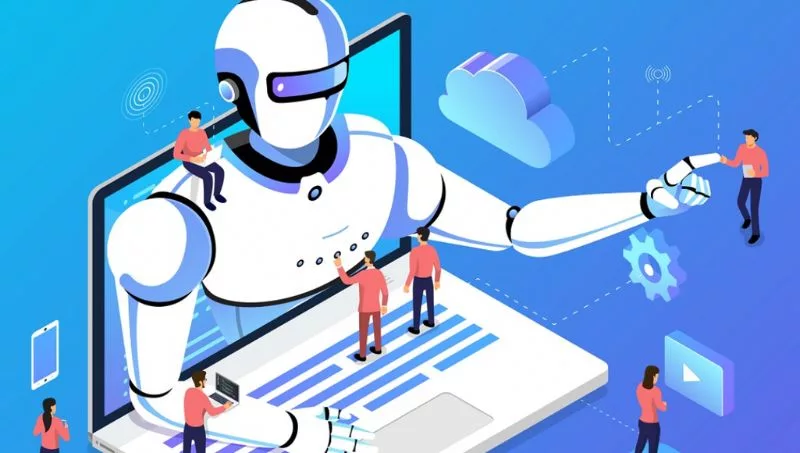
The different faces of the same reality
-
Artificial intelligence can improve people's quality of life if used responsibly. Governments and companies must establish ethical regulations to ensure that AI is used safely and fairly.
-
AI has the potential to improve efficiency and productivity in a wide variety of industries. However, companies must consider the possible impacts on employment and work in collaboration with workers to develop solutions that are beneficial for everyone.
-
AI can have unintentional biases that can perpetuate discrimination in society. It is important that AI developers consider diversity and inclusion when designing algorithms and machine learning models.

-
AI can have a significant impact on data privacy and security. Governments and companies must implement security measures to protect personal and confidential data.
-
AI can amplify economic inequality if not implemented properly. It is important for governments and companies to work together to ensure that AI is used fairly and benefits society as a whole.
-
AI can improve healthcare and medical research. Technology and healthcare experts must work together to develop solutions that are beneficial for patients and medical professionals.
-
AI can improve education and student training. Education professionals must work with AI developers to create solutions that are effective and equitable for all students.
-
AI can improve public safety and crime prevention. However, governments must ensure that technologies used for these purposes do not violate human rights or privacy.
-
AI can improve environmental sustainability if used properly. Governments and companies must work together to develop solutions that reduce environmental impact and promote sustainability.
-
AI can have a significant impact on politics and governance. Governments and citizens must work together to understand how AI is changing the world and to develop policies that protect society and promote general well-being.

AI has the potential to significantly improve people's lives and transform society as a whole. However, it is important for governments, companies, and citizens to work together to ensure that AI is used responsibly, fairly, and safely, and that it benefits society as a whole. What no one can deny is that it generates many changes and that there has been a low level of responsibility and projection of the impact it will produce. The impact is perhaps much more drastic than that of the industrial revolution.
So while we are fighting over right or left ideologies from over fifty years ago, a new great real threat TODAY is not being addressed globally. A supposed six-month brake is not enough, as AI advances much faster than people and systems can adapt. Denying this is serious.

What should all society and all institutions do now?
-
It is important to recognize that these changes can generate minor psychophysical symptoms up to states of distress, stress spikes, and depressive states in people, especially if they are not prepared to adapt to them. Therefore, it is essential to start preparing now for the challenges that will come in the future.
-
People must recycle what they have learned, be more aware, discover who they are, enhance their abilities, and flexibilize their work profile. It is also necessary to consider whether reskilling is needed, that is, carrying out a deep professional recycling based on new requirements and skills.
-
Companies and organizations must work oriented towards collaborators. Reevaluating processes, developing well-being policies and strategies, conducting training, creating mixed teams combining with these new technologies are just some of the actions they can take to support the integration of these technologies into the workplace.
-
Furthermore, it is important for companies to acknowledge that technology is constantly evolving, and therefore, they need to be prepared to adapt and implement new solutions as they arise. This requires a culture of continuous learning and improvement, where employees are encouraged to acquire new skills and stay up-to-date with the latest technological advancements.
-
Another important aspect is to ensure that the use of technology does not negatively impact employee well-being. This can be achieved by promoting work-life balance, providing mental health support, and ensuring that employees have access to the resources and tools they need to perform their job efficiently and effectively.

In summary, the integration of technology in the workplace is inevitable, and companies must embrace this change by developing strategies and policies that support the well-being and development of their employees while maximizing the benefits of these new technologies.










Tu opinión enriquece este artículo: