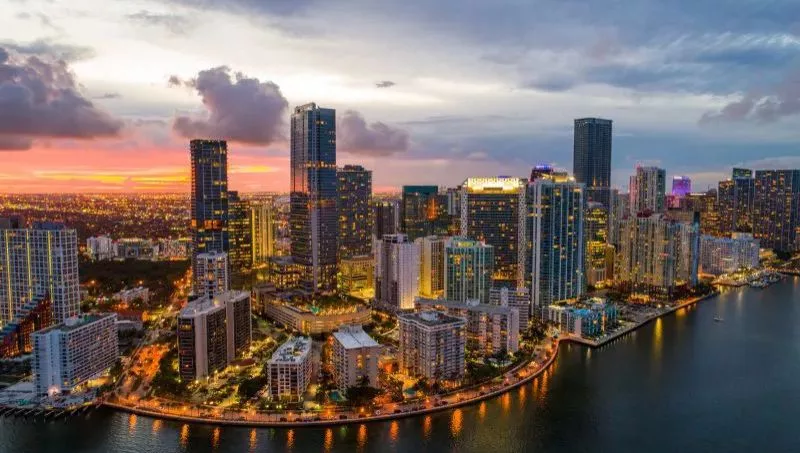

How Did It Achieve This? Here’s a Glimpse into the DNA of Its Trailblazing Spirit
Miami 2.0 — Where Is the City Headed?

Miami isn’t just about beaches and nightlife; it’s a dynamic laboratory where migration, technology, and ambition converge. With a projected population reaching 7 million by 2030 and projects like the USD $6 billion Magic City Innovation District — a mini tech city — the next decade promises to redefine Latin capitalism. The secret? Adaptability, just as it did in 1896.
Key Factors Defining Its Success
(Strategic insights for LATAM and Spain entrepreneurs)
-
Founding Date: July 28, 1896, following Henry Flagler’s arrival via railroad.
-
Economic Powerhouse: 68% of its GDP stems from international trade and tourism (Miami-Dade Beacon Council).
-
Sports Impact: Miami Heat (NBA) and Inter Miami (Messi) generate over USD $1.2 billion annually in economic impact.
-
Real Estate: Average home price: USD $650K (+210% since 2010).
-
Cultural Hub: 72% of the population is Hispanic; it’s the leading startup hub for Latinos in the U.S.

Today, Miami is the magnet for investment — in real estate, advertising, startups, and major events.
It has become the global city where everyone wants to be seen and to succeed, but in doing so, Miami has also become an ultra-demanding environment: excellence is the standard.

The Origins — When a Swamp Turned into Gold
"Julia Tuttle vs. Mosquitoes: The Woman Who Challenged the Skeptics"
-
Key Fact: Julia Tuttle convinced Henry Flagler to extend his railroad by sending him orange blossoms after the devastating 1894 cold snap that destroyed crops in northern Florida.
-
Visionary Strategy: Flagler invested USD $50 million (equivalent to USD $1.5 billion today) in infrastructure, according to Miami: A Cultural History (Arva Parks, 2023).
-
First Success Story: The Royal Palm Hotel (1897), attracting wealthy anglers and tropical climate lovers.

Milestones That Transformed Its Economy
"From Bacardi Warehouses to Brickell Skyscrapers"
1920s–1940s:
-
Prohibition and smuggling: Miami became a key port for Cuban rum (Bacardi) and sugar.
-
Art Deco Boom: 800 buildings constructed in South Beach, now valued at USD $4.3 billion (Miami Design Preservation League).
1980s–2000s:
-
Mariel Boatlift: 125,000 Cubans revitalized sectors like construction and gastronomy.
-
Art Basel: Since 2002, it has generated USD $500 million annually in art sales (2024 report).

Today’s Miami: The Latino Silicon Valley
"Startups, Crypto, and the Power of the Solo Entrepreneur"
Hard data:
-
Tech: Over 2,300 Latino startups operate in Miami, such as Nearshore.com, valued at USD $1.3 billion.
-
Crypto: 30% of U.S. Bitcoin investors are based in Miami (Coinbase Report, 2024).
Replicable Model:
-
eMerge Americas: The annual tech conference attracts 25,000 executives. Key advice: “Align your brand with events blending culture and business,” says Felice Gorordo, CEO of eMerge.

The 3 Unwritten Rules for Success in Miami
Networking over coffee, not just in offices:
-
40% of deals in Wynwood are closed at spots like Panther Coffee.
Invest in Climate Tech:
-
Miami-Dade will allocate USD $1 billion by 2030 to combat rising sea levels.
Leverage Sports as a Branding Powerhouse:
-
The Miami Grand Prix (F1) generates USD $350 million annually.
-
Red Bull sponsors 12 local startups, exemplifying the synergy between sports and innovation.
Read Smart, Be Smarter!
Join us and stay ahead with exclusive access to strategic insights — become part of the largest business and culture community across Anglolatin America!
Sign up for free: https://infonegocios.miami/suscribite-al-newsletter
Infonegocios NETWORK: 4.5 million Anglo-Latinos united by a shared passion for business excellence.

Contact Infonegocios Miami:
Explore our regional platforms:
-
Uruguay: https://infonegocios.biz
-
Argentina: https://infonegocios.info
-
Paraguay: https://infonegocios.com.py
-
Madrid: https://infonegocios.madrid
-
Barcelona: https://infonegocios.barcelona






Tu opinión enriquece este artículo: