
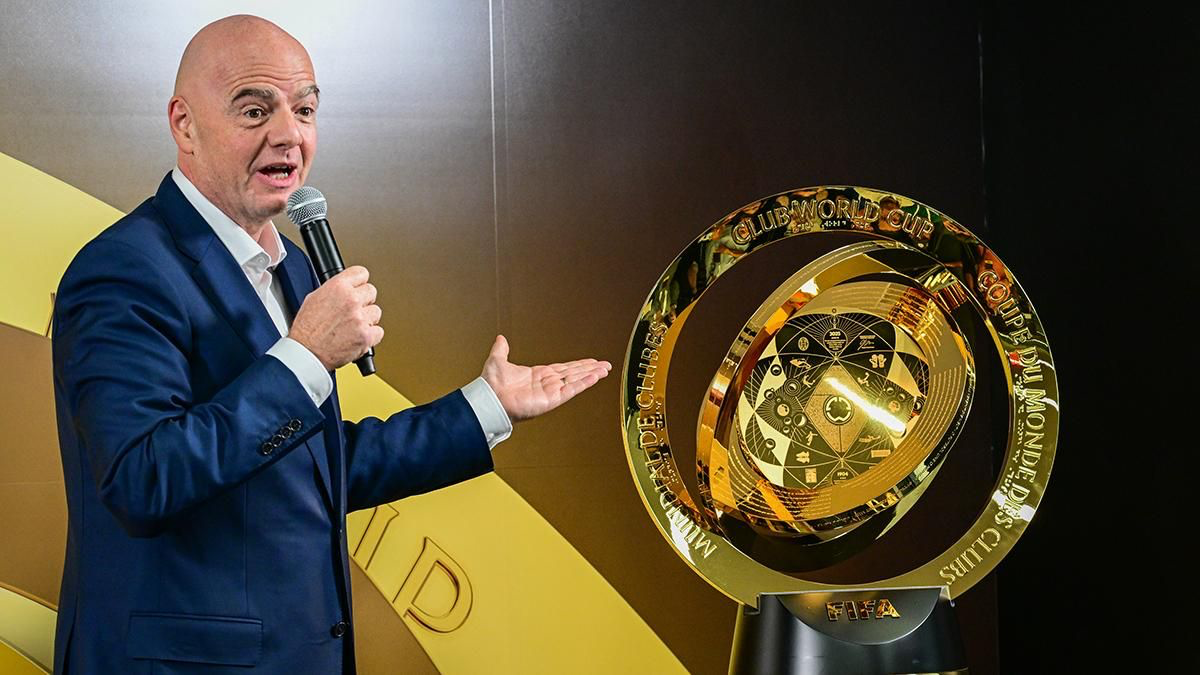
It is almost certain that the tournament will move to Qatar, a country that has proven its ability to successfully host large-scale events, including the 2022 World Cup. But what does this decision mean for sports business, branding strategies, and regional investments?

Why Qatar and not another host?
Since hosting the 2022 World Cup, Qatar has established itself as one of the world’s leading sports hubs, with modern infrastructure, a sustainability strategy, and a legacy that extends beyond football. Choosing Qatar to host the 2029 Club World Cup not only reinforces its leadership in international events but also presents a strategic opportunity for global brands to capitalize on one of the most dynamic and growing markets in the world.
-
Sources close to FIFA reveal that the decision was supported by President Gianni Infantino himself, who aims to maintain a regional trend that combines innovation, investment, and international profile. Qatar’s experience organizing the 2022 World Cup, along with its agenda of sporting and cultural events, makes it the most solid choice to boost the tournament’s global impact.

Impact on business and sports investments in Miami and LATAM
Deciding to move the event to Qatar has direct implications for club strategies, brands, and sponsors across the region. The proximity of the schedule and the shift to a winter season open new opportunities for partnerships, sales, and activations in markets like Miami, which is already emerging as a sports and entertainment epicenter in the US.
-
The economic impact of the Club World Cup in Qatar and the wider region is estimated at over $1.2 billion USD, including rights, tourism, infrastructure, and marketing. For Latin American and Spanish brands seeking entry into emerging and expanding markets, this edition will be crucial for strengthening alliances in a context of rapid growth and global visibility.
And what about the format and frequency?
While some clubs and experts have proposed holding the tournament every two years, FIFA has decided to keep the four-year cycle aligned with the national team World Cup. However, there is consideration to expand the number of participating teams to 48—similar to the 2026 World Cup—to diversify clubs and regions and prevent the absence of major teams like Barcelona or Liverpool in future editions.
-
A more frequent and inclusive format would not only boost revenues but also enhance partnership strategies and expand the tournament’s influence in markets like the US, LATAM, and Europe.

What other changes are expected for the future of the Club World Cup?
The impact of changing the host country and format is just the beginning. FIFA is also exploring the possibility of hosting the tournament at different venues worldwide with each edition, to maximize geographic and economic reach. Additionally, increasing participation to 48 teams opens more commercial opportunities, sponsorship deals, and media exposure.
-
The goal: transform the Club World Cup into the most important football event globally, with a substantial economic impact, technological innovation, and a brand strategy that transcends the pitch.
Choosing Qatar to host the 2029 tournament represents a strategic step in establishing football as a key driver of economic and brand development in regions like the Middle East, Americas, and Europe. For investors, clubs, brands, and governments, this move opens new avenues for business, alliances, and international expansion.
-
Football today more than ever is an ecosystem of innovation, investment, and global branding. In this landscape, Qatar is positioning itself as one of the key protagonists, elevating the impact of a tournament that seeks to redefine its own limits. Are you ready to seize the opportunities this transformation presents for your business?
FAQs
Why Qatar and not another host for the 2029 Club World Cup?
Because of its modern infrastructure, experience in hosting major events, political and strategic backing, and its ability to attract international audiences—further strengthening its leadership in the global sports market.
What impact will this have on businesses and brands in Latin America and Miami?
Increased investment, strategic partnerships, market expansion, and brand activation opportunities at one of the world’s most impactful sporting events, with direct effects on tourism, sales, and positioning.

Join us to receive all strategic insights and become part of the biggest business and culture community across Anglolatinos!
https://infonegocios.miami/suscribite-al-newsletter
Infonegocios NETWORK: 4.5 million Anglolatin Americans united by a passion for business.
Contact Infonegocios MIAMI:
[email protected]
[email protected]

Read Smart, Be Smarter!

Join for free and discover how Miami is leading the naturist movement in the United States!
USA: https://infonegocios.miami
Uruguay: https://infonegocios.biz
Argentina: https://infonegocios.info
Paraguay: https://infonegocios.com.py
Madrid: https://infonegocios.madrid
Barcelona: https://infonegocios.barcelona
Read Smart, Be Smarter!










Tu opinión enriquece este artículo: