

This isn’t a trends piece; it’s a strategic survival manual for brands that expect to matter in the next decade.
-
Beyond trends, a paradigm shift. Marketing isn’t evolving—it’s mutating. Many things that were “trends” as recently as 2022 are already failures.
The age of broad talent and cross‑disciplinary fluency is now. Welcome to Crossing Marketing.
-
Authenticity, amplified real‑world experiences, and collaborative co‑creation: the keys to building real value in a world hyper‑saturated with superficial content.
-
Crossing Marketing 2026: The strategic reinvention that will transform how brands and humans relate in the phygital era

The future is an ecosystem, not a channel.
The brands that win in 2026 will be those that understand marketing is no longer about isolated channels or tactics; it’s about building real value ecosystems where people actually want to spend time.
“The marketing of the future isn’t sold—it’s lived. And the brands that create places to live will win.”
If your brand still operates in silos (digital vs. physical, product vs. experience), you’re obsolete. Hire a Head of Culture. Invest in Experiences Amplification. Become a creator‑ecosystem builder.
The time to transform is now.
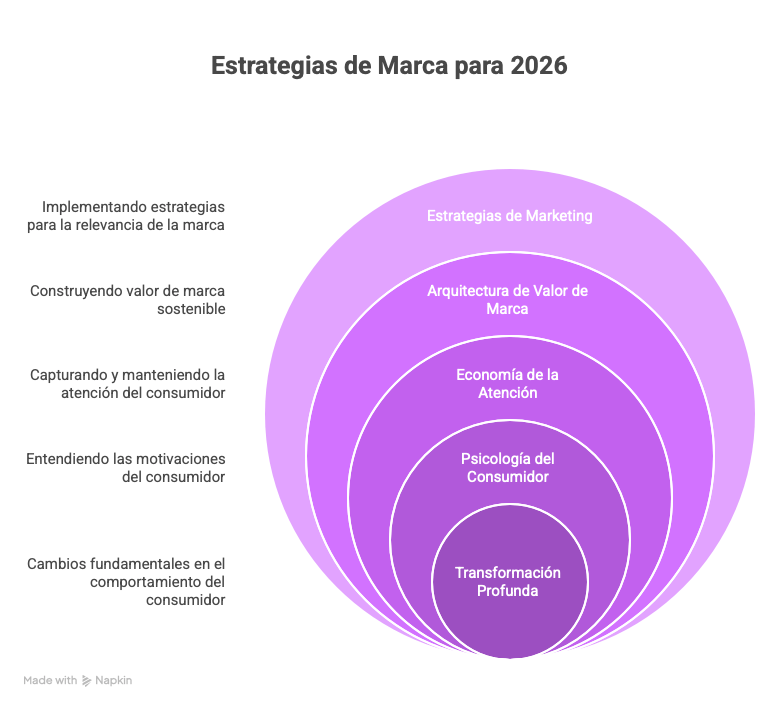
The Age of Authenticity: from curated reality to raw reality
-
Consumers have developed immunity to polished content. Saturation of artificial perfection has triggered a neurobiological demand for authenticity.
-
Applied neuroscience: the human brain detects and rewards authenticity with oxytocin—the trust hormone.
-
Disruptive example: brands like Glossier and Patagonia don’t sell products; they sell transparency and co‑creation.
“Trust is the new currency—and it’s only minted with raw authenticity.”
The creator as a strategic ecosystem: beyond influencers
-
The traditional influencer is over. Enter the creator‑ecosystem builder: individuals who don’t just promote—they build communities with tangible value.
-
Data‑driven: the creators with the highest engagement educate, inspire, or entertain with real utility.
-
Case in point: MrBeast isn’t a YouTuber; he’s an architect of scalable experiences.
Building in public: the new gold standard for trust
-
Sharing the process—not just the outcome—is the radical transparency play that fuels organic loyalty.
-
Applied psychology: showing vulnerability and process increases emotional identification (“like‑me” effect).
-
Advanced example: Tesla doesn’t advertise; it broadcasts its innovation process in real time.
Amplified Real‑world Experiences (ARE): the core of crossing marketing
-
Experiences aren’t add‑ons; they’re the primary product. Crossing Marketing integrates phygital layers (physical + digital) to create memorable, scalable moments.
Strategic formula:
-
Physical experience (event, pop‑up) + Digital amplification (streaming, social) + Interaction layers (AR, NFTs) = ARE
-
Signature case: Red Bull doesn’t sell beverages; it sells edge experiences (F1, skydiving, esports).
Head of Culture: the most critical role of 2026
-
Brands need a Head of Culture—a strategist who understands urban tribes, social movements, and digital subcultures to insert the brand into relevant, non‑forced conversations.
-
Core function: translate cultural insights into authentic narratives and concrete actions.
-
Visionary example: Netflix isn’t hiring CMOs; it’s hiring digital anthropologists.
Genuine hyper‑personalization with AI: beyond big data
-
AI isn’t for automating messages; it’s for scaling empathy. Hyper‑personalization should feel human, not algorithmic.
-
Key tech: LLMs that parse tone, context, and emotions in interactions.
-
Advanced example: Spotify doesn’t recommend songs; it recommends soundtracks for specific emotional moments.
Purpose marketing with total accountability
-
Purpose is no longer a slogan; it’s a transparent accountability system. Consumers demand tangible evidence of social and environmental impact.
-
Key metric: Impact ROI—measurable and reportable.
-
Leading example: Patagonia doesn’t “communicate” purpose; it proves it through legal actions and real donations.
Crossing Marketing: the definitive integration
-
Crossing Marketing is the strategic fusion of channels, disciplines, and experiences to create a cohesive, omnipresent brand ecosystem.
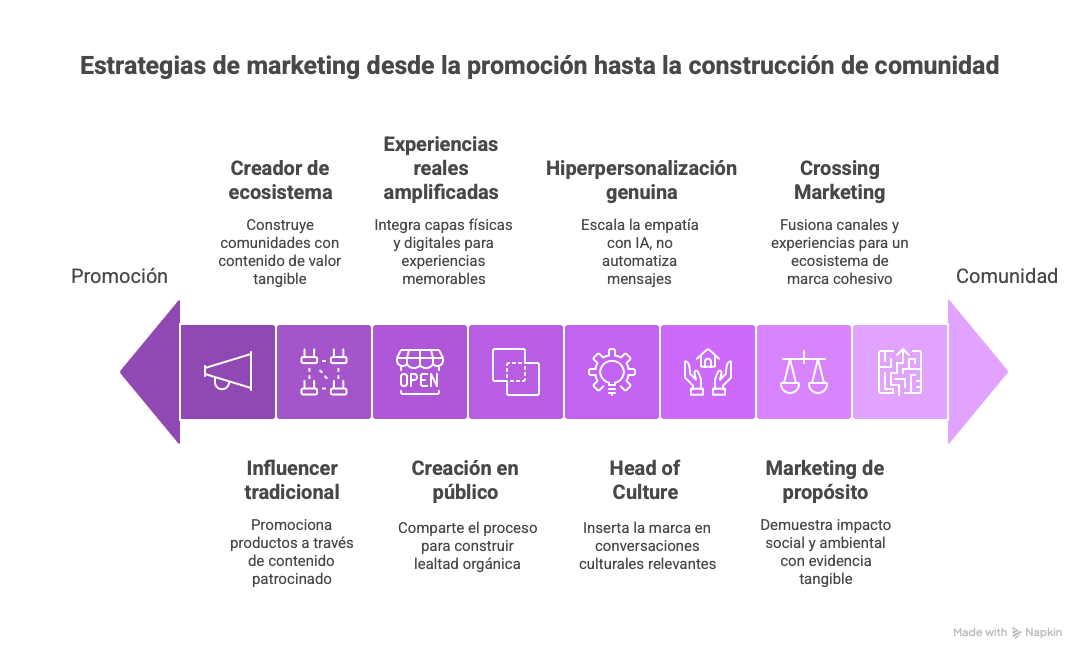
Critical components:
Phygital integration: physical events with immersive digital layers.
Content ecosystem: content that lives across formats and platforms.
-
Community cross‑pollination: tribes interacting across channels.
-
Master example: Apple integrates product, retail, software, and culture into a single universe.
Words that matter: Crossing Marketing, Amplified Real‑world Experiences, Head of Culture, Marketing 2026, Phygital Strategies, Brand Authenticity, Building in Public, AI‑driven Hyper‑personalization, Purpose Marketing, Ecosystem Building, Category Amplification.
Experts and reference books:
-
Seth Godin (This Is Marketing)
-
Simon Sinek (Start with Why)
-
Brian Solis (X: The Experience When Business Meets Design)
-
Ann Handley (Everybody Writes)
-
Case studies: Red Bull, Tesla, Patagonia, Glossier, Netflix
© 2025 Infonegocios Miami.
Read Smart, Be Smarter!
https://infonegocios.miami/suscribite-al-newsletter
Infonegocios NETWORK: 4.5 million Anglo-Latinos united by a passion for business.
Join us and stay informed:
Contact Infonegocios MIAMI:
-
marcelo.maurizio@gmail.com










Tu opinión enriquece este artículo: