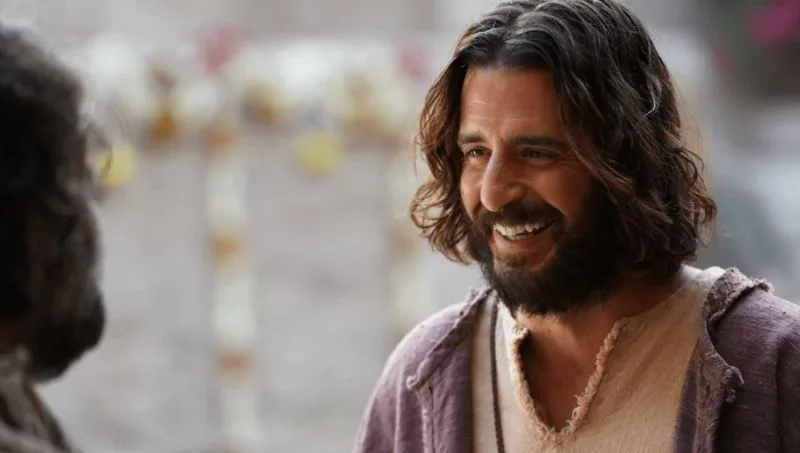

Dallas Jenkins's genius wasn't in retelling the life of Jesus, but in revealing the operational framework for purpose-driven entrepreneurship that has remained hidden in the Gospels for two millennia.
How the Series "The Chosen" Reveals the New DNA for Successful 21st-Century Companies and Conscious Management
THE MASTER AS CEO: WHEN TRANSCENDENTAL LEADERSHIP MEETS MODERN MANAGEMENT
What Netflix catalogs as a "historical drama" is, in reality, the first documented case study of systemic disruption, social movement building, and transformational talent management. Jesus wasn't a preacher; He was history's most successful founder, whose business model—based on values instead of valuation—is being rediscovered by the modern economy.

THE DEFINITIVE ANALOGY: 12 BUSINESS LESSONS FROM A GALILEAN MASTER
The "Product" Isn't What You Sell; It's What You Transform
Jesus didn't sell salvation; He offered personal transformation. 21st-century companies that understand this—that their true product is the change they create in their customers—will build loyalty that transcends transactions. The Chosen shows a Messiah who doesn't seek followers, but collaborators in His mission.
Business Application: Your brand doesn't sell shoes; it sells the confidence to walk. It doesn't sell software; it sells peace of mind. Emotional value proposition always surpasses the functional one.
Hiring for Values, Not Résumés
Peter was a fisherman, Matthew a tax collector, Mary Magdalene had a complicated past. The founding team of this "spiritual startup" was selected for transformation potential, not prior credentials. In The Chosen, we see the first documented program of emotional upskilling.
Business Application: Companies that prioritize "cultural fit" over "technical experience" build resilient teams. Diversity of backgrounds with unity of purpose creates organic innovation.
"Revenue" Model Based on Abundance, Not Scarcity
"Freely you have received; freely give." This wasn't poor financial management; it was an economy of radical reciprocity. Jesus understood that when you give value first, sustainability emerges organically. The Chosen illustrates how strategic generosity builds self-sustaining communities.
Business Application: Freemium isn't an acquisition tactic; it's a philosophy of abundance. Companies that give away their best content build trust that monetizes at deeper relationship layers.
Communication That Convinces the Heart, Not the Mind
Jesus's parables weren't theological lessons; they were narrative algorithms designed to bypass cognitive resistance and reach directly into the value system. The Chosen shows how emotional storytelling surpasses logical argument in persuasive efficacy.
Business Application: Your pitch deck needs fewer charts and more stories. Data convinces the mind; narratives move the heart, where real decisions are made.
Servant Leadership as a Competitive Advantage
Washing His disciples' feet wasn't an act of theatrical humility; it was the ultimate demonstration of inverted leadership: power exercised from the bottom up. The Chosen reveals that leaders who serve first build loyalty that survives crises.
Business Application: CEOs who know the names of the cleaning staff build cultures where excellence is organic, not imposed.
Disrupting the "Establishment" Without Burning Bridges
Jesus challenged the Sanhedrin and the Roman system without declaring frontal war. His strategy was cultural infiltration, not political confrontation. The Chosen shows the art of changing systems from within without becoming what you fight.
Business Application: Startups wanting to change established industries must learn to strategically collaborate with incumbents while building parallel alternatives.
Scalability Through Authentic Delegation
"You are Peter, and on this rock I will build my church." This wasn't a transfer of authority; it was the first documented framework of scaling through empowerment. Jesus built a movement that would survive His departure because He institutionalized values, not personality.
Business Application: Founders who cannot be replaced have built a cult, not a company. The systematization of culture enables growth without diluting purpose.
Resilience in the Face of Immediate Failure
Three years of ministry, twelve disciples, and ended up crucified as a criminal. By traditional metrics, an absolute failure. Yet, the model was so robust it survived the founder and scaled globally. The Chosen reminds us that true success is measured in decades, not quarters.
Business Application: Companies obsessed with the quarterly report sacrifice legacy for short-term gains. Strategic patience is the most undervalued asset in business.
Inclusion as an Expansion Strategy
Samaritans, Romans, marginalized women—Jesus constantly expanded His circle toward those excluded by the system. This wasn't altruism; it was market expansion genius. The Chosen illustrates how serving the unserved creates completely new markets.
Business Application: Companies seeking "total addressable markets" fight over crumbs. Those creating new markets by defining ignored customers build temporary monopolies.
Radical Transparency as the Foundation of Trust
"Do not be afraid," He constantly repeated. In a context of Roman oppression and religious tension, this wasn't denial of reality; it was strategic communication of vulnerability. The Chosen shows leaders who connect by sharing fears, not hiding them.
Business Application: Employees follow leaders who show humanity, not perfection. Strategic vulnerability builds trust faster than any bonus.
Innovation in Execution, Not Just Concept
Turning water into wine, multiplying loaves—these weren't magic tricks; they were demonstrations of radical resourcefulness. Jesus constantly innovated with available resources. The Chosen celebrates creativity under constraints.
Business Application: Startups waiting for funding to innovate never innovate. Creativity applied to limited resources separates founders from dreamers.
A Legacy That Transcends the Founder
Two thousand years later, His model continues replicating, adapting, transforming. This isn't an accident; it's the result of designing a value system flexible enough to adapt to any culture, yet solid enough to maintain its essence. The Chosen shows us the art of building something bigger than oneself.
Business Application: Family businesses that survive generations don't inherit assets; they inherit operating principles clear enough to guide, yet flexible enough to adapt.
THE NEW MODEL: WHEN PURPOSE MEETS PROFITABILITY
The Chosen as a media phenomenon is just the superficial symptom of something deeper: the exhaustion of purely transactional capitalism and the birth of the meaning economy. Viewers aren't consuming entertainment; they're seeking emotional frameworks to navigate a dehumanized business world.
The Triad of New Entrepreneurship:
-
PURPOSE as the North Star: Not a decorative "corporate mission," but a reason for being that justifies every operational decision.
-
COMMUNITY as the Economic Engine: Not a passive "customer base," but an ecosystem of emotionally invested co-creators.
-
LEGACY as the Final Metric: Not an "exit valuation," but measurable impact on transformed lives.

FOR MIAMI: EPICENTER OF CULTURAL-BUSINESS FUSION, and for the entire Anglo-Latino world:
Our city, a crucible of Latin cultures, entrepreneurial capital, and a bridge between worlds, is uniquely positioned to lead this transition. The lessons of The Chosen resonate especially here because:
-
Latin culture understands community not as a marketing concept, but as a real social structure.
-
Migrant entrepreneurs know the power of starting with nothing but conviction.
-
Miami lives at the intersection of Caribbean spirituality and business pragmatism.
The next unicorns may not emerge from Silicon Valley (though they may be powered from this powerful tech node), but from ecosystems with a deep human consciousness—those that understand the most important balance sheet is the emotional one.
THE FINAL CALL: FROM SHAREHOLDER CAPITALISM TO STAKEHOLDER CAPITALISM OF THE SOUL
The Chosen reminds us of what MBAs may have forgotten or perhaps focus too little on something very important: that the most sustainable businesses are those that address hungers of the soul, not just market needs. That long-term profitability emerges from authentic relationships, not transactional optimizations.
In a world where ChatGPT writes code and Midjourney generates branding, the only sustainable competitive advantage will be human authenticity. Companies that learn the lessons of the Master from Galilee—not as theology, but as an operational framework—will be the ones that define the 21st century.
Because, in the end, the most profound business question remains the same one that echoed through the hills of Judea: What does it profit a man to gain the whole world and forfeit his soul?
And its modern corollary: What does it profit a company to dominate the market and forfeit its humanity?

On behalf of the entire Infonegocios team*, we wish you a Merry Christmas!
Maximiliano Rodriguez Otero, Juan Maqueda, M. G. Maurizio, José Maria Martinez Bueno, Maximiliano Mauvecin, Carlos Ortega, Rodrigo Vera, Emiliano Einz Cabrera, Estely Rotmistrosvky, Mary Molina, Máximo Maurizio, Diego Cánepa, Spencer Taylor.
Read Smart, Be Smarter.
Infonegocios Miami—Economic, Cultural, and Business Intelligence with a Global Lens
Follow us for more analysis: @InfonegociosMiami**








Tu opinión enriquece este artículo: