
The Uncomfortable Truth Financial Analysts Aren’t Seeing (The Old Accounting Paradigm vs. The Priceless Value of Cultural Relevance)
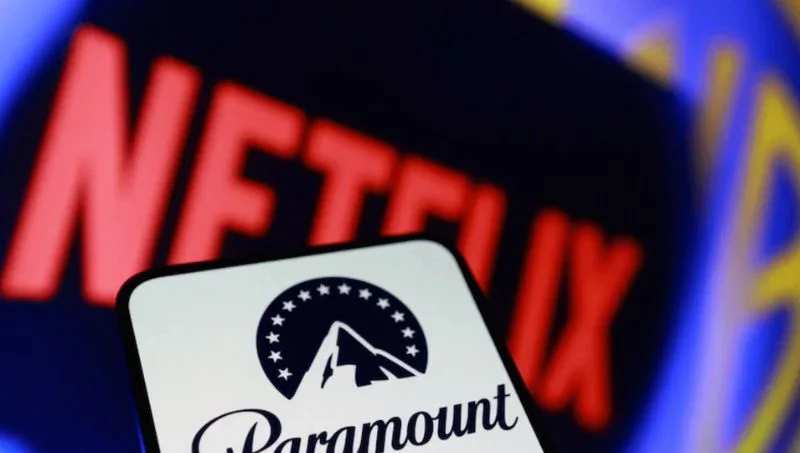
Paramount offered more money, yes. But it offered a glorious past. Netflix offered less, but offered an operating system for the future. Larry Ellison guaranteed $40.4 billion with his signature, but couldn’t guarantee the only thing that matters in 2026: cultural relevance in the era of hyper-fragmentation.
-
WBD isn’t selling its assets. It’s migrating its narrative DNA to the only platform that has solved the 21st-century equation: how to transform attention into addiction. Netflix isn’t buying a catalog; it’s buying mythologies ready to be recalibrated by its personalization engine. HBO Max had The Last of Us. Netflix will have "The Last of Us: Interactive Universe", with narrative variants, alternate endings, and engagement-generated spin-offs.
The question every brand must ask itself is: Are you an ecosystem of culture and relevance, with the competencies to amplify your categories and experiences, or are you a product, assets, a production line?
The Definitive Analogy: Paramount Is a Museum, Netflix Is a Living Organism
Paramount (with Skydance) represents patrimonial capitalism: buying historical jewels (CNN, the studio, the archive) to display them in a bigger showcase. It’s a preservation strategy. Netflix represents narrative capitalism: acquiring ecosystems of characters and stories to feed its metabolism of perpetual content. It’s a metabolism strategy.
The WBD board understood it in Darwinian terms: you can sell yourself to the richest zoo (Paramount), or you can release yourself into the most adaptive forest (Netflix). They chose the forest.
Technical Deconstruction: The 3 Non-Financial Pillars of the Decision
-
The Algorithmic Pillar: Netflix doesn’t have “audiences”; it has maps of neural preferences. Its AI doesn’t recommend; it pre-projects desires. Integrating the Warner catalog (DC, Harry Potter, HBO) into that system is like connecting an ancient library to a hive mind. Content isn’t played; it’s reconfigured.
-
The Behavioral Economics Pillar: HBO Max is a streaming service. Netflix is a psychic routine. The “certainty” Samuel Di Piazza Jr. mentions isn’t legal; it’s behavioral. They know Netflix has the “embedded habit” of the global user, something neither Paramount+ nor HBO Max achieved.
-
The Cultural Geopolitics Pillar: In the letter to legislators, Paramount accuses Netflix of operating in a “closed” premium content market. They’re right, and that’s precisely the advantage. Netflix doesn’t compete with TikTok; it co-opts it. Netflix’s “universes” are born on-screen, mutate on TikTok, are debated on Twitter, and monetized in video games. It’s a closed ecosystem of open narrative—the perfect paradox.

Paramount’s Denunciation: A Funeral Oration (Magnificent)
Makan Delrahim’s letter to legislators is brilliant, precise… and an epitaph. When he argues that Netflix should be considered “premium content” in a closed market, he isn’t defending competition. He’s confessing his own future irrelevance. Admitting that Netflix is a market unto itself is recognizing the game is no longer about streaming share, but about share of collective imagination.
Paramount plays chess (regulatory blocks, hostile offers, personal guarantees). Netflix plays ecosystem (merging narrative, data, and habit).
The 15 Mandates to Survive in the Post-Merger Era (When Your Competitor Is a Universe)
-
Don’t sell content. Sell access to narrative universes. Your product isn’t a movie; it’s a portal to a mythology.
-
Your greatest asset isn’t your catalog, but your ability to generate behavioral addiction. Measure “minutes per user per lifetime,” not quarterly subscriptions.
-
Integrate AI not to recommend, but to co-create. Develop narrative variants, alternate endings, engagement-data-generated spin-offs.
-
Turn every IP into a “transmedia core.” A series must simultaneously have a podcast, comic, Roblox experience, and product line from day one.
-
Abandon the “premiere” logic. Adopt the logic of “perpetual activation.” A franchise never ends; it exists in permanent beta.
-
Seek mergers with habit platforms, not content conglomerates. It’s better to be part of TikTok than of Paramount.
-
Create niche “micro-universes.” You don’t need to be Marvel; you need to be the indispensable universe for a hyper-specific tribe (e.g., sci-fi surfer enthusiasts).
-
Your legal team must understand narrative as much as antitrust. Regulatory defense will be about “diversity of imagination,” not just market share.
-
Hire a “Chief Mythology Officer.” Their job is to map existing mythologies in your IP and design their expansion across all media.
-
Transform your viewers into “algorithmic co-authors.” Their viewing data should influence future plot developments.
-
Prepare your IP for the “narrative singularity”: The moment when AI generates personalized episodes in real time. Your classic archive must be tagged at the level of narrative trope and emotional archetype.
-
Ally with “residual attention” platforms (TikTok, Instagram Reels) not as marketing, but as narrative canon. What happens on TikTok is part of the story.
-
Monetize through “depth of immersion,” not just access. Subscription tiers that offer access to scripts, virtual writer meetings, alternate versions.
-
Anticipate regulation not as a threat, but as a framework for innovation. Lead the conversation on “algorithmic diversity” and “narrative plurality.”
-
If you can’t be Netflix, become the indispensable “specialized component” for it. Be the best horror studio, adult animation house, or political sci-fi producer that Netflix will need to acquire next.

Warner Bros Chose Netflix for the Eighth Time (And It’s Not About the USD $83 Billion)
The choice of Netflix over Paramount isn’t a financial transaction; it’s the clearest declaration of the decade: the “Hollywood studio” model is dead, and whoever doesn’t transform into an “algorithmic narrative universe” will disappear.
The Future: The Birth of the “Netflix Discovery Group” and the New Geopolitics
This merger won’t create a streaming monster. It will create the first “Narrative Nation-State” with ambassadors (its shows), economy (its subscriptions), and territory (the world’s screens). The Department of Justice will analyze market concentration, but the real battle is over imagination concentration.
-
By 2027, we won’t talk about “streaming services.” We’ll talk about “narrative provinces.” Disney+ will be the family province. Amazon Prime, the integrated consumption province. And Netflix-Warner, the province of the adult, complex, and algorithmically personalized world.

The Last Decision of Classic Hollywood
Warner Bros, the studio that defined classic cinema with Casablanca, chose to become data in Netflix’s cloud. It’s poetic and tragic. It’s the end of an era and the birth of another. Paramount fought with money from the past. Netflix won with the currency of the future: the pattern of predictable, scalable attention.
The question for any media company now is brutally simple: Are you an archive, or are you an algorithm? Warner Bros has already answered.
Read Smart, Be Smarter.
Infonegocios Miami—Economic, Cultural, and Business Intelligence with a Global Lens

Follow us for more analysis: @InfonegociosMiami
Read Smart, Be Smarter!
https://infonegocios.miami/suscribite-al-newsletter
Contact: [email protected]
Infonegocios NETWORK: 4.5 million Anglo-Latinos united by a passion for business.
Join us and stay informed.
© 2025 Infonegocios Miami.






Tu opinión enriquece este artículo: