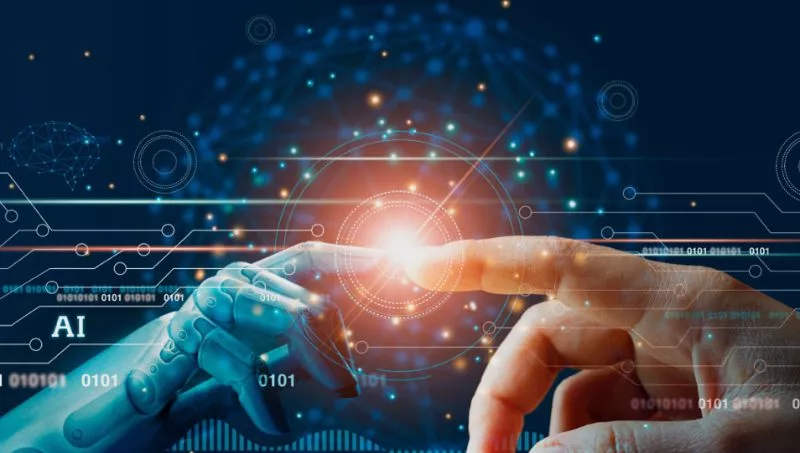

This isn’t just another tech upgrade. It’s an awakening—a shift in the human condition that forces us to ask not only what AI can do, but what kind of society we intend to build around it.
A new kind of awakening
“The greatest awakening of our time isn’t the technology itself, but whether humanity awakens to its responsibility to guide it.”
-
The world has stood at crossroads before. When electricity lit up cities in the early twentieth century, skeptics feared chaos while visionaries saw modern life begin. When the internet spread in the 1990s, governments raced to regulate while entrepreneurs charged ahead.
-
Today we face a transformation of equal, if not greater, scale: the emergence of artificial intelligence—especially generative AI. This isn’t just another upgrade. It’s an awakening, a change in the human condition that compels us to ask not only what AI can do, but what kind of society we want to construct around it.
-
In just a few years, AI systems have moved from lab curiosities to ubiquitous tools. Language models generate convincing text; synthetic media blur the boundary between truth and fiction; data-driven platforms come to know us better than we know ourselves. For some, this is exhilarating. For others, unsettling. But beyond individual reactions, one fact is inescapable: AI has become the new infrastructure of decision-making, commerce, and human communication.
Every revolution has two faces
-
History reminds us that every technological revolution creates winners and losers. The steam engine generated wealth and jobs—but also inequality and displacement. The internet connected billions—but deepened polarization and misinformation. AI follows the same pattern, only faster and at larger scale. Its promises are vast: unleashing creativity, boosting productivity, and solving problems once thought impossible. Its risks are equally large: destabilizing middle-class employment, eroding public trust through waves of disinformation, and intensifying geopolitical rivalries.
-
Unlike electricity or the early internet, generative AI isn’t a neutral tool waiting for instructions. It learns, adapts, and evolves in ways that surprise even its creators. Erik Brynjolfsson warns of the “Turing Trap”: a future obsessed with imitating human intelligence instead of augmenting it. Eric Schmidt cautions that AI will supercharge disinformation and alter global security balances. Laura Tyson notes that without the right policies, automation will erode the middle class that underpins democracy. These are not abstractions. They’re happening now.
Generative AI: promise and peril
-
At the heart of this awakening is a technological leap that surprised even the field’s pioneers. Generative AI—systems that produce text, images, code, and even voices—rests on foundation models trained on oceans of data. Jack Clark of Anthropic called this an “alien intelligence,” not because it’s extraterrestrial, but because its logic diverges from human reasoning. Mira Murati of OpenAI emphasizes that these models evolve with human feedback. Alexandr Wang of Scale AI highlights reinforcement learning as the bridge between raw machine power and real human utility.
-
Yet this reliance on human steering exposes a paradox. We don’t fully understand what these models know or how they reason. They surprise with creativity—and fabricate errors with equal confidence. The danger is forgetting the distinction between imitation and augmentation. A society that uses AI to replace people courts redundancy. A society that uses AI to empower people can unleash a true productivity revolution.

The squeeze on the middle class
-
The most immediate socioeconomic impact will hit the labor market. Automation isn’t new; machines have replaced physical effort for centuries. What’s new is AI’s focus on routine cognitive work. Laura Tyson and John Zysman call this “routine-biased technological change—amplified.” Stable middle-class professions—accounting, legal research, customer service, basic journalism—are already under pressure.
-
For decades, the middle class has underwritten democracy and growth. Its erosion threatens not only households but nations. In the United States, globalization and automation have already hollowed out many middle-income jobs. In Latin America, millions who recently entered the middle class risk slipping back if upskilling doesn’t keep pace with AI.
-
Companies face a similar fork. Startups experiment boldly; large enterprises move cautiously; both tend to prioritize automation first. Cost cuts may appease shareholders, but they weaken long-term resilience. The more promising path is augmentation: doctors with faster diagnostics, teachers supported by adaptive curricula, lawyers with accelerated research. Too few firms are prioritizing this. Efficiency metrics dominate boardrooms while human consequences are sidelined.
The battle for truth
-
Perhaps no risk is as urgent as AI’s role in defining truth. Generative systems can mass-produce persuasive falsehoods: fabricated articles, manipulated images, cloned voices. Eric Schmidt warns this will supercharge disinformation, enabling surgical manipulation of public opinion.
-
The problem isn’t just the lie—it’s the erosion of trust. If any video can be faked and any text machine-generated, how will citizens know what to believe? Democracy depends on shared facts and trusted institutions. Without them, polarization deepens and conspiracy theories flourish.
-
AI also offers defenses. Algorithms can detect synthetic media and automate fact-checking. But offense tends to outpace defense. Disinformation spreads instantly; correction lags. The battle for truth won’t be won by technology alone. It requires digital literacy, strong institutions, and international cooperation.
Geopolitics and the new AI race
-
Beyond jobs and the public sphere, AI is redefining global balance. The U.S.–China competition isn’t just about market share—it’s control over the digital infrastructure underpinning economies and militaries.
-
Network effects drive consolidation: a handful of platforms dominate and concentrate power. For smaller countries, this means a new dependency. Just as resource dependence shaped past centuries, digital dependence may define the twenty-first.
-
Risks extend to security. AI amplifies cyberattacks, fuels propaganda, and could undermine nuclear deterrence by improving targeting of rival forces. Once released, AI-driven cyberweapons can mutate beyond human control. The unpredictability of autonomous systems adds instability to an already fragile international order.
-
Schmidt argues that limited cooperation is possible. Setting red lines, sharing research, and agreeing on safeguards can reduce risks. The alternative is an uncontrolled arms race with consequences too severe to ignore.
Charting a human-centered path
Despite the risks, AI’s trajectory is not preordained. It hinges on our choices. To steer toward inclusion rather than division, three pillars matter:
-
Public policy: governments must invest in lifelong learning, incentivize augmentation over substitution, and harden defenses against disinformation.
-
Business leadership: companies should deploy AI to empower workers, not discard them—while prioritizing transparency and trust.
-
Society: education systems must cultivate digital literacy and critical thinking, while civic institutions rebuild trust in the era of synthetic content.

Technology does not determine destiny. Our choices do.
-
AI’s awakening is here—and global. Its advances promise broader creativity and productivity. Its risks threaten to destabilize jobs, undermine trust, and sharpen rivalries. At this socioeconomic crossroads, the path we choose will determine whether AI becomes the foundation of a more prosperous, equitable world—or the engine of new divisions.
-
What differentiates this moment from prior revolutions is not only the velocity or scale of change, but the agency we still possess. Algorithms may be opaque, yet how we choose to employ them remains squarely in our hands.
Arturo Sutter
© 2025 Infonegocios Miami. Todos los derechos reservados.
Read Smart, Be Smarter!
https://infonegocios.miami/suscribite-al-newsletter
Para ponerte en contacto por contenido en Infonegocios Miami, puedes escribir a [email protected]
Infonegocios NETWORK: 4.5 million Anglo-Latinos united by a passion for business.
Join us and stay informed:
Contact Infonegocios MIAMI:
-
marcelo.maurizio@gmail.com











Tu opinión enriquece este artículo: