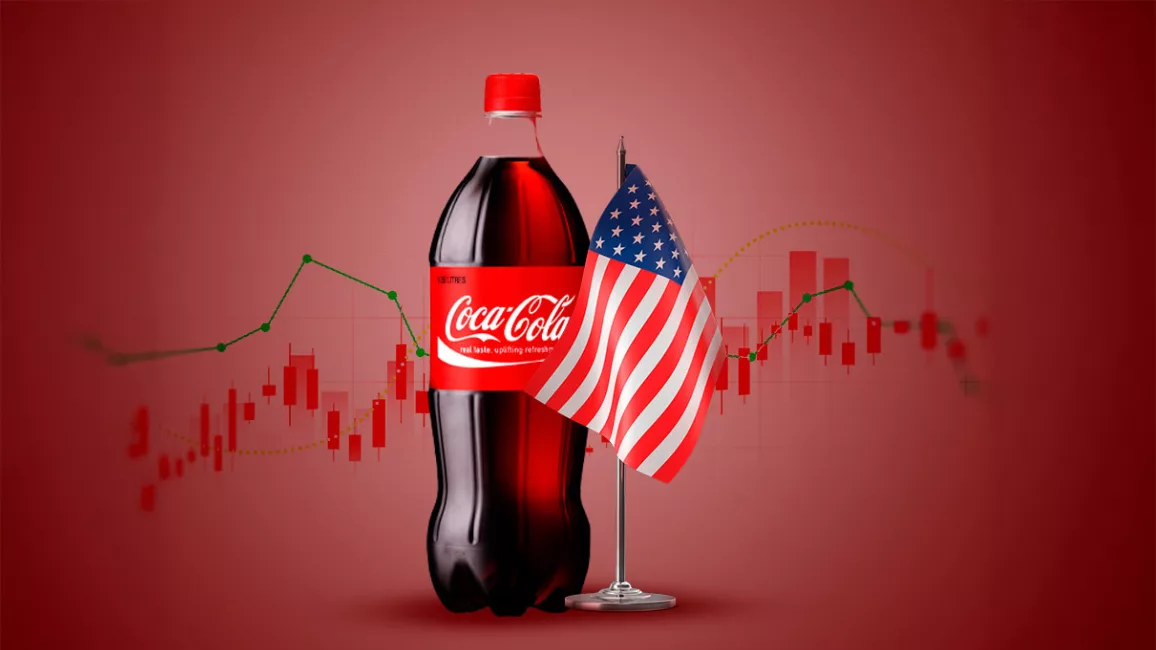
The Masterstroke Combining Politics, Public Health, and Business Strategy in the World’s Most Competitive Market
This isn’t just a business move; it’s a geopolitical strategy that ties public health, food sovereignty, and brand positioning in a market where every move sends seismic waves worldwide.
The announcement signifies more than a change in ingredients—it embodies a new era in American business thinking, where political pressure, consumer demand, and competitive differentiation converge in a move that could reshape decades-old consumption patterns.

Micro IN Miami Note: 5 Strategic Keys to Coca-Cola’s Revolution
-
Direct presidential influence: Trump turns personal preference into public policy, proving that executive soft power can push billion-dollar corporations toward structural change.
-
Smart dual strategy: “It’s an ‘and’ strategy, not ‘or’”—Coca-Cola keeps corn syrup for cost efficiency while adding cane sugar for premium positioning, maximizing market share.
-
Critical supply challenge: The U.S. consumes 12.5 million tons of sugar annually but produces only 4 million tons of cane. The 8.5 million-ton gap requires massive imports and supply chain reconfiguration.
-
Immediate financial impact: Coca-Cola’s profits are already rising (+3%) on the same day of the announcement, showing that premium differentiation instantly adds value for shareholders.
Disrupting an Industry: Beyond the Flavor

The Political Roots of a Commercial Decision
Coca-Cola’s move isn’t coming out of nowhere. As Michael Porter explains in Competitive Strategy, external forces can reconfigure entire industries when regulatory pressures, changing consumer preferences, and competitive dynamics align.
Trump, a known consumer of diet Coke, uses his platform to push a “more natural ingredients” agenda—resonating with 73% of American consumers concerned about ultra-processed foods, according to Mintel data.
This direct presidential intervention sets a precedent: political soft power can drive industry change when aligned with emerging market trends.
The Complex Supply Equation
The numbers are staggering:
-
Domestic sugar consumption: 12.5 million tons/year
-
U.S. cane production: 4 million tons
-
Critical gap: 8.5 million tons, requiring massive imports and sugar beet processing.
James Quincey, Coca-Cola’s CEO, remains confident: “Over time, if demand grows, more hectares will be planted.” But logistics are complex—USDA reports that expanding cane cultivation takes 18-24 months, and each additional hectare demands about $12,000 in infrastructure investments.

The Economic Equation of Change
High fructose corn syrup (HFCS) dominates for economic reasons: it costs 40% less than cane sugar and ensures supply stability. The U.S. produces 7 million tons of HFCS annually, turning agricultural surpluses into profitable industrial ingredients.
Coca-Cola’s dual ingredient strategy—maintaining both HFCS and cane sugar—reflects sophisticated market segmentation: HFCS for price-sensitive consumers, cane sugar for those willing to pay a 15-20% premium for “natural ingredients.”
The Crisis That Unveiled a Critical Dependency
In early 2025, Coca-Cola faced an unexpected crisis: fake social media videos claimed the company was collaborating with immigration authorities, sparking nationwide boycotts in Hispanic communities. The immediate fallout was a 12% drop in Hispanic household penetration, costing roughly $340 million in lost revenue.
As Naomi Klein discusses in No Logo, global brands are particularly vulnerable to social narratives when their consumer base includes politicized communities. The Hispanic market in the U.S., valued at $1.9 trillion by Nielsen, accounts for 22% of the nation’s buying power and 35% of population growth.
Strategic Recovery
By June 2025, Quincey confirmed that “market share and household penetration among Hispanics had already returned to January levels.” This recovery wasn’t accidental; it involved massive investments in community outreach, partnerships with Latino organizations, and targeted campaigns to rebuild trust.
The introduction of cane sugar acts as a symbolic bridge: many Latino consumers associate this ingredient with the Coca-Colas from their countries of origin, where cane sugar is the standard. For example, Mexico exports 180,000 tons of cane-sugar Coca-Cola annually to the U.S., generating $240 million in cross-border commerce.










Tu opinión enriquece este artículo: