
Summary and Tips IN

-
IG: @infonegociosmiami

This article explores five key challenges that Alibaba currently faces: the stagnation of e-commerce in China, the weak growth of its cloud services, the sustainability of its international expansion, the withdrawal of the IPO from its logistics division, and the increase in its market multiples.
Key Challenges for Alibaba
-
E-commerce Performance in China: A Worrying Growth
The e-commerce segment in China, which includes platforms like Taobao and Tmall, is the main revenue generator for Alibaba. However, its performance has been disappointing. In the last quarter of fiscal year 2024, the company reported only 4% growth compared to the previous year, reflecting a decline from the 6% growth in the first nine months of the same year. This stagnation occurs in a context where competition, especially from companies like PDD Holdings with its Temu platform, intensifies, making it even harder for Alibaba to regain its momentum.
-
Cloud Services: Stagnant Growth Despite Incentives
Despite efforts to incentivize the use of its cloud services, including price reductions on over 100 products, Alibaba has not seen a significant increase in sales. Revenue growth from its Cloud Intelligence Group remained at a modest 3% during the last quarter of FY24. Although the company has expressed its intention to prioritize high-quality revenue and AI-related products, the lack of improvement in EBITDA margins raises questions about the effectiveness of this strategy.
-
International E-commerce: Can Growth Be Sustained?
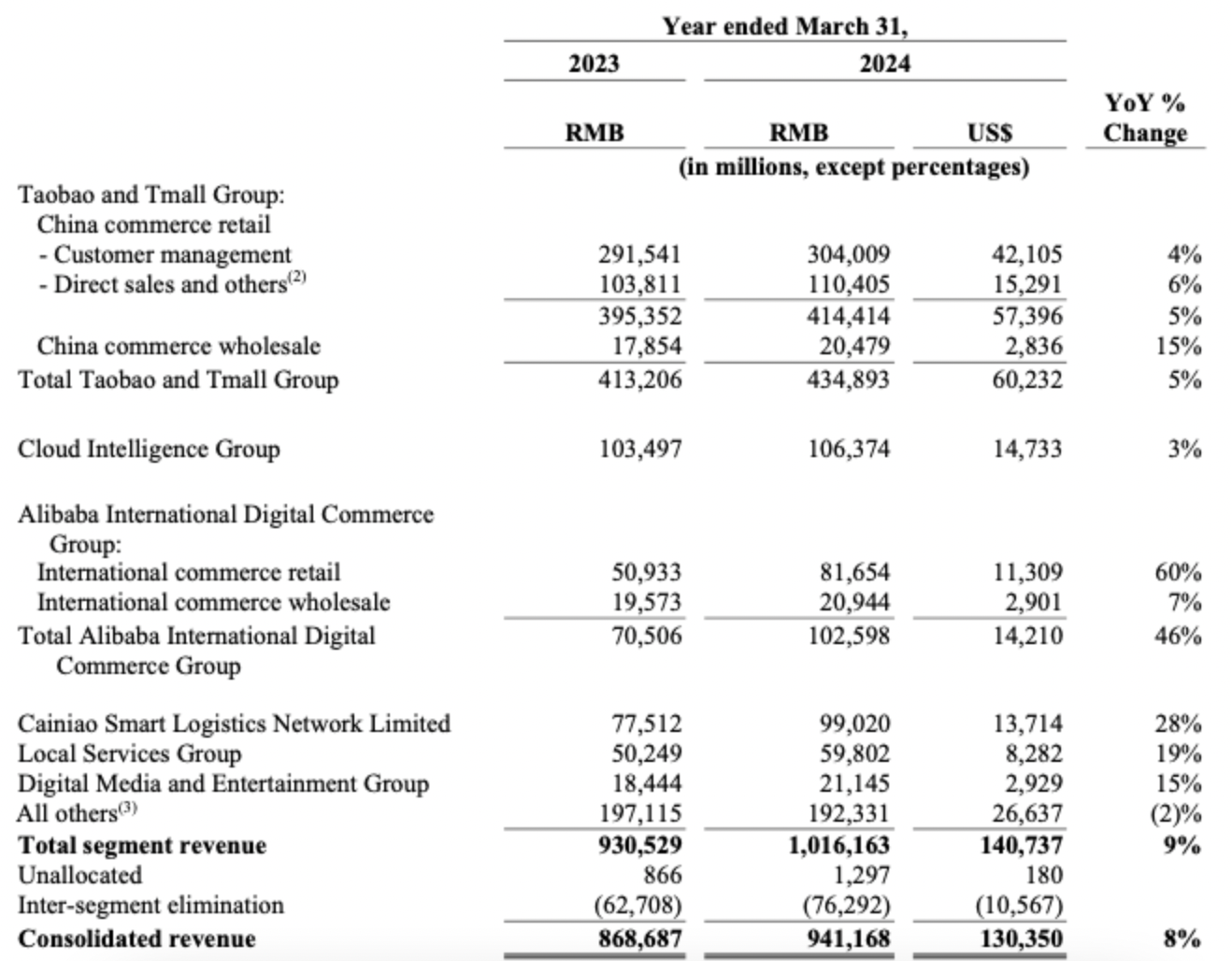
Alibaba's international segment, which includes its international digital commerce unit, has shown impressive growth of 46%. However, this growth raises questions about its sustainability. Trade tensions between China and the United States, along with concerns about labor practices and national security, could limit Alibaba's ability to expand into Western markets. The recent decision not to spin off its cloud services division also reflects a cautious strategy in the face of an uncertain international environment.
-
Logistics: The Withdrawal of the Cainiao IPO
Alibaba's logistics division, Cainiao Smart Logistics Network, has also experienced healthy revenue growth of 28%. However, the recent cancellation of its IPO has generated concern. Although it was justified as a measure to foster synergies with the e-commerce division, the reality is that this decision could be related to an unfavorable market environment and the pursuit of a better valuation in the future. Such changes in the company's structure could indicate a lack of clarity in Alibaba's overall strategy.
-
Market Multiples: An Uncertain Landscape
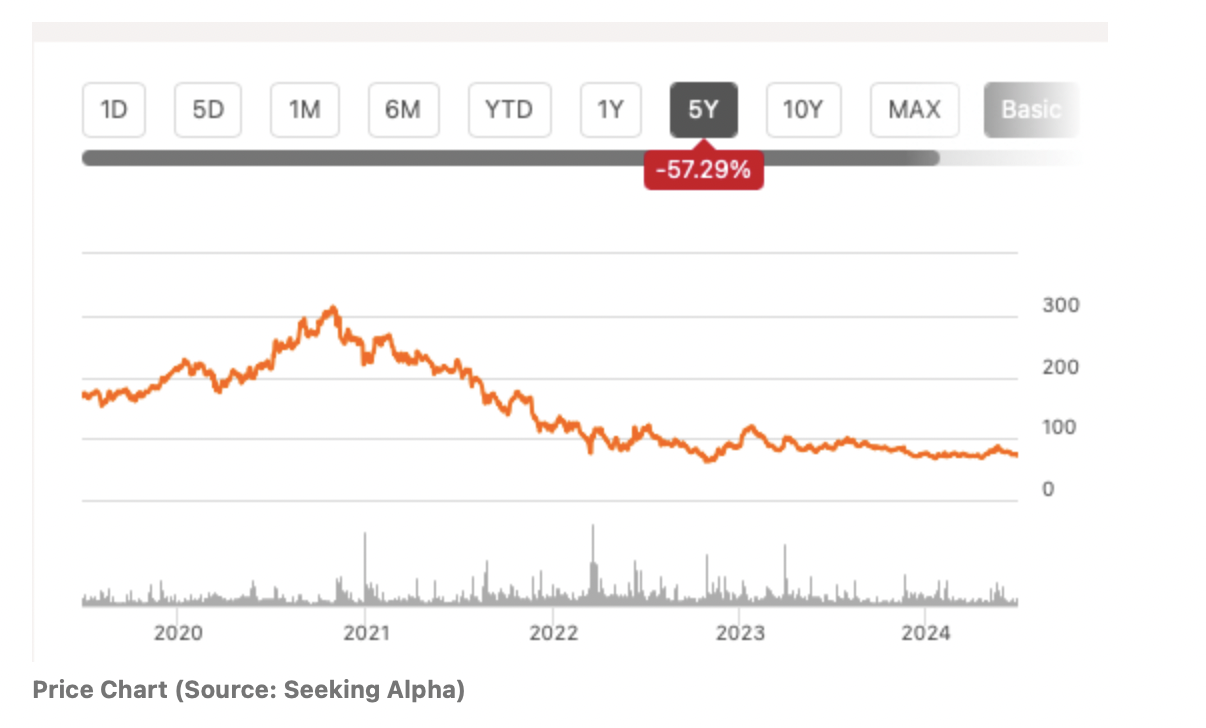
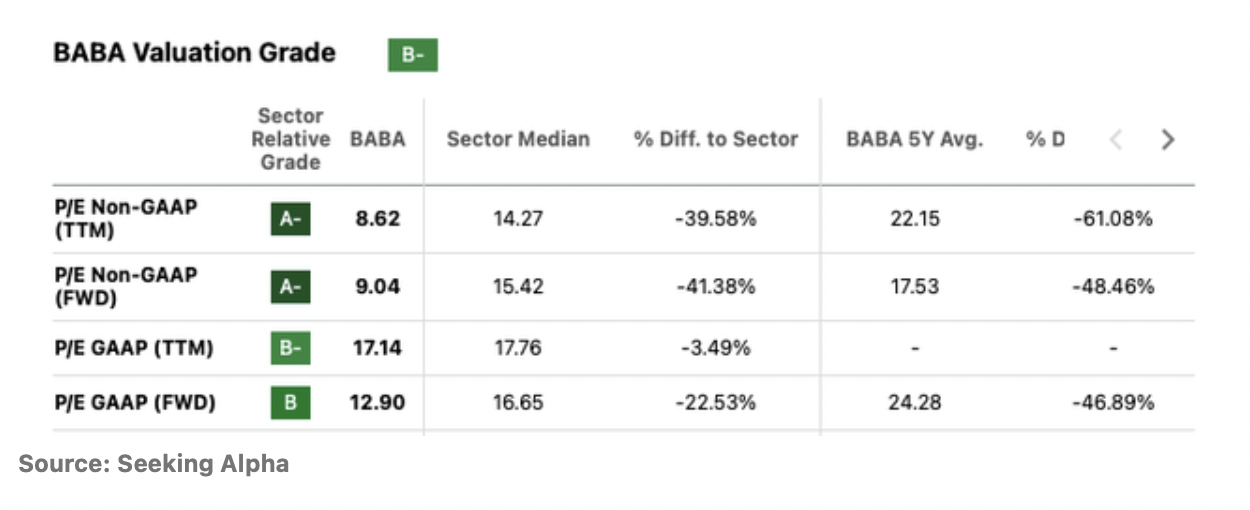
Although Alibaba's market multiples appear competitive compared to five-year averages, the recent increase in its price-to-earnings (P/E) ratio raises questions. With a 96% contraction in net income in the last quarter of FY24, and an expectation of a decrease in earnings per share for FY25, analysts are cautious. If current trends continue, Alibaba's multiples could lose attractiveness, further complicating its financial outlook.
Conclusion: An Uncertain Future
Despite Alibaba's efforts to communicate with its investors and offer a long-term vision, the current challenges are undeniable.
The company faces a complex environment, with financial performance failing to recover and an international strategy threatened by external factors, where the Chinese state has yet to take the step that all entrepreneurs in the country and the rest of the world hope it will take, towards freedom and respect for private and individual property.
This would not only enhance its leadership in quantitative terms but would also dramatically improve trust, relationships, experience, and ultimately, the most important aspects: the quality and value of its economy, empathy, and security in what is most decisive and meaningful for the human being—full freedom.


Registrate sin cargo, ahora, aquí.
- Contactos: [email protected] or [email protected]











Tu opinión enriquece este artículo: