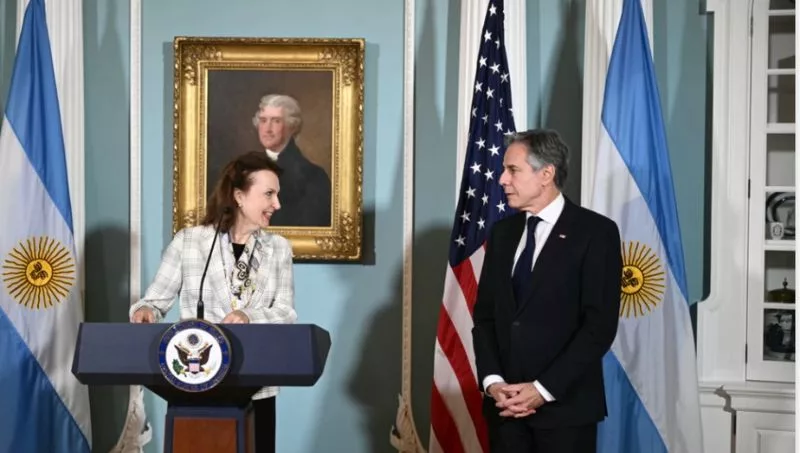
The Milei government is a key player in the plan to contain China in Latin America.
If Argentina and the U.S. truly collaborate, the entire region will experience significant development in every aspect.
Argentina and the region are victims of the growing number of criminal activities that impact people's daily lives, from drug trafficking corruption and power-influencing systems it generates, to human trafficking, terrorism, digital piracy, and smuggling of various goods, including illegal fishing by organized gangs in Argentine waters. There is much that Argentina and all Latin American countries require in terms of clear and intense policies, where collaboration between nations and a systemic work plan demand solid, democratic, and executive agreements that bring order and quality of life to the people.
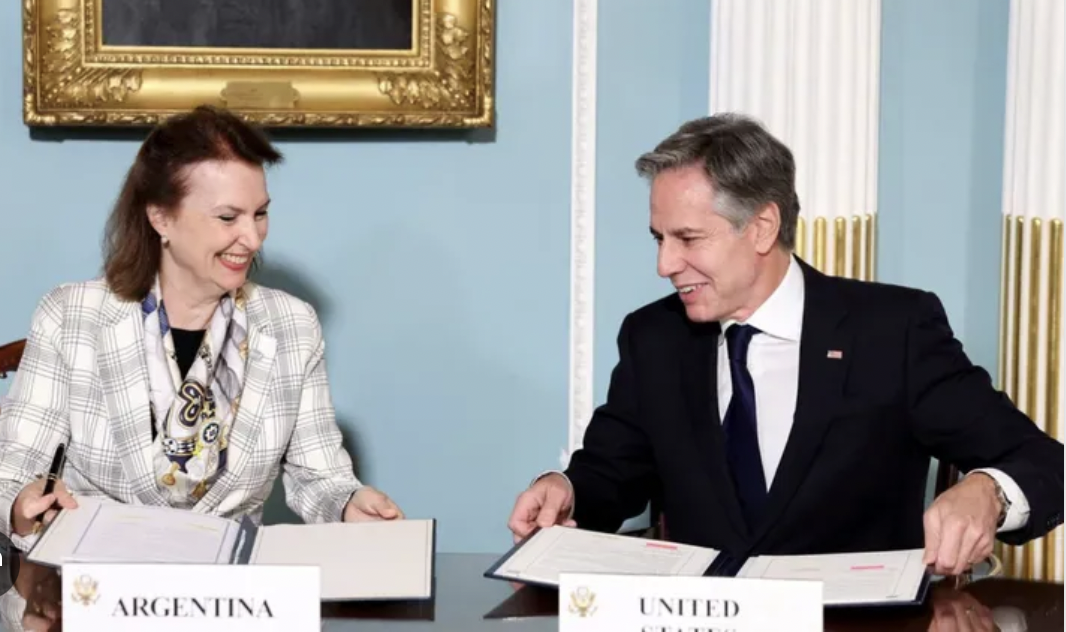
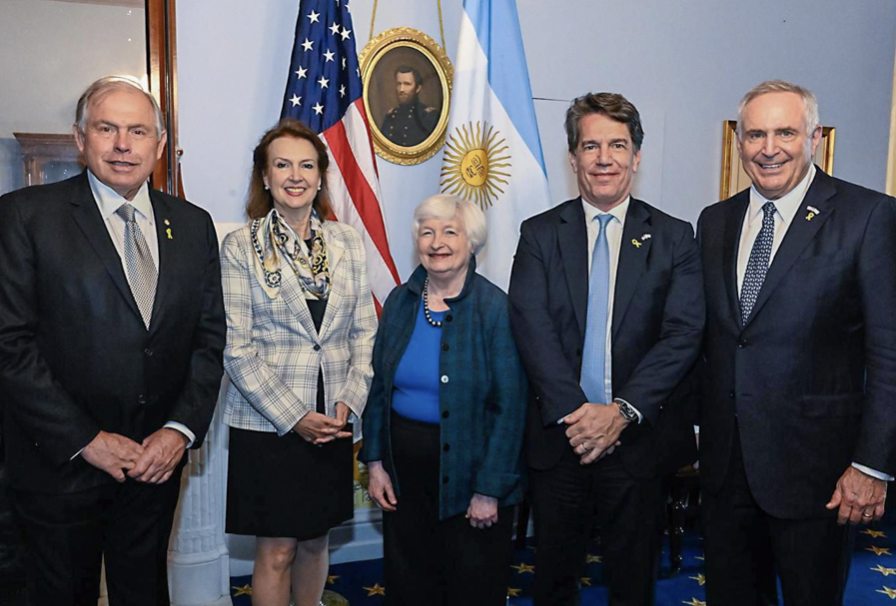
A discourse that the world needs to hear. A great success for the current Argentine government.
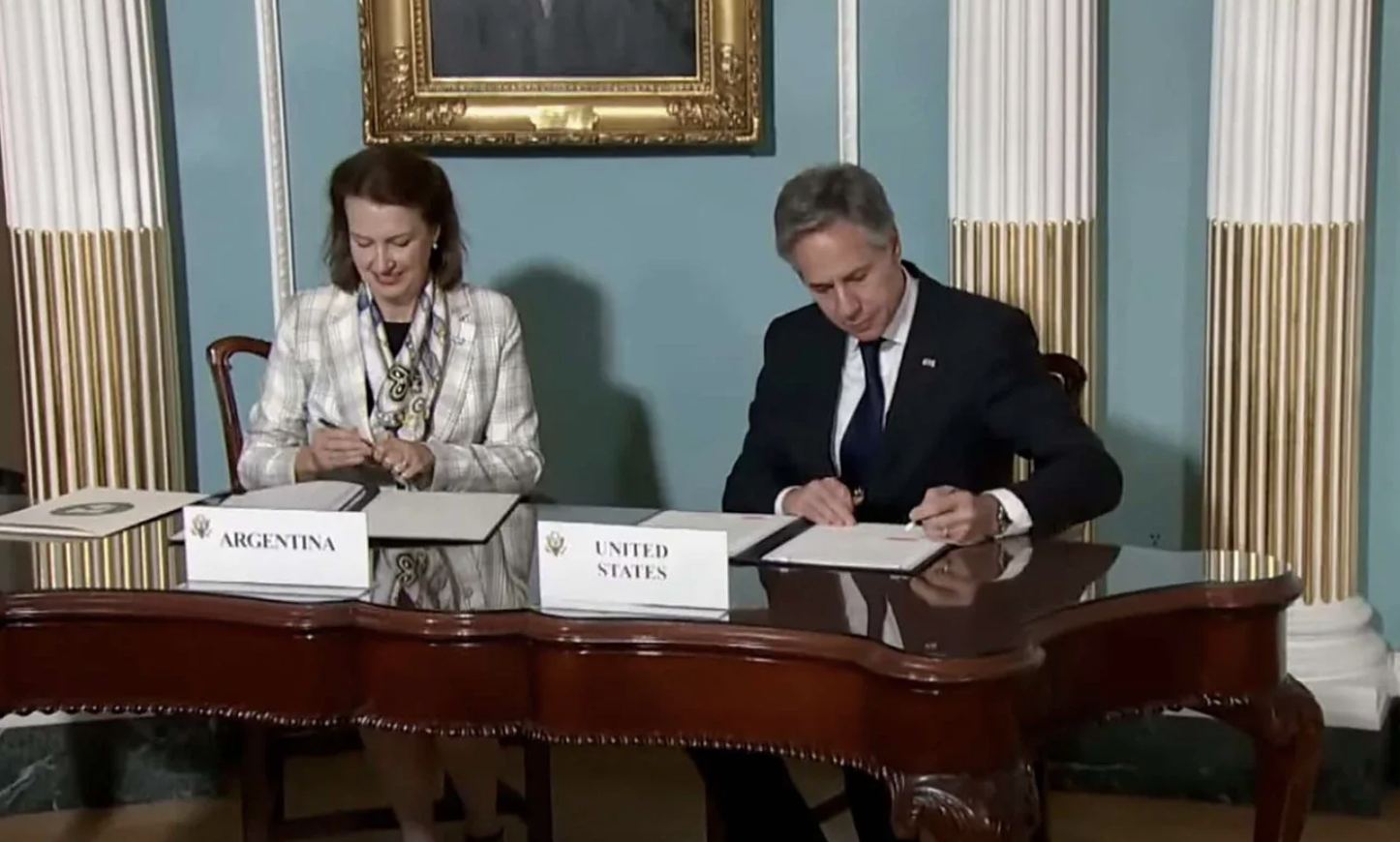
Before the signing, Blinken emphasized that this bilateral treaty reflects the strengthening of coordination and cooperation between both countries in various areas, both at the bilateral and regional/global levels. There is a significant intensification in joint work on multiple fronts, highlighting the importance and depth of the current relationship between the United States and Argentina.
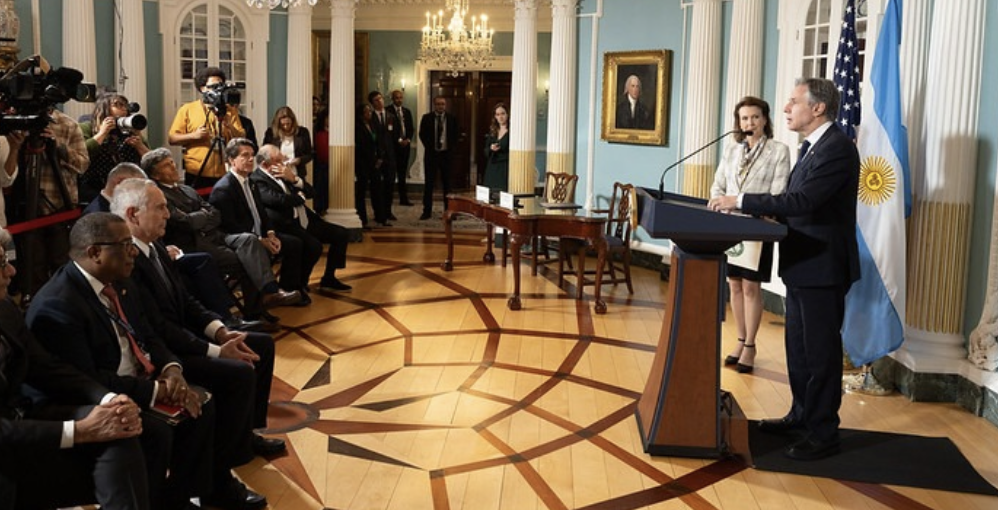
Mondino, the great chancellor Argentina has not had for decades:
Mondino, for her part, expressed the willingness to expand the agenda of trade and investment, promoting collaboration in various sectors to improve the quality of life for citizens of both countries. Argentina is open to strengthening its bilateral ties not only with the U.S. but also with other nations, towards common goals and mutual benefits.
"We trust each other so much that we signed the agreement without having read it," Antony Blinken told Diana Mondino after the ceremony in the Treaty Room of the Department of State. In the front row, Chief of Staff Nicolás Posse and Ambassador Gerardo Werthein observed, while on the other side sat White House representative Marc Stanley and Assistant Secretary for Latin America Brian Nichols.
Milei - Mondino, Argentina's best international policy in a century:
1. What are the geopolitical effects of this agreement for Argentina in a regional context marked by the influence of powers like China?
The signing of this agreement with the U.S. could mean a key strategic positioning for Argentina in a scenario where China has been gaining ground in the region through investments and alliances. This could help counterbalance Chinese influence and strengthen Argentina's position on the international stage.
Countries like Brazil, Nicaragua, Cuba, and Venezuela have become regional allies of Beijing, and the White House is already deploying its own strategy to balance Xi Jinping's influence in Latin America.
2. What are the implications of collaboration between Argentina and the U.S. in security and humanitarian cooperation issues, such as the case of Haiti?
Collaboration on security and humanitarian assistance, such as in the case of Haiti, demonstrates the joint commitment of both countries to address regional and global challenges. Argentina, by responding to the U.S. call to collaborate in critical situations like Haiti, reinforces its role as a committed actor in international stability and security.

3. How does Argentina position itself regarding regional conflicts, such as the case of refugees in the Argentine embassy in Caracas?
The situation of refugees in the Argentine embassy in Caracas highlights Argentina's firm stance in defense of human rights and the protection of opponents to authoritarian regimes. This reflects the Argentine government's commitment, in line with democratic values, to provide support to those seeking refuge and protection within its territory.

In a context where international relations play a fundamental role in shaping the global landscape, the alliance between Argentina and the U.S. emerges as a crucial strategic step for both countries. This agreement not only strengthens bilateral ties but also sends a message of cooperation, dialogue, and commitment to stability and development in the region and beyond.










Tu opinión enriquece este artículo: