Far from slowing down, the trend is intensifying.
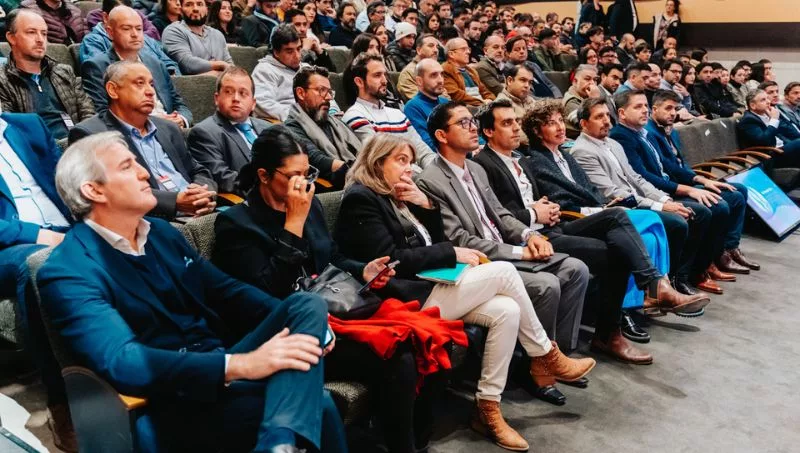
The upcoming Córdoba Cybersecurity Conference 2025, set for June 10th at Siglo 21 University’s campus in Córdoba, Argentina, stands as a strategic response from academia, government, and the private sector alike.
More sophisticated, multi-billion dollar scams
Investment schemes disguised as opportunities on social media, messaging platforms, and seemingly credible websites lead the pack, causing losses of $5.7 billion in 2024.
But the near future could be even more alarming. A recent Deloitte report estimates that fraud leveraging generative AI—such as deepfakes and ultra-realistic chatbots—could cost the U.S. economy up to $40 billion by 2027.
Latin America: increasingly in the crosshairs
Although often associated with developed nations, Latin America is also feeling the heat. In 2024, bank transfer fraud in the region surpassed $275 million, exceeding losses linked to cryptocurrencies.
This situation is worsened by the lack of secure digital infrastructure and a strong cybersecurity organizational culture—especially among small and medium-sized enterprises.

The invisible cost: reputation, trust, and sustainability
When fraud occurs, the impact extends far beyond the financials. Reputational damage can be devastating: loss of customer trust, legal conflicts, breakdown of business alliances, and, in the worst cases, total operational shutdown.
SMBs are particularly vulnerable. Many lack trained staff or updated protocols to combat threats like phishing, ransomware-as-a-service (RaaS), or corporate deepfakes.
Cybersecurity: an urgent investment, not an optional expense
Today more than ever, cybersecurity must be central to organizational strategy. It’s not enough to just install software—building teams, raising awareness, and cultivating a strong digital culture are essential.
The most successful scams of the past year weren’t just technically sophisticated—they succeeded because someone believed in a manipulated email, message, or video.
Companies that don’t grasp this are exposed to systemic risks that are increasingly difficult to contain.

We invite you to explore our tech and marketing sections for top-tier content in both English and Spanish:
Click: https://infonegocios.miami/silicon-beach
Click: https://infonegocios.miami/impact-mkt


Córdoba Cybersecurity Conference 2025: A Knowledge-Driven Response
In this critical context, the Córdoba Cybersecurity Conference 2025, taking place on June 10th at Siglo 21 University in Córdoba, Argentina, epitomizes a strategic effort from academia, government, and the private sector.
The event will bring together international experts, companies, government agencies, and tech leaders to address digital fraud from a multidisciplinary, collaborative perspective.
Key topics include:
-
The economic impact of AI-driven scams
-
Accessible tools to protect SMBs
-
Emerging regulations and digital compliance challenges
-
Real-world banking fraud cases and lessons learned


Follow us on Instagram: Click Here
Turning a Blind Eye Is No Longer an Option
Digital fraud knows no borders, sectors, or business sizes. It affects all of us. And every minute of inaction gives attackers an advantage.
That’s why we’re calling on entrepreneurs, executives, investors, and tech leaders to raise awareness, get trained, and take action. Because the only way to combat this global threat is with a coordinated, knowledge-based, worldwide response.

Suscribete:
-
Subscribe for free to receive the most strategic, agile, and valuable insights at: https://infonegocios.miami/suscribite-al-newsletter
Infonegocios NETWORK: 4.5 million Anglo-Latinos united by a passion for business.
Contact Infonegocios MIAMI:
Read Smart, Be Smarter!











Tu opinión enriquece este artículo: