More and more excitement in Miami, hosting seven matches in the FIFA World Cup 2026, including the third and fourth-place playoff: All you need to know.

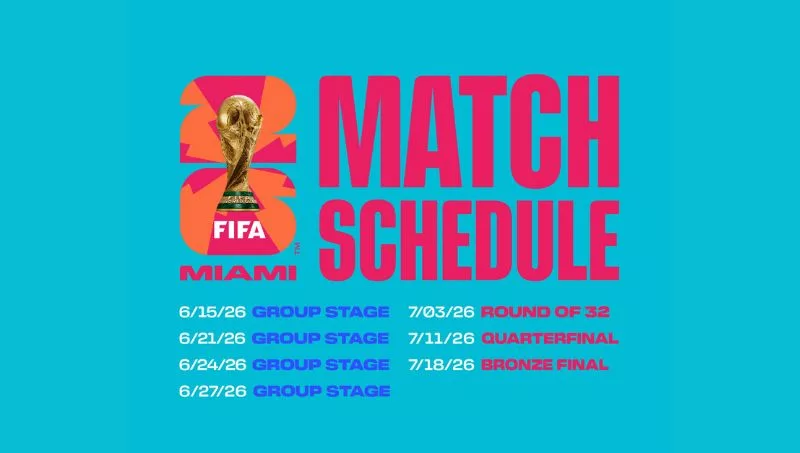
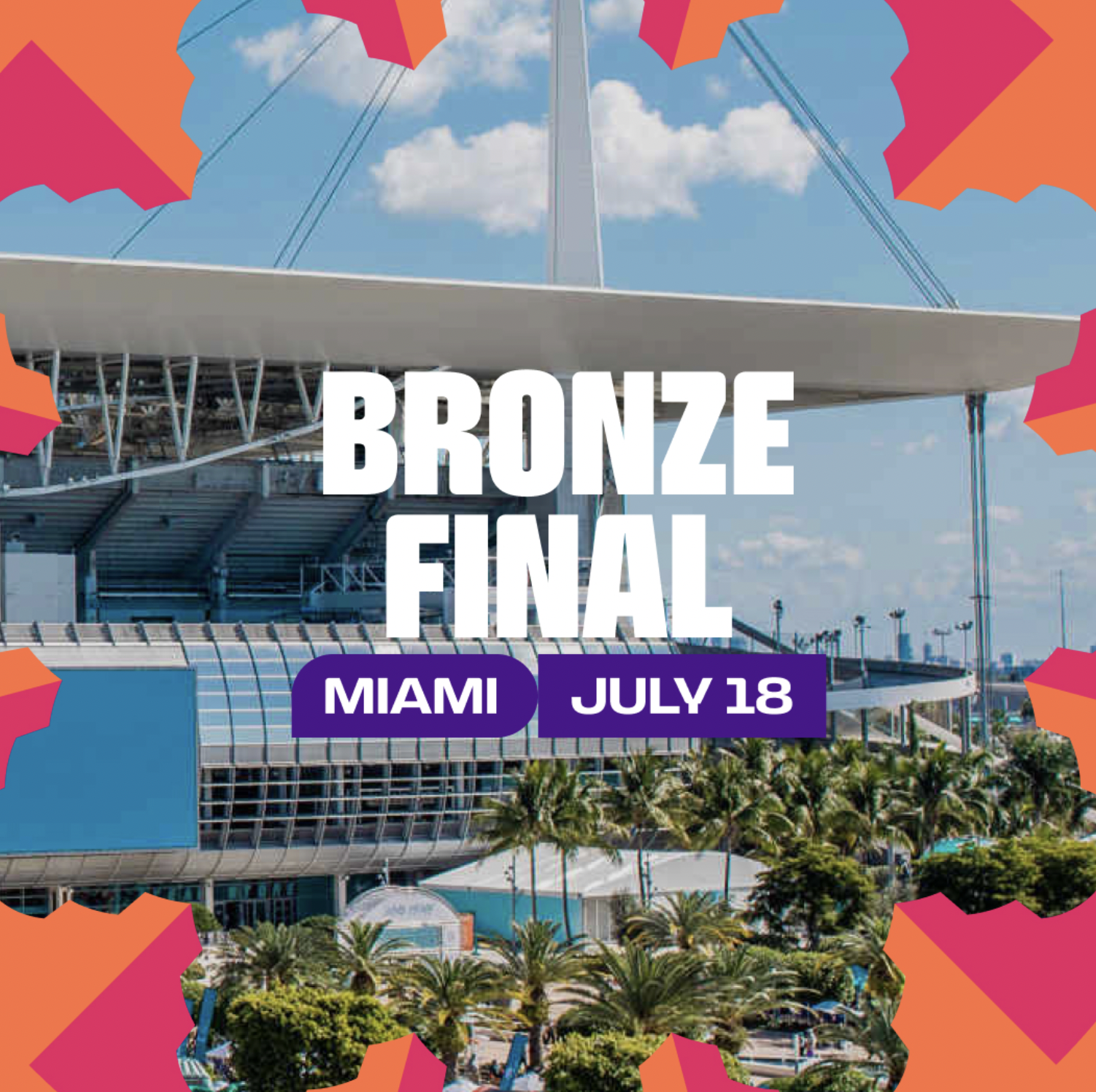
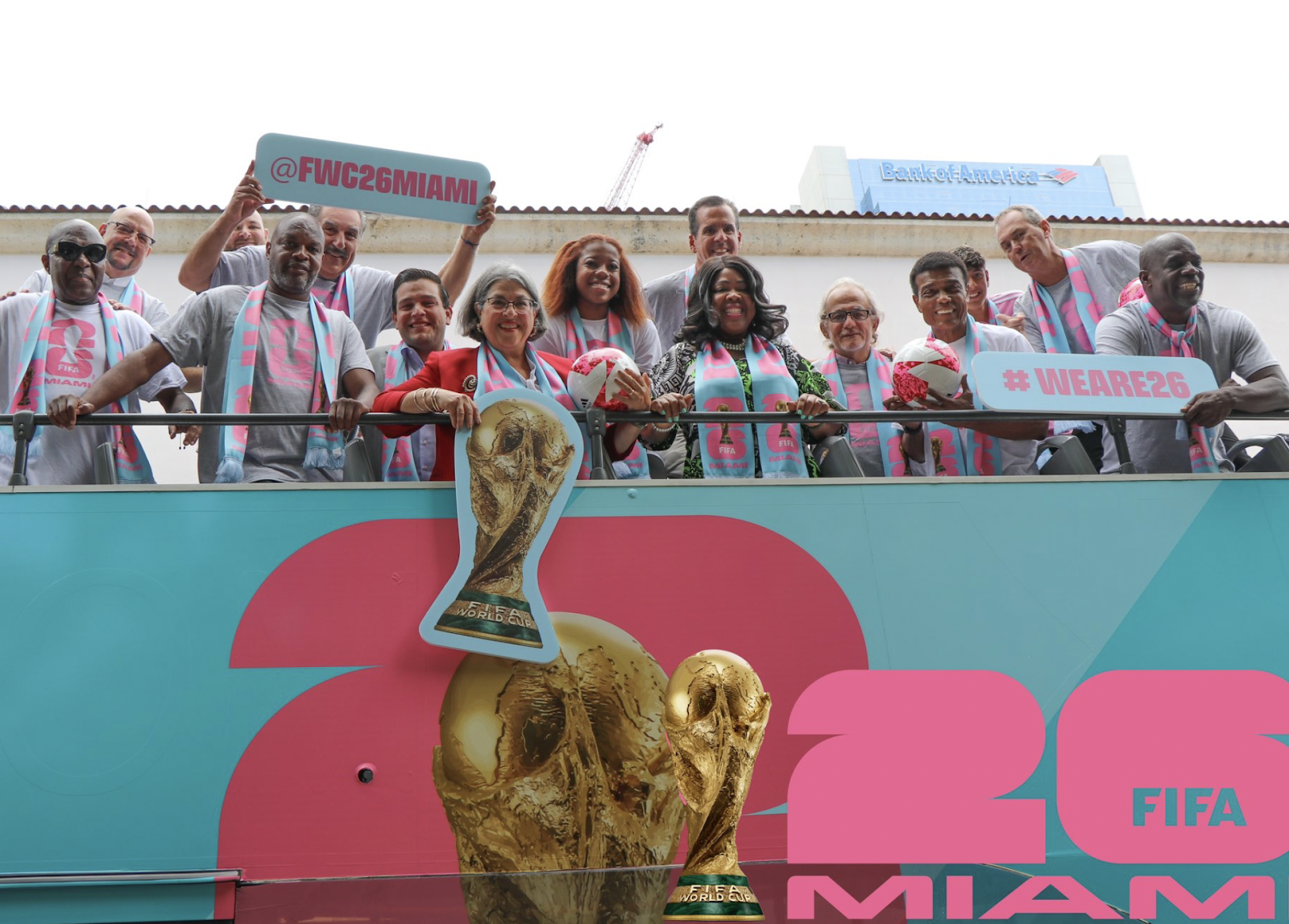
(By Ortega, Maqueda, and Estela Rotmistrovsky) The official schedule for the 2026 FIFA World Cup, the largest and most inclusive edition in history, has been announced, and Miami, one of the 16 host cities, has been selected to host a total of 7 matches in the premier international tournament. The Hard Rock Stadium in Miami Gardens, home of the Miami Dolphins and host venue for the annual Miami Open and Formula 1 Grand Prix, as well as chosen this year to host the final of the 48th edition of the Copa América, will host the third-place match or the Bronze Final, scheduled for July 18. 

Additionally, it will host four group stage matches (Monday, June 15; Sunday, June 21; Wednesday, June 24; and Saturday, June 27); a Round of 32 match on July 3; and a Quarterfinal match on July 11.
The 2026 FIFA World Cup will be the first edition to feature 48 teams instead of 32, with a total of 104 matches (up from 64), including 78 games in the United States and 13 in Mexico and Canada across 16 venues. The tournament's 16 venues will be distributed as follows: 11 in the United States, 3 in Mexico, and 2 in Canada. The format will consist of 12 groups of four teams each. The top two teams and the best eight third-placed teams will advance to the Round of 16. This means that the semi-finalists will play 8 matches, compared to the 7 played under the old system.
Where will the opening match of the 2026 FIFA World Cup be played? The opening match of the 2026 FIFA World Cup will take place at the iconic Estadio Azteca in Mexico City, which will become the only venue to have hosted matches in three different World Cups in the nearly 100-year history of the tournament. According to tradition, this match will feature the Mexican national team as the protagonist, awaiting the opponent determined by draw. This first match is scheduled for Thursday, June 11, 2026.
Where will the final of the 2026 FIFA World Cup be played? The venue hosting the grand final of the 2026 FIFA World Cup will be the MetLife Stadium in New York/New Jersey on Sunday, July 19, 2026. The stadium, with a capacity of 82,500 people, home to the New York Giants and New York Nets, will host a total of eight matches, including 5 in the group stage, one in the Round of 32, one in the Round of 16, and, of course, the final.
Additional key information (Highlights of the 2026 FIFA World Cup calendar) The first match to be played in Canada, hosting its first World Cup, will take place on June 12 at the BMO Field in Toronto. 

Action in the United States, hosting the World Cup for the second time, will kick off at the SoFi Stadium in Los Angeles on the same day. In other words, the 2026 FIFA World Cup will have "three opening matches". Mexico, Canada, and the United States are guaranteed to play their three group stage matches at home. 

The semi-finals will be held in Atlanta and Dallas, and the third-place match will be in Miami. Dallas will host the most matches, with 9 including one of the semi-finals. 
This is a consolation prize as the AT&T Stadium was initially earmarked to be selected for the final. The innovative schedule design ensures that teams enjoy three days of rest before 103 of the 104 tournament matches. Most matches will be concentrated in the East, Central, and West regions to save travel for both teams and fans.


Tu opinión enriquece este artículo:

Rosemary Beach: es como ir a lo mas lindo de Europa y de Miami a la vez (en Florida)

(Por Maurizio) Este pequeño paraíso, ubicado en la pintoresca Costa del Golfo, es un verdadero refugio para aquellos que buscan una escapada idílica, combinando la serenidad de la naturaleza con un estilo de vida moderno y vibrante. En el vasto paisaje de la costa de Florida, se encuentra un rincón de ensueño que no siempre recibe la atención que merece: Rosemary Beach

(Tiempo de lectura estratégica y de alto valor: 4 minutos)

El colapso del consumo del alcohol (excepto hiper lujo o meta relevancia) está remodelando todo el marketing de bebidas

(Por Maqueda con Maurizio) Imagine una inversión que pierde casi la mitad de su valor en cinco años. No es una criptomoneda volátil ni una startup fallida. Es la industria global del alcohol, un gigante que durante siglos pareció inmune a las crisis y que hoy enfrenta una tormenta perfecta: una revolución generacional en los hábitos de consumo, guerras comerciales y una transformación farmacológica que está reescribiendo la relación humana con la intoxicación.

(Nota ágil de 3 minutos, menos de 250 palabras)

Paradoja Starbucks 2026: reestructura en EEUU y crece en MX (by Alsea) (¿por qué nadie te explica por qué?)

(Por Maqueda y Maurizio) Si quieres entender el futuro del retail, no mires las ganancias. Mira las energías contrastantes. Starbucks no tiene un problema financiero; tiene una crisis ontológica. Mientras en México florece como un ecosistema resiliente, en Estados Unidos se contrae como un organismo que olvidó su propia mitología.

(Tiempo de lectura estratégica y de alto valor: 4 minutos)

La revolución del retail temático: ¿por qué tu tienda ya no es una tienda? (Target lo acaba de demostrar en el Soho)

(Por Maurizio y Maqueda) Si crees que el retail  físico está muriendo, no has entendido nada. Lo que murió fue la transacción fría. O solo la venta de producto o servicio. Lo que nace —y Target en SoHo lo grita con cada detalle— es la tienda como universo temático, como escenario narrativo, como espacio ritual. No estamos hablando de “branding”. 

(Tiempo de lectura estratégica y de alto valor: 3 minutos)

Red Bull 2026: la escuela del Crossing Mkt, en la era de expansión de categorías y universos de marca (10 tips ágiles)

(Taylor- Maqueda-Otero-Maurizio)  2026 llega con una certeza estratégica: la expansión de categorías y universos de marca ya no es opcional, es la norma. En este contexto, Red Bull no es solo una bebida energética; es la escuela global de Crossing Marketing, aquella disciplina que cruza, mezcla y eleva marcas para generar valor real en ecosistemas tremendamente complejos.

(Tiempo de lectura estratégica y de alto valor: 4 minutos)

Estrategias de éxito para 2026: ¿sabes cuánto invierte Red Bull en crear universos temáticos y expandir sus categorías? (P-2)

(Taylor- Maqueda-Otero-Maurizio) Red Bull ha convertido lo que parecía ser una simple bebida en un ecosistema de innovación continua. En la era de la expansión de categorías y universos de marca, es la referencia de cómo convertir talento, contenidos, patrocinios y experiencias en un valor de marca sostenido y creciente. 

(Tiempo de lectura estratégica y de alto valor: 4 minutos)