
At the 2026 World Cup: The Other Championship Being Played Off the Pitch — and the One That's Rewriting the Rules of Global Sports Marketing
"We don't dress teams. We dress cultures." — The philosophy PUMA just demonstrated live at Domino Square, New York
There are two World Cups in 2026. One is played on the pitch. The other is played in the streets.
While the majority of the world had its eyes locked on the stadiums of the United States, Canada, and Mexico — trying to figure out who's lifting the FIFA World Cup trophy — PUMA made a decision that the most sophisticated brand strategists on the planet have spent weeks dissecting with a potent combination of professional admiration and genuine vertigo:
-
They launched the kits of 11 national teams — not inside a stadium. Not at a corporate activation event. Not via a globally produced Hollywood-grade livestream.
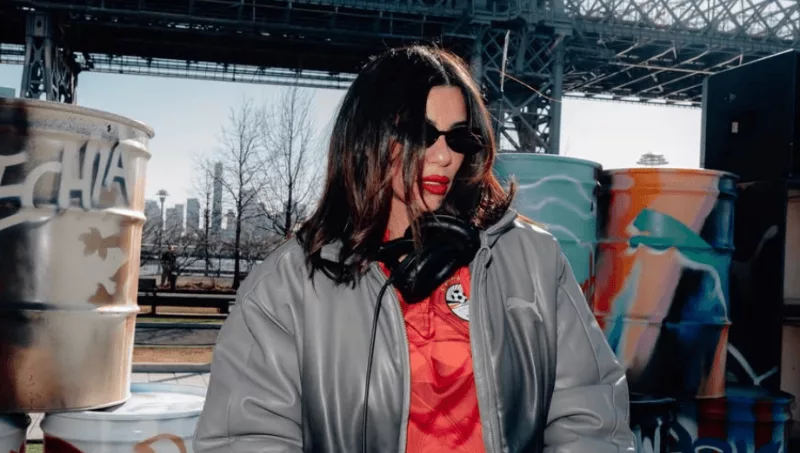
They launched them at Domino Square — a public park in Williamsburg, Brooklyn, where immigrant communities from dozens of countries converge every afternoon around domino tables, improvised soccer pitches, and food trucks that simultaneously smell like four continents.

That choice — seemingly simple on the surface, radically disruptive in its implications — is the precise difference between a brand that communicates and a brand that belongs. And in the sports marketing landscape of 2026, that distinction is worth billions.
The Core Insight That Changed Everything: A Jersey Isn't Clothing. It's a Cultural Passport.
To fully grasp why PUMA's New York launch is a strategic masterpiece, you first need to internalize something that the athletic apparel industry took decades to process with the clarity it deserves:
A national team jersey is not a garment. It is the single most identity-loaded physical object in contemporary global culture.
-
No other mass-market consumer product simultaneously concentrates national history, family memory, ethnic pride, diasporic identity, and sporting emotion into 150 grams of fabric. The Ghana jersey that a Ghanaian immigrant in the Bronx wears on match day isn't fashion. It's a portable flag, a personal ID, and a declaration of love for a country that sits 9,000 kilometers away.
Grant McCracken, Harvard's preeminent consumer anthropologist and author of Culture and Consumption, documented this with academic precision: objects that achieve the status of "high-symbolic-load cultural goods" transcend entirely the functional category in which they were originally conceived. They don't compete on price, durability, or technical performance. They compete on meaning. And meaning cannot be manufactured on a production line. It can only be honored — or betrayed.
With its Domino Square launch, PUMA chose to honor it. Deliberately. Unapologetically.
Domino Square: The Single Most Intelligent Venue Choice in Sports Marketing in Decades
The decision to stage this launch at Domino Square was not a logistical call. It was a semiotic one.
-
New York City is, in 2026, the most nationally diverse city on the planet. With over 800 languages spoken across its five boroughs and active communities from virtually all 211 countries in the world, NYC is the only place on earth where an event celebrating Portugal, Morocco, Ghana, Paraguay, Senegal, Ivory Coast, Czech Republic, Switzerland, New Zealand, Austria, and Egypt — simultaneously — makes geographic, cultural, and emotional sense.
Williamsburg and its surrounding radius concentrates active communities from several of those very nations. Street soccer — organized by collectives like NYC Footy, which coordinated the 4v4 tournament at the event — is the shared language of those communities.
And Domino Square, with its deep history as a public space organically claimed by Caribbean and Latin American cultures, is exactly the kind of territory where a brand communicates something that no stadium architecture ever could:
"We're not here to be seen. We're here because we belong."
Nadia Kokni, PUMA's VP of Global Brand Marketing, articulated this with a clarity that deserves to be framed in every business school on the planet:
"We wanted to connect with fan communities by showing up in the places and moments that truly matter to them. This event was born from that idea — giving local footballers the chance to debut these new kits before anyone else, on the pitch of their own city."
Those two sentences contain more actionable brand strategy than most campaign briefs produced in an entire calendar year.
Four Continents. Eleven Flags. One Movement: The Soccer Geopolitics That PUMA Is Winning
There is one number that sports equipment industry analysts are citing with increasing emphasis:
PUMA kits nearly a quarter of the national teams competing at FIFA World Cup 2026.
That is not a marketing data point. That is a geopolitical position within the most powerful ecosystem in global sport.
The geographic distribution is particularly compelling: Portugal as a European powerhouse with Cristiano Ronaldo as a generational cultural reference; Morocco as the breakthrough revelation of Qatar 2022 — the team that proved Africa can compete at the absolute highest level; Ghana, Senegal, Ivory Coast, and Egypt as the most dynamic football federations on the continent; Paraguay as South American representation; Switzerland and Czech Republic as solid Central European presences; and New Zealand and Austria completing a four-continent portfolio that no competitor in the sector can match with this degree of cultural coherence.
-
The African presence is especially strategic. With five continental national teams wearing PUMA, the German brand is uniquely positioned in the highest-growth market in global football. Africa has over 1.4 billion inhabitants, a predominantly young population, and a passion for soccer that participation and viewership data confirm as the most intense per capita anywhere on earth.
PUMA isn't just dressing African national teams. It's building the long-term relationship with the market that will define football for the next two decades.
Simon Chadwick, Professor of Sport Geopolitics at SKEMA Business School and one of the most respected analysts of the global football business, argues in his research that sports brands investing in building authentic African presence between 2020 and 2030 will hold in 2035 the same competitive advantage that brands investing in China between 1990 and 2000 eventually commanded. PUMA appears to have read that analysis well ahead of its competitors.
Ricardo Quaresma, Asamoah Gyan & El Hadji Diouf: The Generational Bridge No Algorithm Can Replicate
One of the most strategically brilliant — and least analyzed — dimensions of the Domino Square event was the presence of Ricardo Quaresma, Asamoah Gyan, and El Hadji Diouf as representatives of Portugal, Ghana, and Senegal respectively.
These are not influencers. They are not brand ambassadors in the contemporary commercial sense of the term. They are cultural legends of their respective nations and diasporic communities — figures who, for the generation of fans between 30 and 45, represent moments of collective glory that simply don't fade.
Malcolm Gladwell, in The Tipping Point, identified these profiles as "Connectors": individuals with the rare and unique ability to bridge generations, communities, and cultural contexts that would otherwise never intersect. Their presence at an event doesn't add audience linearly. It multiplies cultural credibility in a way no media budget can purchase.
Quaresma showing a young Portuguese-American kid from the Bronx how to pull on the new Portugal kit on a concrete court in Brooklyn is, in pure brand equity terms, infinitely more valuable than any digital performance campaign ever produced.
That's what the top 1% of brand strategists in the world understand and deploy. And PUMA executed it with a naturalness that is only achievable when strategy and culture are genuinely, authentically aligned.
Want to master everything you need to know about succeeding in sports marketing? Here's the definitive bible of sports and apparel marketing. Don't sleep on this high-value strategic content:
🔗 Business Films — A Must-Watch for the World Cup Era
Marcelo Maurizio is Brand Strategy & Culture Editor at Infonegocios Miami. Research grounded in: Grant McCracken — "Culture and Consumption" (1988); Adam Morgan — "Eating the Big Fish" (1999); Malcolm Gladwell — "The Tipping Point" (2000); Simon Chadwick — "Geopolitics of Sport," SKEMA Business School (2024); WARC Sports Marketing Effectiveness Report 2025; PUMA AG Annual Report 2025 public data.
© Infonegocios Miami | Strategic journalism for the leaders moving the world forward.
#PUMA #WorldCup2026 #FIFA2026 #WorldCupKits #SportsMarketing #Soccer #BrandStrategy #InfonegociosMiami #Miami #Business #ULTRAWEAVE #REFIBRE #Portugal #Ghana #Senegal #Morocco #Marketing2026 #GlobalBrandStrategy #Latam #NewYork
Read Smart, Be Smarter.
🔗 Subscribe to our Newsletter 📩 Contact: [email protected]
Infonegocios NETWORK — 4.5 million Anglo-Latinos united by a passion for business. Join us and stay sharp.
© 2026 Infonegocios Miami Economic, Cultural & Business Intelligence with a Global Lens www.Infonegocios.Miami




Tu opinión enriquece este artículo: