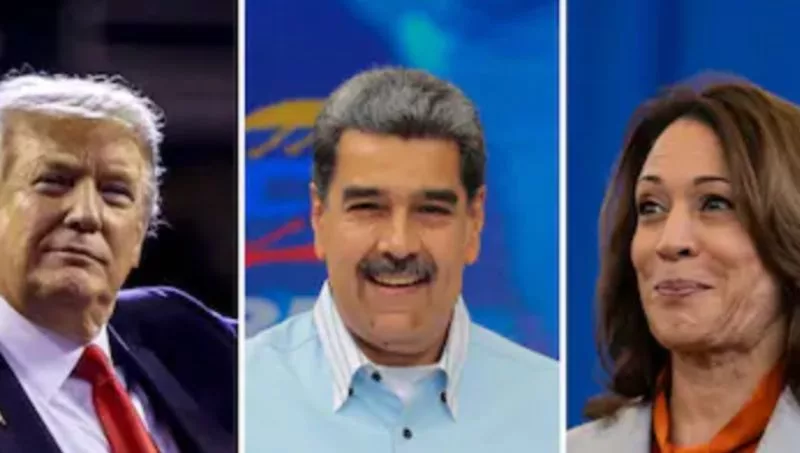

The dictator Maduro, a horror that should no longer be tolerated. Trump is far more committed to the freedom of Venezuela and Cuba, yet there is an extreme nonchalance from Harris and Biden on this crucial issue for Latino migrants.
Venezuela's political history has been marked by a robust democracy throughout much of the 20th century, which began to unravel with Hugo Chávez's rise to power in 1999. The similarities between Trump and the late Chávez are striking: both share an authoritarian style, combative rhetoric, and an aggressive strategy toward their opponents. However, Venezuelans who have fled chavismo and, more recently, madurismo, perceive Trump as a diametrically opposed leader: a right-wing politician and a successful magnate.
This phenomenon is surprising, given that Venezuela has a deeply rooted social-democratic tradition and lacks a consolidated right akin to that of Europe or the United States. "This is also evident in places like Madrid, where Venezuelans have aligned with Vox," notes political analyst Fernández. Such a rightward inclination is reflected in other communities that have suffered under socialist regimes.
In the American political landscape, Venezuelans behave similarly to Cubans, especially in Florida. The conviction that voting is a tool of political power is a distinctive trait of the exile community. According to census data, Venezuelans constitute one of the most registered Latino voting groups in the United States, with approximately 120,000 voters nationwide. This figure may have increased due to recent naturalizations and the arrival of immigrant children who have reached voting age. Overall, Latinos represent 14.7% of eligible voters for the November 5 elections, totaling around 36.2 million individuals.
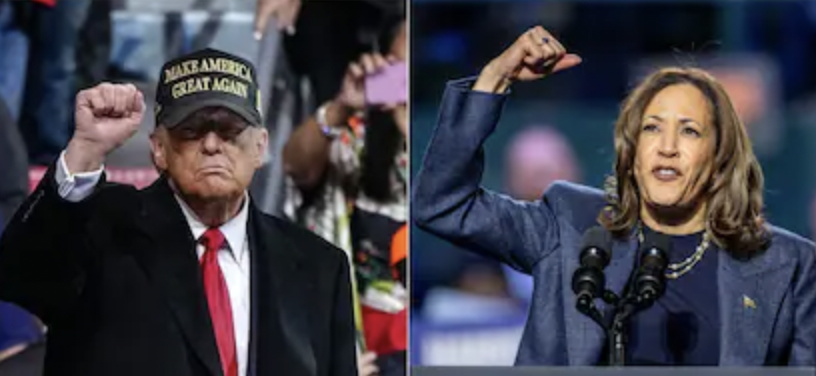
Although the impact of the Venezuelan vote is relatively modest compared to other Latino communities, its presence is increasingly significant. According to the 2023 American Community Survey (ACS) from the U.S. Census Bureau, the Venezuelan population in the country exceeds 900,000, ranking tenth among the largest Latino communities.
Republicans or Democrats: The Polarization of the Venezuelan Vote
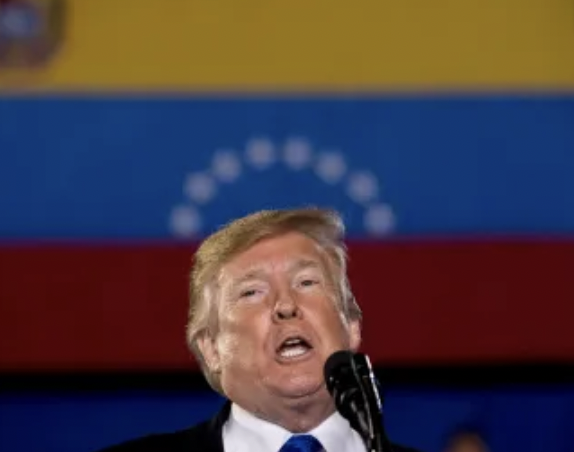
Venezuelans who arrived in the U.S. during the first wave of migration (2005-2015) come from more affluent backgrounds and possess a high level of education. Nonetheless, after settling, many began to lean toward Trump and his movement. "The crisis in Venezuela intensified in 2017, and Trump proclaimed himself 'the greatest anti-communist in history,'" explains Eduardo Gamarra, director of the Latino Public Opinion Forum at Florida International University. Moreover, Senator Marco Rubio played a crucial role in connecting the Venezuelan diaspora to the Republican Party, implementing sanctions on oil and promoting the notion of potential military intervention.

IG: @infonegociosmiami
In the 2020 elections, Biden won Miami-Dade County by a narrow margin of 7.4 points, a result influenced by Venezuelan votes in favor of Trump. Towards the end of his term, Trump issued an executive order protecting Venezuelans from deportation, which bolstered his support among newcomers.
However, the landscape of the Venezuelan exile community is diverse. Many have settled in Texas, Georgia, and New York, where their political inclinations may differ from those of their compatriots in Florida. According to Gamarra, in 2016, the majority of Venezuelans voted for Hillary Clinton, viewing her as a counterbalance to Trump. Despite the growing support for Republicans, it has not yet surpassed 50% among registered voters, suggesting that the Venezuelan vote remains predominantly Democratic, especially outside Florida.
The Biden administration has offered the diaspora Temporary Protected Status (TPS) and humanitarian parole, yet Trump has threatened to eliminate these protections if he returns to the White House. "Comparing Venezuelans to Cubans, Colombians, and Nicaraguans, Venezuelans maintain a Democratic identity despite some aligning with Trump."
-
Infonegocios RED: 4.5 million Anglophone Latinos reading business news daily.
-
Contacts: [email protected] or [email protected]








Tu opinión enriquece este artículo: