“A Brand is not a product, it is a purpose, an endless experience in living, a way to see the world… a Brand creates worlds, it broadens them, it creates value”.
We are referring to brands, not factories or industries that even export, because there is a great difference in impact between both things.
A large company can be very strong and can even export, but outside its country, no one knows it as a brand. Does this happen in your country? It may be that in a certain place that company is the strongest, and even if it exports a lot, the consumer abroad may not know it. Consequently, it is not an international brand, it is either a factory or an industry that exports.
A company that has many international brands generates a greater positive impact.
A country that has many companies with many international brands, even if it produces in its own country, it is a society that generates good quality of life in its country and where it produces.
For example, Budweiser, Corona, McDonald's, M&M, Adidas, Apple and Hugo Boss not only sell and manufacture stuff, in fact, some of them don't even have factories. They are present in thousands of series and movies and they carry out "experiences" in many branded places. They also generate product line extensions (clothing, toys, even theme parks and merchandising) That is to say, they create a brand value culture that has an impact on a drastic growth in the diversity of jobs they produce, suppliers they develop, but fundamentally in the added value that they introduce in people’s life quality.
Obviously, a national company that exports or buys factories abroad and becomes international is very important for a country, but being an international brand is something else. It means being part of the universal culture, integrating into the world, achieving empathy, working with people from each country, generating being part of each citizen’s life. This is a great social (human) advance, it is an elevation of culture.
Having a nation with many international brands means that the country has the organizational, legal and human ability to co create with other cultures.
Are the politicians of every country in America aware of this? Have the members of the different political ideologies of Latin America already realized this? Have the men of Latin companies become aware of this much higher purpose? Have the faculties, the professors, the industrial engineers, accountants, lawyers, the same advertisers, journalists, the marketing men of Latin America, realized this? Have the unions, the workers, the institutions, the economists, the public employees of each Latin American country been able to accept and incorporate this as a priority value result for their objectives?
Having a country that generates "brands" which succeed internationally implies that they have a social, organizational and legal agreement behind them, where competitiveness is the product of a culture that respects, values and inspires this for the present of human activity, integrating knowledge , justice, security, economic development and life quality for all.
If a society keeps arguing ideologies, old limiting beliefs, it will always be a slave of its own ties.
Let’s think about how many companies in Latin America are large factories in their countries that bought other companies in other countries. And although they are large exporters of mass consumption foods or beverages, they have not developed either theme parks (within their portfolio, with investment and risk) in their nation, or cultural thematic museums with their actions as sponsors in all orders, or their brand "temples", with games, line of thematic products, clothing, gifts, etc.
Let's imagine that these large factories are also dedicated to cross-cutting crockery, decoration products, their own fashion lines, themed bars where they highlight the achievements of music, sports, art, the children's world of their nations... that is, to be a Brand and leave a mark.
“A Brand is not a product, it is a purpose, an endless experience in living, a way to see the world… a Brand creates worlds, it broadens them, it creates value” (Marcelo Maurizio).
If we want strong nations, we need nations with culture and education, a diversity of institutions that make up a large distribution of power in a society, but we also need the culture of these nations, from the smallest SMEs to the largest factories, to generate value, that is, they are brands.
The difference between a society where families or companies do things to sell and a society where SMEs, startups and entrepreneurs do things with a purpose to be chosen is also very big.
A great phrase sums it all up: "Marketing is not there to solve the problems of companies, its purpose is to solve the problems of the companies' customers", Seth Godin.
The great problem of a nation may also be when, in their social, business culture, they think that marketing is aimed at supplying sales for the big mistakes of their brand.
A great branding, together with a great branding, makes a brand to be chosen, a great nation, among other very important things, is the sum of many companies that make brands in a framework of legal, business and human impeccability. Brands with purpose and excellence.
If the family, in all the diversity and inclusion of its conception, and education are the basis of a society, brands are also a differential sign of a nation with a high quality of life, since for this to happen, the division of powers and the excellence of the institutions, are the protagonists that allow this international projection.
The image that represents this comparison is the photo of a market in a city, with street stalls presented in a precarious way, like centuries ago, versus a district full of shops, commercial and corporate buildings, food trucks, shopping malls, theme and attraction parks, recreational and cultural museums, connected by infinite modern and orderly roads.
Miami is clearly the product of a social, human, inclusive, evolved, free and safe organization that represents the idea of many cities, countries and different cultures around the world. A world with societies where sports, culture, the state, companies, brands, institutions, the market, the economy are parts of a whole, that is, they are a free and coordinated union, and not parties in competition.
Why is Miami the center of anglo latin american culture today?
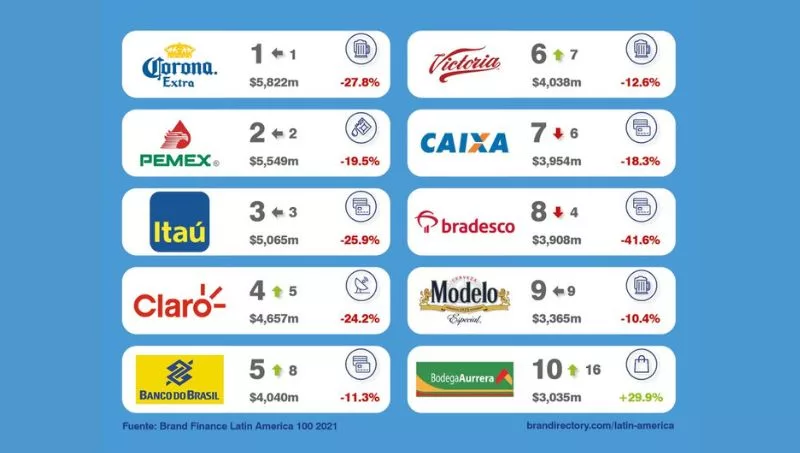
How many international brands does Brazil have? How many does Mexico have? We talk about brands that everyone recognizes, values, loves and searches for. How many does the USA have? What about Colombia, Argentina, Chile?
And how many of these brands, their products and their headquarters remained in their native countries and are part of groups originating from those countries? How many migrate, also as families or young people migrate from their countries? Why do many come to Miami?
We suggest reading: InfoNegocios Miami y la Argentine American Chamber of Commerce sign cooperation agreement in content and information
Silicon Beach, the ally of the technological Latin America (startups in the conquest of the world)
(Co created with Marcelo Maurizio)








Tu opinión enriquece este artículo: