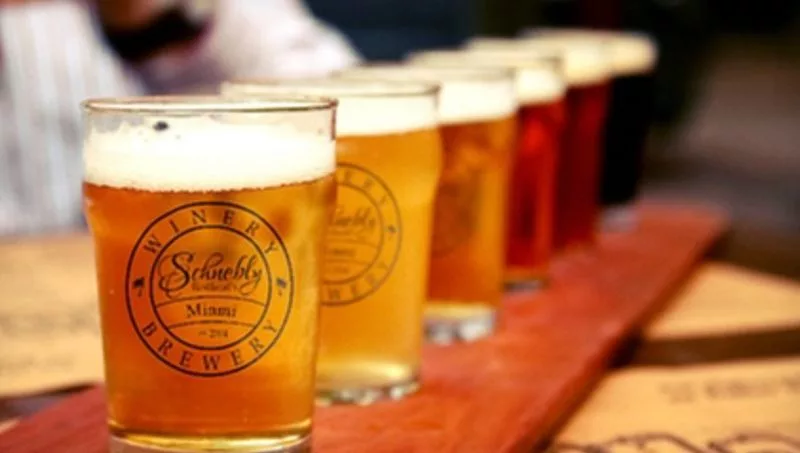

Today is special—for me and for millions of people worldwide. Beer is more than a drink; it’s a culture, a lifestyle philosophy, and a meta-symbol of human connection.

But did you know this celebration has roots dating back centuries—and that it now carries profound economic, cultural, and social impact across numerous countries?
Having had the privilege of living immersed in beer culture and community—working with brands like Corona and Bud across the Americas (USA, Mexico, and South America), and in Argentina with Heineken, Santa Fé, Córdoba, and some craft breweries like Brunnen Bier (Instagram link)—I’ve experienced firsthand how beer unites people.

In Villa General Belgrano, Argentina, a charming town often called “a Bavarian village,” I’ve also contributed to organizing their world-renowned Oktoberfest (Instagram link), one of the top five Oktoberfest celebrations globally—an event I highly recommend visiting.
As a descendant of Central Europeans, my love for beer runs deep. Beyond the passion for the product itself, I value the rich culture and tradition behind this industry. In the U.S., the variety is staggering—over 7,000 brands on store shelves, seemingly endless.

-
Here’s a detailed report on the diversity of beers in the USA:
Explore the Growing World of Beer in Florida
Symbolically, beer represents community, celebration, and tradition. Festivals, fairs, and social gatherings centered around beer reinforce its role as a catalyst for cultural and social bonds worldwide.

Below, I share insights from experts in history, etymology, economics, and beer culture—covering the origins and evolution of this celebration, its regional significance, and how beer continues to be a driver of innovation, business, and cultural resilience.
When and How Did International Beer Day Begin?
Officially celebrated every August 1st since 2007, thanks to BeerDay—a U.S.-based organization aiming to honor beer during a period of booming craft brewing and a renewed appreciation for ancient traditions. However, its roots are far deeper, woven into centuries of cultural history.

Historical Milestones and the Origins of the Celebration
-
Ancient Roots:
The word “beer” in English derives from the Old English beor, and in German, Bier. Beer’s history dates back over 4,000 years to Mesopotamia, where Sumerians brewed primitive versions. In ancient Egypt, beer was considered sacred nourishment—an integral part of daily life and ritual. -
19th Century Growth:
The Industrial Revolution revolutionized brewing, with modern techniques making beer accessible to all social classes and boosting variety and quality. -
The Modern Festivity:
Since 2007, the craft beer community has propelled the celebration, promoting beer culture and supporting small and medium-sized breweries during a period of global innovation and market transformation. Today, many countries have adopted the date, tailoring it to their traditions.

Why August 1st?
The date was chosen for its symbolism: in many regions, early August marks peak summer—a perfect time for festivals, gatherings, and tastings. It also coincides with historic moments like the opening of Prague’s first modern brewery in 1842 or key legislative milestones regulating beer production in various regions.
The Economic and Cultural Impact of Beer Worldwide
International Beer Day isn’t just a celebration—it’s a mirror reflecting the economic power of beer in countries like Germany, Belgium, the Czech Republic, the U.S., and Spain.

United States:
The craft brewing industry has grown 15% annually over the past five years, creating over 81,000 jobs and exceeding USD $29 billion in market value (Brewers Association, 2023). While alcohol consumption overall has declined in 2024 and 2025, non-alcoholic beers are experiencing sustained growth.

Read about the rise of alcohol-free beers here:
The Paradigm Shift Toward Non-Alcoholic Beers in Miami and Beyond
Germany & Czech Republic:
With centuries-long traditions, these nations’ beer cultures are embedded in national identity. Oktoberfest in Munich and Pilsen’s festivals draw millions of tourists annually.
Spain:
The country’s leading alcoholic beverage, beer, is experiencing sustained growth in its craft sector, now representing over 10% of the total market, boosting local economies and tourism.

Innovation & Culture as Economic Drivers
Today, beer is a field of constant innovation. The craft movement has led to unique styles, using local ingredients, experimental fermentations, and sustainable practices. Brands like BrewDog in Scotland or Cervecería del Valle in Colombia exemplify how beer culture can spur new businesses, attract investment, and energize local economies.

The Etymology and Symbolism of Beer
The word “beer” has roots across languages, reflecting its global significance. In ancient Mesopotamia, words like kash or kashsh signified fermented liquids, while in Gaelic, beoir means “liquid,” “drink,” or “elixir.”

Celebrating History and Looking Ahead
International Beer Day is more than a festival—it’s a tribute to history, culture, and the economic force behind this ancient beverage. Its millennia-old story, ongoing innovation, and worldwide community show that beer is much more than a drink: it’s a symbol of unity, creativity, and resilience.

For businesses, entrepreneurs, and leaders, this day also invites reflection on market trends, valuing traditions, and investing in sustainable innovation.
As Steve Hindy, founder of Brooklyn Brewery, states in The Craft Beer Revolution:
“Beer teaches us that tradition and innovation can coexist—and both can drive a business and a culture in continuous evolution.”

How will you celebrate International Beer Day?
Happy August 1st! May this celebration inspire new ideas, collaborations, and flavors in your business!
Cheers!
-
German: Prost!
-
Italian: Salute!
-
English: Cheers!
-
Portuguese: Saúde!
-
French: Santé!
-
Swedish: Skål!
-
Dutch: Proost!
-
Danish: Skål!
Read Smart, Be Smarter!
Infonegocios NETWORK: 4.5 million Anglo-Latinos united by a passion for business.
¡Sé parte y únete para recibir toda la información estratégica y pertenecer a la comunidad de negocios y cultura más grande de todo anglolatina!:
-
¡Únete sin costo!: https://infonegocios.miami/suscribite-al-newsletter

Contact Infonegocios MIAMI:
-
marcelo.maurizio@gmail.com










Tu opinión enriquece este artículo: