
Breaking the Spell of Old Paradigms: The Path to New Crossing Marketing Focused on Value and Experiences

(By Estela Rotmistrovsky and Marcelo Maurizio)  It's time to stop denying, postponing, or deceiving ourselves that this is only for the "big" ones or for those with high profitability. Crossing marketing and the mega area of head of culture is the way to do business, entrepreneurship, or social or political activity today. It's time to challenge old paradigms, break the inertia, and embrace change as an opportunity for growth and evolution. The future of marketing is already here, and it's written with an "i" for innovation, immersion, and impact.

(A 3-minute read packed with insights)

The Crossing Marketing: A Quantum Leap towards Relevance

Ignoring the call to transformation is a luxury that few companies can afford in today's fast-paced and ever-changing business environment. Cross-marketing, with its holistic and customer-centric approach, is the key to achieving relevance in a world saturated with noise.

The quantum leap in marketing is a necessary step for companies that want to stay ahead in today's business environment. By adopting a customer-centric approach, creating a solid brand culture, and appointing a head of culture, companies can reap the benefits of the quantum leap in marketing and achieve long-term success.



Building a High-Performance Team:


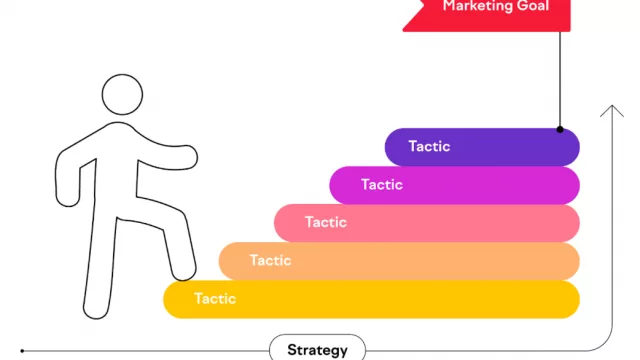
 Hiring multidisciplinary talent with technical and human skills is the first step in leading the transformation. "Translators" who can connect strategic vision with tactical execution, combining creativity with efficiency, are needed. Strategic planning today is a constant system of agenda, analysis, organization that feeds on all the information all the time for immediate, short-term, medium-term, and long-term design.

Empowering the Cultural Architect:


 The Head of Culture is not a decorative role, but a visionary leader who guides the transformation from the essence of the brand. Investment, not only economic but also of trust and autonomy, is required for this leader to build a culture that embraces change.

Adopting the Philosophy of Giving to Receive:


 Cross-marketing does not seek immediate sales, but rather the construction of long-term relationships based on generating value. It's about offering unique experiences, relevant content, and solutions to real customer problems.


 

Follow us on: IG: @infonegociosmiami


Understanding the Quantum Leap in Marketing

The quantum leap in marketing refers to the profound transformation that companies must undergo to adapt to the changing needs and expectations of their customers. This transformation involves a change from a traditional, product-centric approach to a more holistic, customer-centric approach that takes into account the entire customer experience. Additionally, it is realistic about the hyper-dispersion of media and the need to coordinate everything in time and systems.



The Importance of Brand Culture

Brand culture is a critical component of the quantum leap in marketing. It refers to the shared values, beliefs, and behaviors that define a company's identity and guide its interactions with customers. A solid brand culture is essential for creating a cohesive and consistent brand image, which is fundamental for generating trust and loyalty with customers.

Today, a brand is a "theme park and a show factory amplified in multi-channels and multi-media online and offline".

 

The Role of the Head of Culture

The Head of Culture is a key player in the quantum leap in marketing. This person is responsible for defining and implementing the company's brand culture, and for ensuring that it is consistently communicated across all touchpoints. The Head of Culture must be a visionary leader who can inspire and motivate employees to live the brand culture every day.

The Benefits of the Quantum Leap in Marketing or Crossing Marketing

The quantum leap in marketing offers numerous benefits for companies that are willing to take the leap. These benefits include:


  1. Increased customer loyalty and retention


  1. Improved brand reputation and awareness

  2. Enhanced customer experiences


  1. Increased revenue and profitability

  2. Competitive advantage in the market

  3. Expansion of product lines, markets, and categories.


  1. Expansion of moments of contact, channels of purchase, and consumption cycle.

  2. Cycle of relevance and differential interest.



Subscribe to Infonegocios Miami:


 https://infonegocios.miami/suscribite-al-newsletter

 Contact Infonegocios MIAMI:

 [email protected]

  [email protected]


Tu opinión enriquece este artículo:

El Head de Cultura, el rol absolutamente clave hoy en las empresas tops de USA (que aún en Latinoamérica no se ha implementado)

(Por Juan Maqueda, Marcelo Maurizio y Estely Rotmistrovsky, desde Miami) En la actualidad, el Head de Cultura (también conocido como Chief Culture Officer o Director de Cultura o el Co-Ceo) es un puesto cada vez más relevante en las empresas, tanto en línea como fuera de línea. En esta nota te contamos sobre casos concretos de éxito de este rol en USA, Europa y América Latina.

(Tiempo de lectura estratégica y de alto valor: 4 minutos)

Ole Miss creó el relato perfecto del “Fast Friday” al Fiesta Bowl (por qué Miami es el último capítulo de una revolución)

(Por Ortega) El field goal de 47 yardas de Lucas Carneiro que venció a Georgia no fue un golpe de suerte. Fue la culminación de un proceso diseñado para prosperar en el caos, la validación de una hipótesis arriesgada: que un equipo puede perder a su entrenador estrella un mes antes del playoff, mantener a un staff dividido entre dos programas, y aún así ejecutar bajo presión extrema.

(Tiempo de lectura: 4 minutos para ilusionarse)

Empieza este 2026 haciendo lo que ya los Gurús de las top brands hacen

(Por Otero-Maurizio) "El marketing del futuro no se vende; se vive. Y las marcas que creen espacios para vivir, ganarán." Las tendencias 2026 no son meras predicciones, sino síntomas de una transformación profunda en la psicología del consumidor, la economía de la atención y la arquitectura de valor de las marcas. 

(Contenido de alto valor: 3 minutos)

2026, el primer chisme que hizo estallar las redes: Brady & Earle en St. Barths (¿romance, colaboración de marca o el nuevo power duo del entretenimiento global?)

(Por Vera) En la noche de Año Nuevo, mientras el mundo brindaba por lo nuevo, dos figuras aparentemente distantes —Tom Brady, el atleta meticuloso, y Alix Earle, la influencer de la generación Z— escribían, sin saberlo, un capítulo revelador sobre el futuro del branding, el entretenimiento y la economía de la atención en 2026.

(Nota ágil de 3 minutos, menos de 250 palabras)

El colapso del consumo del alcohol (excepto hiper lujo o meta relevancia) está remodelando todo el marketing de bebidas

(Por Maqueda con Maurizio) Imagine una inversión que pierde casi la mitad de su valor en cinco años. No es una criptomoneda volátil ni una startup fallida. Es la industria global del alcohol, un gigante que durante siglos pareció inmune a las crisis y que hoy enfrenta una tormenta perfecta: una revolución generacional en los hábitos de consumo, guerras comerciales y una transformación farmacológica que está reescribiendo la relación humana con la intoxicación.

(Nota ágil de 3 minutos, menos de 250 palabras)

Revolución Bebidas 2026: lo que Starbucks traerá (restructuración para crear experiencias de marca, nuevas líneas, categorías, y salir del no-lugar)

(Por Ortero, Maqueda, con la colaboración de Maurizio) En el vertiginoso mundo del marketing y la cultura de marca, y la expansión de categorías, experiencias de marcas y crossing marketing,  observar cómo grandes empresas como Starbucks se reinventan constantemente es crucial. 

(Tiempo de lectura estratégica y de alto valor: 4 minutos)