This step, necessary for the House of Representatives to vote on the agreement, was achieved despite resistance from some of the more radical members of the Republican Party. They have criticized the plan, believing that it does not achieve sufficient cuts in public spending.
"I want to be very clear. No Republican should vote in favor of this agreement. We are working hard to make sure it is stopped," said conservative lawmaker Chip Roy, one of the voices speaking out against the pact, during a press conference.
The House Rules Committee agreed by a vote of seven in favor and six against to advance the legislative process.
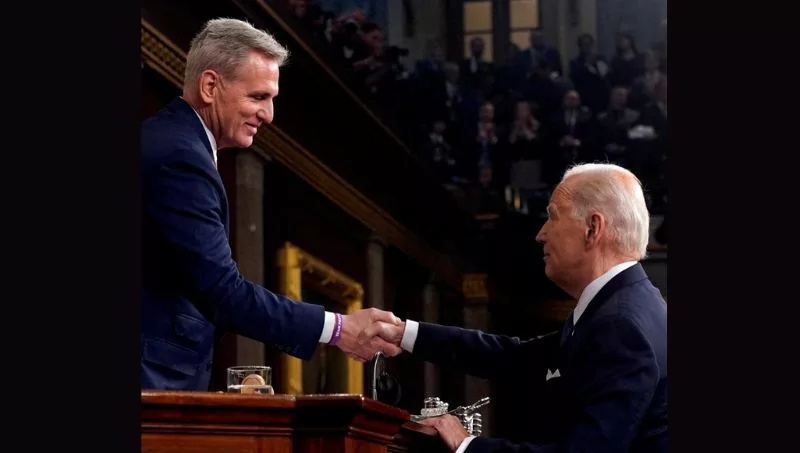
If passed, the compromise reached over the weekend between US President Joe Biden and House Speaker Kevin McCarthy, a Republican, will raise the debt ceiling for the next two years, extending beyond the upcoming presidential elections.
In return, the White House commits to reducing spending levels and introducing some requirements for food aid programs and vulnerable families.
Congressional approval of the agreement is crucial to prevent the country from defaulting on its public debt after reaching the debt ceiling in January, the legal limit on the amount of money the US can borrow to fulfill its obligations.
Lawmakers have until June 5th to pass the measure in both chambers, which is the date the Department of the Treasury estimates the country will exhaust its reserves.
The agreement has faced criticism from some of the more radical members of the Republican Party, who have called for its rejection, as well as from some progressive members of the Democratic Party.
However, it enjoys the support of the leadership of both parties in both houses of Congress.

During a press conference on Tuesday night, several House Republicans expressed their support for the proposal and expressed confidence that they will have the necessary votes to move it forward on Wednesday.
"There were members this morning who were undecided and had very valid questions. They received the information, and tonight they said they will vote in favor. I think we will continue to see support grow; that's what happens with all major legislation," said House Majority Leader Steve Scalise.
Conservatives also argued that the proposal is just the beginning of an offensive to limit what they perceive as excessive spending by the Biden administration and the Democrats in Washington.
Lawmakers have until June 5th to pass the measure in both chambers, which is the date the Department of the Treasury estimates the country will exhaust its reserves.
Reactions:
Members of the Freedom Caucus, representing the more right-wing faction of the Republican Party, called on the media to rally their ranks against the legislation aimed at avoiding a sovereign debt default.
"I had no idea that there would be such a short-lived and noxious plan like this. I will vote 'no' and urge my colleagues to vote 'no' as well," added Andy Biggs, who last week introduced a bill advocating for utilizing unspent allocated funds, such as COVID relief, to postpone the date of the likely default and continue negotiations.
"Negotiating does not mean completely ignoring what we had approved," criticized Congressman Ralph Norman.
Congresswoman Lauren Boebert agreed that the House had done its job and that neither President Joe Biden nor the Democrat-controlled Senate had done theirs. "If every Republican voted according to what they campaigned for, they would vote against this bad agreement tomorrow," she argued.
(With information from EFE and AFP)











Tu opinión enriquece este artículo: