
Argentina is now in the top three of the world inflation ranking, only surpassed by Venezuela and Lebanon, which registered an annual inflation of 189.7% until February. Something unthinkable if one of the richest countries in the world were administered in a coherent and realistic way.
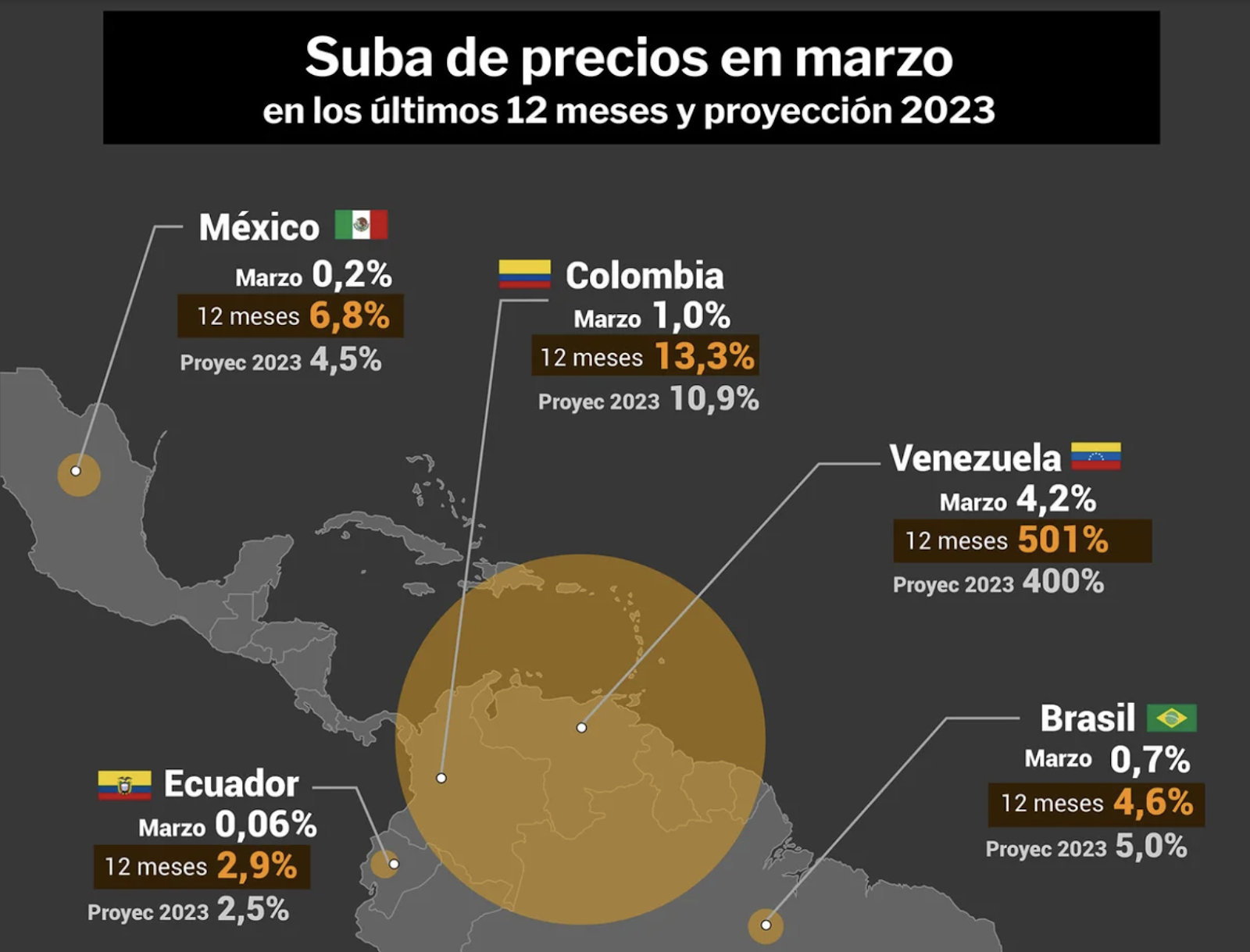
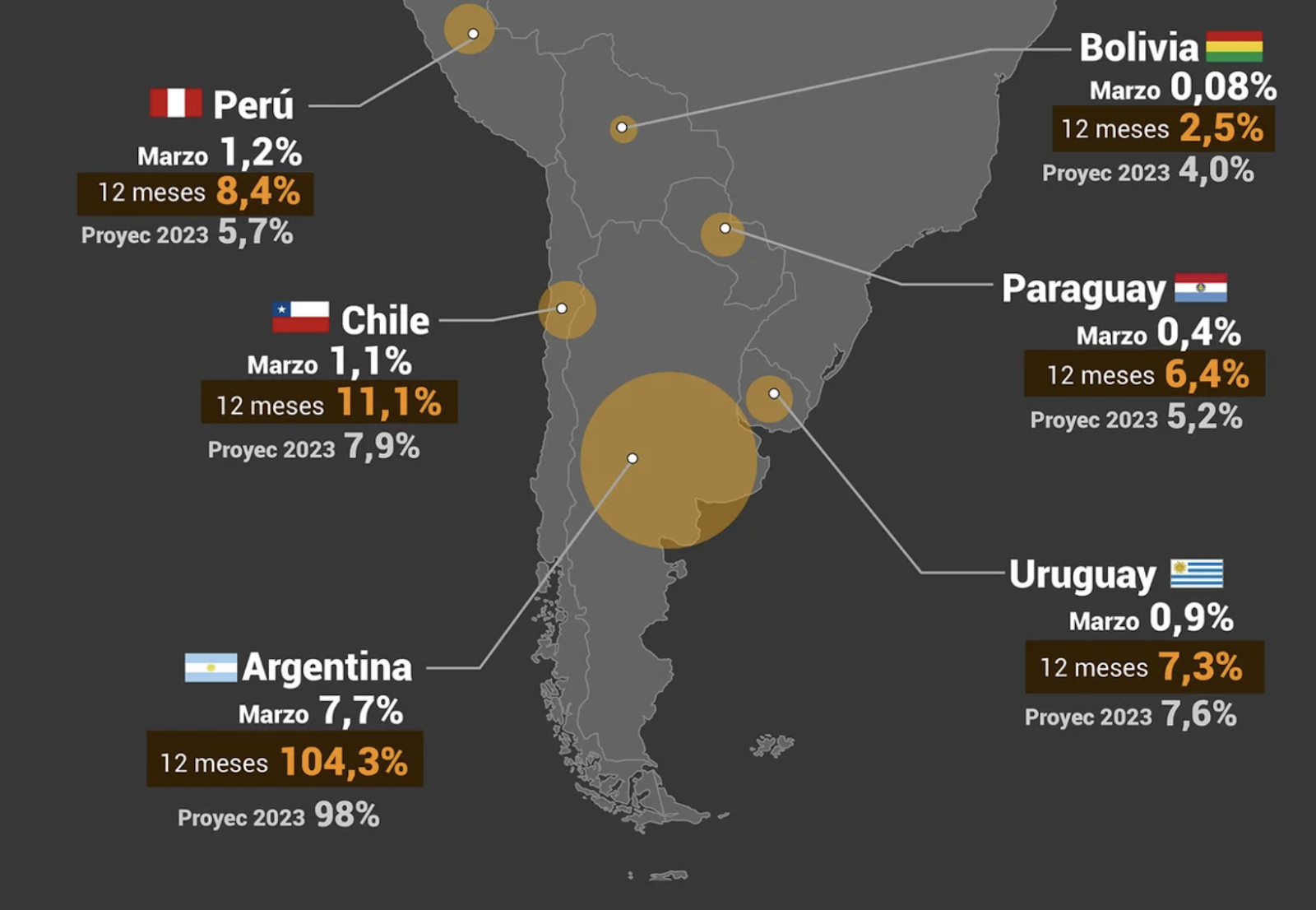
Argentina leads the inflation list in Latin America with a monthly inflation rate of 7.7%, according to Indec, leaving Venezuela behind with 4.2% in March.
The IMF projected an annual inflation rate of 98% for Argentina in 2023, and 400% for Venezuela. But clearly, there are two worrying scenarios in the countries of America, one problematic, and the other extremely worrying.
Summary:
Inflation in Argentina has skyrocketed in recent years, leading the list in Latin America. In March 2023, the country's consumer price index was at 7.7%, while in Venezuela, which ranks second, it was at 4.2%. IMF data predict an increase of 98% for Argentina in 2023, and Argentina's own projections exceed this figure.
Special information:
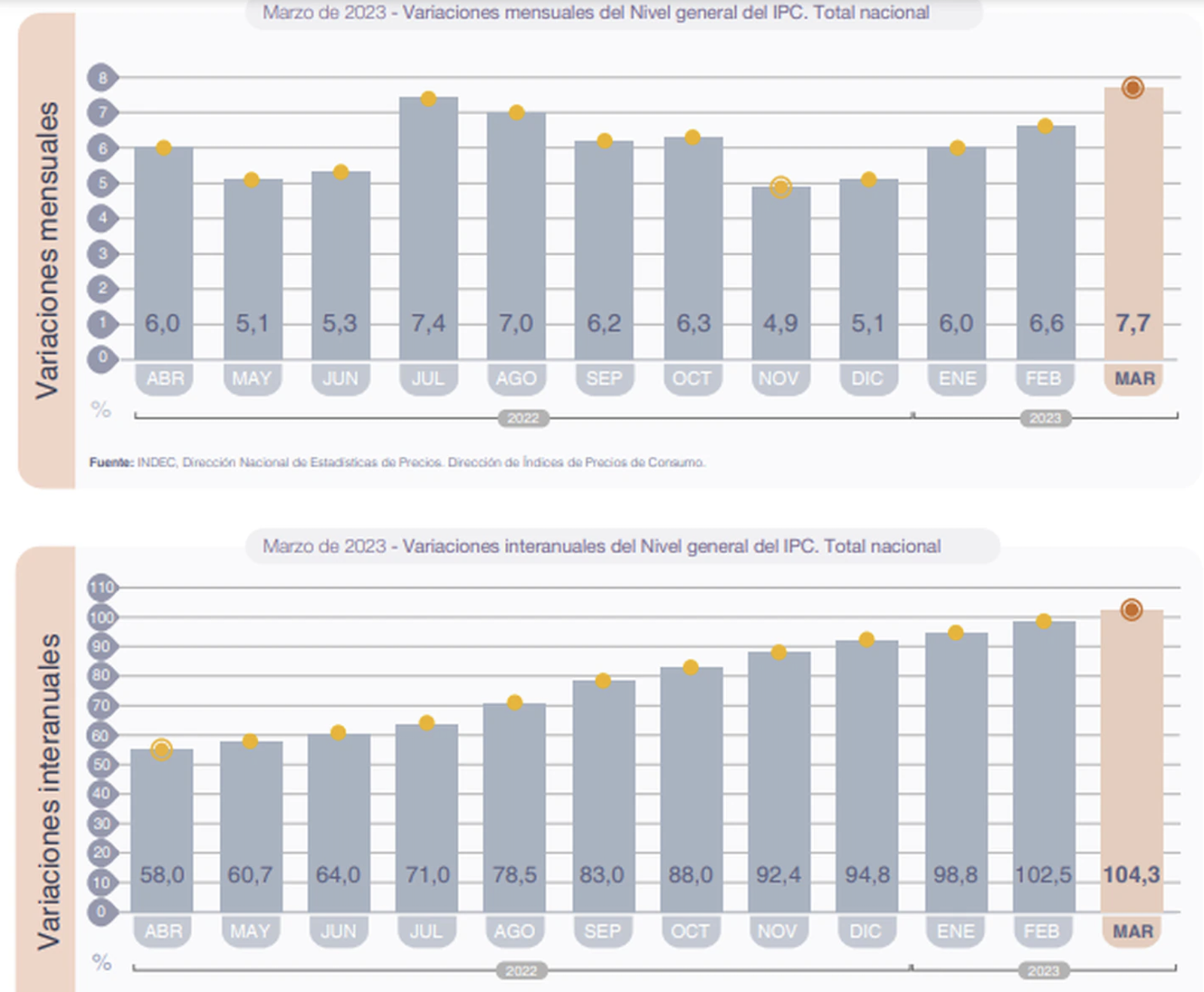
While most of the country's economic consulting firms expected an acceleration of the Consumer Price Index (CPI) during the third month of the year, the figure reported this Friday by Indec surprised to the upside and marked a new monthly record for the last two decades.
The national statistical institute also revealed that the accumulated inflation during the first quarter of the year reached 21.7%, while the year-on-year price increase remained above three digits and was 104.3%. Core inflation, on the other hand, was 7.2%.
The division with the highest increase during the month of March was Education, with a rise of 29.1%, due to increases in all educational levels at the beginning of the school year. Also noteworthy in that regard were the increases recorded in clothing and footwear (9.4%), Non-alcoholic beverages and food (9.3%), Alcoholic beverages and tobacco (8.3%), and Restaurants and hotels (7.9%).
Why does such high inflation in Argentina affect all of America?
While a 400% increase is projected for Venezuela, Argentina's current inflation is the highest in decades and is generating significant economic and social problems in the country, but clearly impacting the entire region.
No one benefits from such a struggling Argentina, not just the Argentines themselves. The last three years, the economy has closed again, and the inability to buy or sell products in Argentina affects the entire economy of the US and the entire continent. Although Argentina is now the land to go shopping as a tourist, as a company or nation, it is impossible to trade. This is bad for all of America. The lack of neatness, order, stability affects any business or commercial project, whether it is a multinational or a startup.
5 tips to combat inflation:
-
Increase interest rates: High interest rates are commonly used to control inflation as it decreases demand for credit and reduces the amount of money in circulation. However, the particular problem in Argentina is the lack of productivity due to the enormous fiscal pressure, which generates what is known as the financial "roulette." The high tax burden results in low profit margins, which discourages job creation, investment, and production, so people prefer to invest in interest. This produces a perpetual effect, particularly in Argentina.
-
Reduce public spending: When the government reduces public spending, it decreases the fiscal deficit and the need for central bank financing, which can reduce inflation. This is a priority in countries like Colombia, Venezuela, Brazil, and especially Argentina.
-
Restrictive monetary policy: It is important for the central bank to control the money supply and limit the growth of money in circulation.
-
Encourage domestic production: By promoting domestic production, the country's dependence on imports is reduced, and price stability is maintained.
-
Promote competition: Competition in markets can help reduce consumer prices and therefore combat inflation. This involves ceasing to lie about indicators, currency quotes, etc.
Opinion:
The problem of inflation in Argentina is not new and has been a recurring theme in the country's economic policy. Poor state policy choices have led to high inflation, which has had a negative impact on the economy and the well-being of the population. Drastic and effective measures are necessary to control inflation and restore the country's economic stability. Argentina has become accustomed to living off the state and takes the realities of living in a nation that spends much more than it produces with a lot of bias. Above all, it is costing them a lot to understand and take the necessary steps to make structural changes to their state model and public employment structure.

Conclusion:
Inflation in Argentina remains a major problem that requires urgent attention. Effective and consistent economic policy measures are necessary to address the problem and improve the country's economic and social situation. While Argentina deceives itself with blame on third parties, it is following the path of Venezuela, Cuba, and now also in some ways Brazil and Colombia. Implementing the appropriate measures and making brave and timely decisions can help reduce inflation and ensure a more prosperous economic future for Argentina. If Argentina can be honest with itself, it can be an example for the whole region to avoid heading towards the iceberg.
Dossier:
The INDEC reported that inflation in Argentina in March 2023 was 7.7%, a figure that far exceeds that of other countries in the region, including Venezuela, which registered a 4.2% increase according to independent measurement. IMF data predicts a 98% increase for Argentina in 2023, while Venezuela is projected to experience a 400% increase. Inflation in Argentina has skyrocketed in recent years and is the highest in decades. According to the Foundation for Freedom and Progress, since the beginning of Alberto Fernández's government, cumulative inflation has been 387%. This high inflation is generating serious economic, social, and cultural problems.











Tu opinión enriquece este artículo: